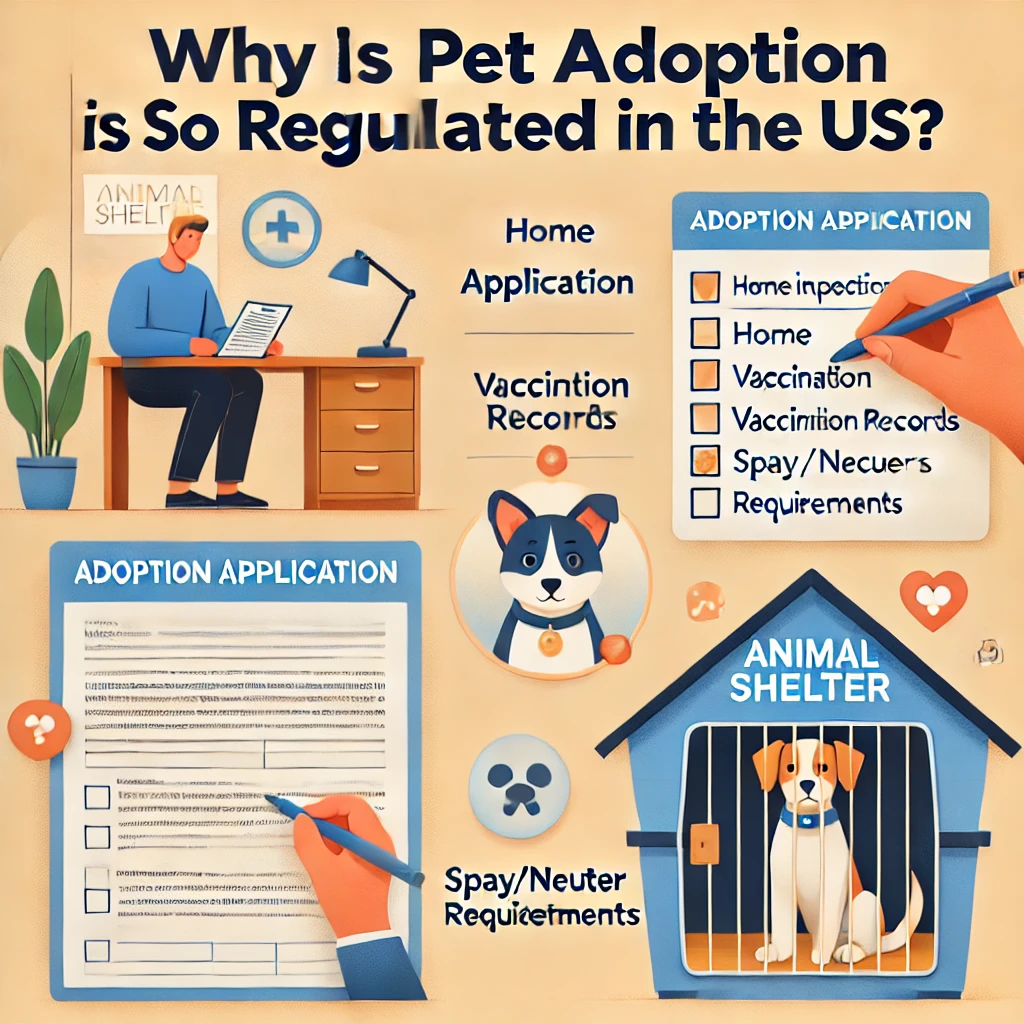
Why Is Pet Adoption So Regulated in the US?
Pet adoption in the United States is often associated with rigorous processes, including applications, interviews, and home checks. While this level of regulation may seem excessive to some, it serves several important purposes aimed at ensuring the safety and well-being of animals and their potential owners. Here’s why pet adoption is so regulated in the US.
1. Ensuring the Welfare of Animals
The primary goal of adoption regulations is to protect the well-being of the animals. Shelters and rescue organizations want to ensure pets are placed in safe, loving homes where they will receive proper care, including:
- Adequate food and shelter.
- Veterinary care.
- Attention and companionship.
By vetting adopters, organizations reduce the likelihood of pets ending up in abusive or neglectful situations.
2. Reducing Return Rates
When pets are adopted into homes that are not well-suited for their needs, they are often returned to the shelter. For example, a high-energy dog may not thrive in an apartment with limited space. Regulations, such as interviews and home checks, help match pets with owners who can meet their specific needs and lifestyle requirements, reducing the chances of returns.
3. Addressing Overpopulation Issues
Pet overpopulation is a significant concern in the US, with millions of animals entering shelters every year. Many adoption regulations, such as mandatory spaying or neutering, aim to prevent further overpopulation. By ensuring adopted pets are sterilized, shelters contribute to controlling the pet population and reducing the number of animals in shelters.
4. Preventing Impulse Adoptions
Adopting a pet is a long-term commitment that requires time, effort, and resources. Strict regulations discourage impulse decisions by making potential adopters think carefully about their readiness to care for a pet. This helps ensure that pets are adopted by responsible, prepared individuals or families.
5. Protecting Pets from Harm
Unfortunately, not all people who seek to adopt pets have good intentions. Some may exploit animals for illegal activities, such as dogfighting or puppy breeding. Rigorous adoption processes help identify and weed out individuals with malicious intent, ensuring that animals are placed in safe environments.
6. Matching Pets to the Right Homes
Every pet has unique needs based on their breed, age, temperament, and health. Adoption regulations often include questions about an adopter’s lifestyle, living situation, and experience with pets to ensure a good match. This personalized approach benefits both the pet and the owner, leading to more successful adoptions.
7. Encouraging Responsible Pet Ownership
Shelters and rescues often require adopters to sign agreements promising to provide proper care, including regular veterinary checkups, vaccinations, and proper training. These measures promote responsible pet ownership, ensuring that adopters are committed to providing a lifetime of care for their new pets.
8. Legal and Liability Considerations
Rescue organizations and shelters have a legal responsibility to ensure the pets they adopt out do not pose a risk to the public. For example, thorough checks help assess whether adopters can safely manage pets with behavioral issues or special needs. This reduces the likelihood of liability issues for the organization.
9. Raising Awareness About Pet Care
The adoption process often includes educational components, such as discussions about pet care, training, and veterinary needs. This helps first-time pet owners understand the responsibilities involved, setting them up for a successful and fulfilling relationship with their new pet.
10. Addressing Shelter Policies
Nonprofit shelters and rescues rely on limited resources to care for animals. Strict adoption regulations help ensure that each pet goes to a home where they will be well-cared for, allowing the shelter to focus its resources on helping more animals in need.
Conclusion
Pet adoption in the US is heavily regulated to prioritize the welfare of animals, reduce returns, and promote responsible pet ownership. While the process may seem stringent, these measures are designed to create successful, long-term matches between pets and their new families.
For more tips on improving your photography and editing skills, check out helpful guides to take your selfies to the next level.
Добавить комментарий