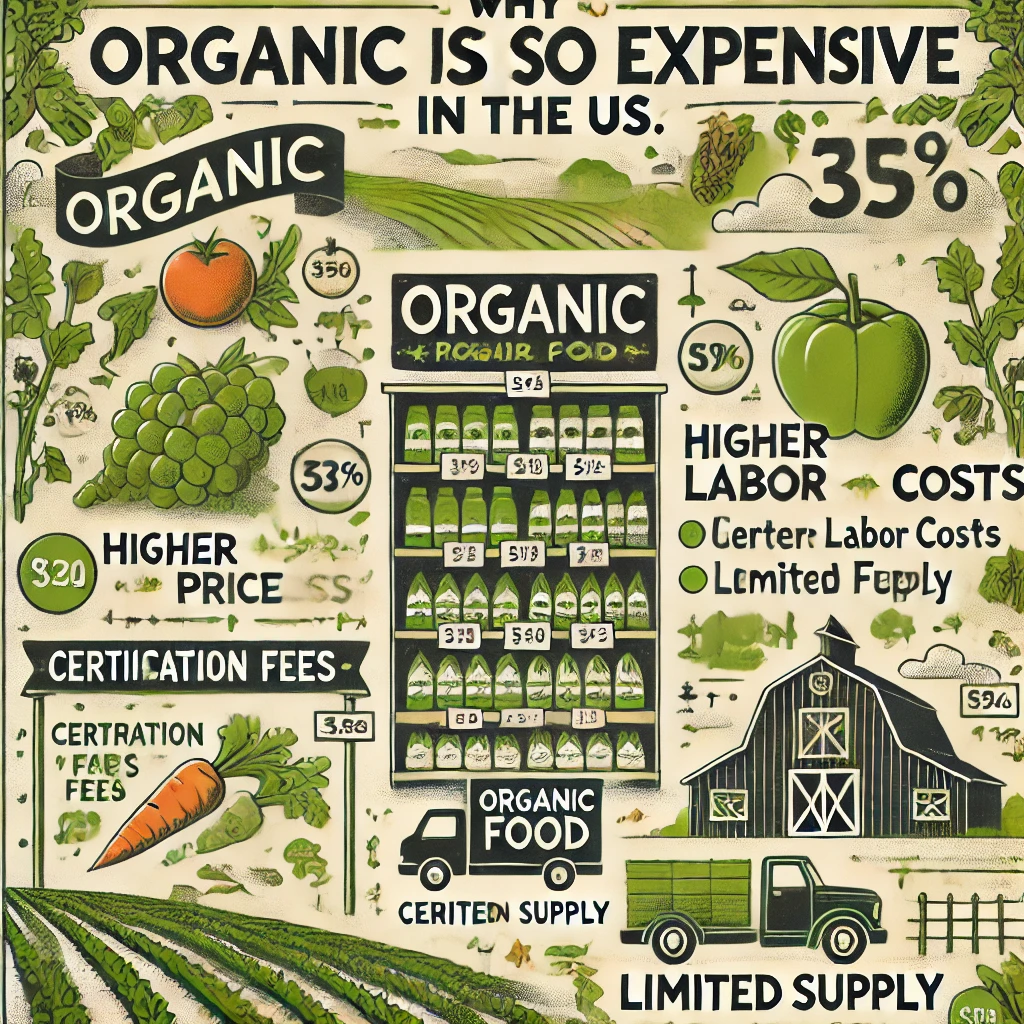
Why Is Organic Food So Expensive in the US?
Organic food has become increasingly popular in the US, with more people choosing it for its perceived health, environmental, and ethical benefits. However, the price tag on organic produce, meat, and other goods is often significantly higher than their conventionally grown counterparts. But why is organic food so expensive in the US? Let’s explore the factors driving up the cost of organic products.
1. More Labor-Intensive Farming Practices
Organic farming relies on methods that are more time- and labor-intensive than conventional farming.
- No Synthetic Pesticides or Herbicides: Without chemical pesticides or herbicides, organic farmers often resort to manual weeding and natural pest control methods, which require more labor.
- Crop Rotation and Soil Management: Organic farmers must rotate crops to maintain soil health and fertility, which limits how much of any single crop can be grown at a time.
- Animal Care: Organic livestock must be raised with access to pasture and without antibiotics or growth hormones, which requires more hands-on care.
Why It Matters: Higher labor requirements translate into higher costs for farmers, which are passed on to consumers.
2. Certification Costs
Obtaining and maintaining organic certification in the US can be costly and time-consuming for farmers.
- USDA Organic Certification: Farmers must meet strict standards set by the US Department of Agriculture (USDA), which involve:
- Detailed documentation of farming practices.
- Regular inspections by certified agents.
- Application and renewal fees that can cost thousands of dollars annually.
- Transition Period: Farms transitioning from conventional to organic must follow organic practices for three years before becoming certified, during which time they cannot charge organic prices.
Why It Matters: The cost of certification adds to the overall expense of producing organic food.
3. Smaller Yields Compared to Conventional Farming
Organic farming typically results in smaller yields because it avoids synthetic fertilizers and pesticides.
- Yield Gap: Studies show that organic crops produce 10–20% less than conventional crops on average, though this varies by crop type and farming practices.
- Crop Losses: Organic farmers face greater risks of crop loss due to pests, diseases, and weeds, which are harder to control without chemical inputs.
- Limited Scale: Many organic farms are smaller and produce less volume, which prevents them from achieving economies of scale.
Why It Matters: Lower yields mean higher costs per unit of food produced, contributing to higher prices for consumers.
4. Higher Feed Costs for Organic Livestock
Organic meat, dairy, and eggs are more expensive partly because of the high cost of feeding organically raised animals.
- Organic Feed Prices: Organic feed for livestock is often twice as expensive as conventional feed because it must also be grown without synthetic chemicals or GMOs.
- Access to Pasture: Organic livestock must have access to pasture for a certain number of days per year, which increases land and labor costs.
- No Antibiotics or Growth Hormones: Organic farmers cannot use antibiotics or synthetic growth hormones to speed up production, resulting in slower growth rates and higher costs.
Why It Matters: The additional costs of raising organic animals lead to significantly higher prices for meat, dairy, and eggs.
5. Smaller Supply and Higher Demand
The demand for organic food in the US has grown significantly, but supply has struggled to keep pace.
- Limited Organic Farmland: As of 2023, only about 1% of US farmland is certified organic, limiting the amount of organic food that can be produced.
- Growing Demand: More consumers are seeking out organic food for its health and environmental benefits, driving up prices due to limited supply.
- Import Costs: The US imports a significant portion of its organic food from other countries, which adds transportation costs and increases prices.
Why It Matters: The imbalance between supply and demand results in higher prices for organic products.
6. Cost of Complying with Organic Standards
Organic farmers must follow strict USDA guidelines that add to production costs.
- Restricted Inputs: Organic farmers cannot use inexpensive synthetic fertilizers or pesticides, relying instead on natural alternatives that are often less effective and more costly.
- Soil Health Management: Maintaining organic soil health through composting and natural amendments requires significant effort and expense.
- Animal Welfare Standards: Organic livestock farms must meet specific standards for housing, feeding, and access to the outdoors, which increases costs.
Why It Matters: The additional effort required to meet organic standards raises the cost of production.
7. Lack of Government Subsidies for Organic Farms
While conventional farming receives substantial government subsidies, organic farming gets less financial support.
- Subsidies for Conventional Crops: Crops like corn, soy, and wheat—key ingredients in processed foods—are heavily subsidized, keeping prices low for conventional farming.
- Limited Support for Organic Farmers: Although there are programs to assist organic farmers, the level of support is much smaller compared to conventional agriculture.
- Impact on Prices: Without subsidies to offset costs, organic farmers must charge higher prices to cover their expenses.
Why It Matters: The lack of subsidies for organic farming puts organic products at a financial disadvantage compared to conventionally grown foods.
8. More Expensive Distribution Channels
The distribution and marketing of organic food add to its cost.
- Smaller Supply Chains: Organic farms often operate on a smaller scale, making it harder to distribute products efficiently.
- Special Handling Requirements: Organic food must be kept separate from conventional food during transportation and storage to maintain certification, increasing logistical costs.
- Retail Markups: Organic products are often sold at specialty grocery stores, which may charge higher markups compared to conventional supermarkets.
Why It Matters: Higher distribution costs lead to higher prices for consumers at the grocery store.
9. Consumer Willingness to Pay More
Many consumers are willing to pay a premium for organic food, which allows producers and retailers to charge higher prices.
- Perceived Health Benefits: Organic food is often seen as healthier because it’s free of synthetic pesticides, antibiotics, and GMOs.
- Environmental Benefits: Consumers who care about sustainability and environmental impact may prioritize organic products.
- Premium Pricing Strategy: Retailers know that consumers associate organic products with higher quality and are often willing to pay more for that perception.
Why It Matters: The higher demand and perceived value of organic food allow sellers to maintain higher prices.
10. Environmental and Ethical Benefits Come at a Cost
Organic farming practices aim to protect the environment and promote ethical treatment of animals, but these benefits come with added expenses.
- Sustainability Efforts: Organic farming prioritizes sustainable practices like reducing chemical runoff, preserving soil health, and conserving biodiversity, which require more time and resources.
- Animal Welfare: Organic standards ensure better living conditions for livestock, which increase costs for farmers.
- Higher Long-Term Value: While organic farming benefits the planet, the upfront costs are higher compared to conventional methods.
Why It Matters: The environmental and ethical benefits of organic farming justify higher prices for many consumers.
Final Thoughts
Organic food is more expensive in the US due to labor-intensive practices, certification costs, smaller yields, and limited supply. While the higher price tag reflects the true cost of sustainable and ethical farming, it can make organic food less accessible for many Americans. As demand grows and production scales up, there’s hope that organic food may become more affordable in the future. For now, consumers can save by shopping at farmers’ markets, buying in bulk, or choosing store-brand organic products.
For more tips on improving your photography and editing skills, check out helpful guides to take your selfies to the next level.
Добавить комментарий