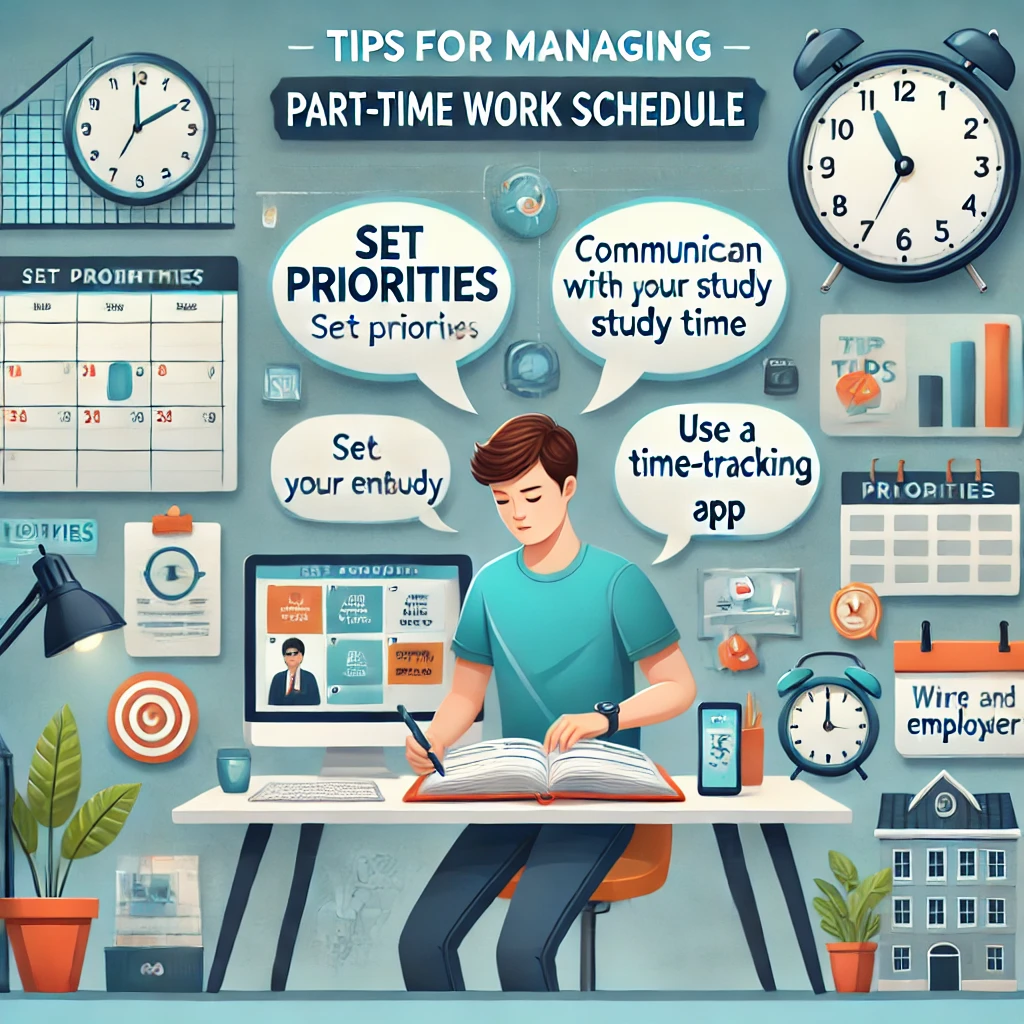
Part-Time Work Schedules
Balancing a part-time job with school and personal life can be challenging, but with effective time management, it’s possible to succeed in all areas. Here are practical tips to help you manage your part-time work schedule while staying on top of your responsibilities.
1. Communicate with Your Employer
Why It Helps:
Clear communication ensures your work schedule aligns with your school and personal obligations.
How to Do It:
- Let your employer know your availability upfront, including school hours and extracurricular activities.
- Request a consistent schedule if possible, so you can plan around your shifts.
- Inform your manager in advance about exams, school projects, or other important events.
Tip: Be honest about your limits—don’t overcommit to shifts that might interfere with your priorities.
2. Use a Planner or Calendar
Why It Helps:
A planner keeps you organized and ensures you don’t double-book your time.
How to Do It:
- Record your work shifts, school deadlines, and social events in one place.
- Use color coding to distinguish between work, school, and personal time.
- Set reminders for upcoming shifts or tasks to avoid forgetting commitments.
Tip: Digital apps like Google Calendar or Notion can sync across devices for easy access.
3. Prioritize Tasks
Why It Helps:
Focusing on the most important tasks helps you stay productive and stress-free.
How to Do It:
- Make a daily to-do list and rank tasks by urgency and importance.
- Complete schoolwork before your shift to avoid last-minute cramming afterward.
- Set aside time for rest and relaxation to recharge.
Tip: Use the “Eisenhower Matrix” to separate urgent from non-urgent tasks.
4. Set Realistic Goals
Why It Helps:
Being realistic about your workload prevents burnout and ensures quality work.
How to Do It:
- Limit the number of hours you work each week to balance other commitments.
- Break larger tasks (like studying for exams) into smaller, manageable chunks.
- Avoid taking on extra shifts during exam weeks or other busy periods.
Tip: Aim for 10–15 hours of work per week if you’re a full-time student.
5. Create a Daily Routine
Why It Helps:
A consistent routine helps you make the most of your time.
How to Do It:
- Block out specific times for studying, working, and relaxing.
- Schedule breaks between school and work to decompress and refocus.
- Stick to a bedtime routine to ensure you’re getting enough sleep.
Tip: Test different routines to find one that works best for you.
6. Stay Flexible
Why It Helps:
Life is unpredictable, and being adaptable reduces stress when things don’t go as planned.
How to Do It:
- Be open to swapping shifts with coworkers if something urgent comes up.
- Plan for unexpected delays, like traffic or extra homework, by leaving buffer time in your schedule.
- Learn to say no if a shift conflicts with an important responsibility.
Tip: Flexibility is key, but don’t let work consistently take precedence over school.
7. Leverage Downtime
Why It Helps:
Using spare moments productively helps you stay on top of tasks.
How to Do It:
- Review flashcards or brainstorm essay ideas during lunch breaks.
- Use commute time to listen to educational podcasts or audiobooks.
- Organize your to-do list or calendar while waiting for your shift to start.
Tip: Even 10–15 minutes of focused effort can make a difference.
8. Take Care of Yourself
Why It Helps:
Maintaining your physical and mental health is essential for sustained productivity.
How to Do It:
- Eat balanced meals and stay hydrated to keep your energy levels up.
- Exercise regularly to reduce stress and improve focus.
- Take mental health breaks when needed—overworking can lead to burnout.
Tip: Schedule downtime into your week to unwind and recharge.
9. Learn to Delegate
Why It Helps:
Delegating tasks when possible frees up time for your priorities.
How to Do It:
- Ask family or friends to help with chores or errands during busy weeks.
- Partner with classmates for group projects to share responsibilities.
- Discuss workload adjustments with your employer if you’re overwhelmed.
Tip: Focus on tasks only you can do, and let others handle the rest.
10. Reflect and Adjust Weekly
Why It Helps:
Regular reflection helps you identify what’s working and where improvements are needed.
How to Do It:
- Review your past week to see if you met your goals and stayed balanced.
- Adjust your work hours or routine based on what felt manageable.
- Plan for the week ahead, accounting for any changes in school or work schedules.
Tip: Use Sunday evenings to plan and set intentions for the week.
Example of a Balanced Weekly Schedule
| Day | Morning | Afternoon | Evening |
|---|---|---|---|
| Monday | School | Homework/Study | Work shift (4 PM – 8 PM) |
| Tuesday | School | Club Meeting | Relax/Personal Time |
| Wednesday | School | Work shift (2 PM – 6 PM) | Homework |
| Thursday | School | Study Group | Work shift (5 PM – 9 PM) |
| Friday | School | Homework | Social Time with Friends |
Final Thoughts
Balancing a part-time job with school is all about planning, communication, and self-care. By organizing your time, setting boundaries, and staying mindful of your health, you can handle both responsibilities effectively and still make room for fun.
For more resources and tools on managing your time, explore helpful guides and build a schedule that works for you!
Добавить комментарий