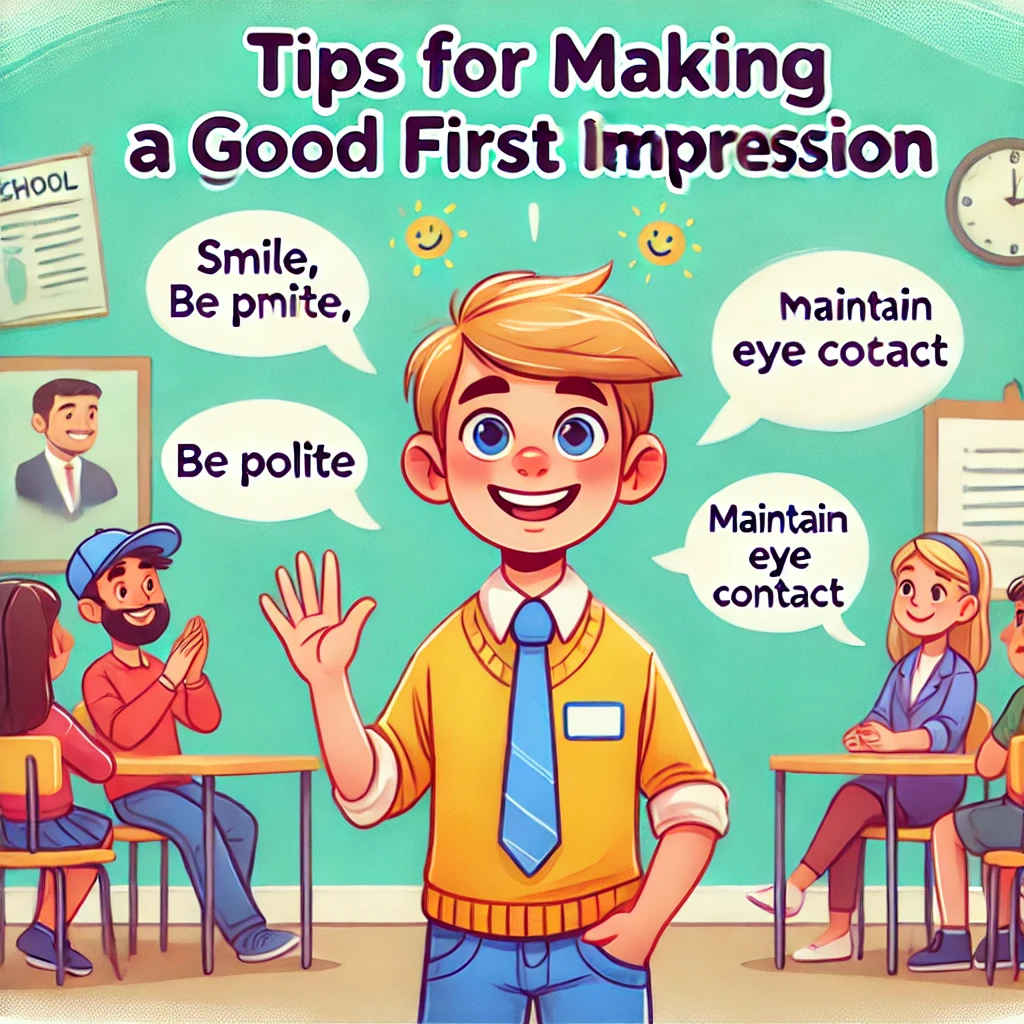
Good First Impression
First impressions are powerful and often shape how others perceive you in the long term. Whether you’re meeting new classmates, coworkers, or potential friends, making a strong and positive impression can open doors and build connections. Here are some practical tips to help you leave a great first impression.
1. Be Confident
Why It’s Important:
Confidence helps you appear self-assured and approachable.
How to Show Confidence:
- Stand tall with good posture.
- Maintain steady eye contact.
- Speak clearly and at a moderate pace.
Tip: If you feel nervous, take a deep breath and smile—it instantly makes you appear more confident.
2. Dress Appropriately
Why It’s Important:
Your appearance is often the first thing people notice.
How to Do It:
- Choose clean, well-fitted clothes that suit the occasion.
- Avoid overly casual or flashy outfits unless the setting calls for it.
- Pay attention to grooming, like neat hair and clean nails.
Tip: When in doubt, opt for simple, polished looks that make you feel comfortable and confident.
3. Smile Genuinely
Why It’s Important:
A warm smile makes you appear friendly and approachable.
How to Do It:
- Smile naturally, not forced or overly exaggerated.
- Combine your smile with direct eye contact for maximum effect.
Tip: Smiling also helps reduce your own nervousness!
4. Be Punctual
Why It’s Important:
Arriving on time shows respect for others and reliability.
How to Do It:
- Plan ahead to ensure you arrive early or exactly on time.
- Allow extra travel time in case of delays.
Tip: Being early gives you a chance to compose yourself before the interaction.
5. Use a Firm Handshake
Why It’s Important:
A handshake conveys confidence and professionalism.
How to Do It:
- Grip firmly but not too tightly.
- Shake hands for about 2–3 seconds.
- Make eye contact while offering a friendly smile.
Tip: In informal settings, a simple wave or fist bump can be a good alternative.
6. Show Genuine Interest
Why It’s Important:
People appreciate when you focus on them and show curiosity about their thoughts.
How to Do It:
- Ask open-ended questions like, “What brought you here today?” or “What do you enjoy doing?”
- Actively listen by nodding and making brief affirming comments like “That’s interesting!”
- Avoid interrupting or shifting the conversation back to yourself.
Tip: Remember a detail they share and mention it later—it shows you were paying attention.
7. Use Positive Body Language
Why It’s Important:
Nonverbal cues play a big role in how others perceive you.
Examples of Positive Body Language:
- Keep your arms relaxed at your sides (avoid crossing them).
- Face the person you’re talking to.
- Lean slightly forward to show engagement.
Tip: Mirror their body language subtly to build rapport.
8. Speak Clearly and Positively
Why It’s Important:
Your tone and choice of words set the tone for your interaction.
How to Do It:
- Speak at a volume appropriate for the setting.
- Use a friendly and upbeat tone.
- Avoid negative or overly critical comments.
Tip: Practice introducing yourself in a concise and confident way, like, “Hi, I’m [Your Name]. Nice to meet you!”
9. Be Respectful and Polite
Why It’s Important:
Manners show that you value others and their time.
How to Do It:
- Use “please” and “thank you” when appropriate.
- Be mindful of personal space and cultural norms.
- Avoid interrupting or dominating the conversation.
Tip: Acknowledge others’ opinions and viewpoints, even if you don’t agree.
10. Be Authentic
Why It’s Important:
Being genuine helps build trust and lasting connections.
How to Do It:
- Share a little about yourself, but stay humble.
- Avoid pretending to be someone you’re not.
- Let your personality shine—whether you’re funny, thoughtful, or outgoing.
Tip: People are drawn to authenticity more than perfection.
11. Follow Up
Why It’s Important:
Following up reinforces the impression you made and shows interest in continuing the relationship.
How to Do It:
- Send a quick thank-you note or message if appropriate.
- Reference something specific from your conversation to keep it personal.
- Express your enthusiasm for meeting them or seeing them again.
Tip: Keep follow-ups short and sincere.
Common Mistakes to Avoid
- Overthinking or Overexplaining: Keep it simple and natural.
- Being Distracted: Stay off your phone and give the person your full attention.
- Trying Too Hard: Relax—authenticity beats trying to impress.
- Neglecting Preparation: Plan ahead so you’re confident and ready.
Final Thoughts
Making a good first impression is about being confident, respectful, and authentic. With these tips, you’ll create a positive and lasting impact on anyone you meet. Remember, first impressions may open the door, but it’s your genuine actions and personality that keep relationships strong.
Добавить комментарий