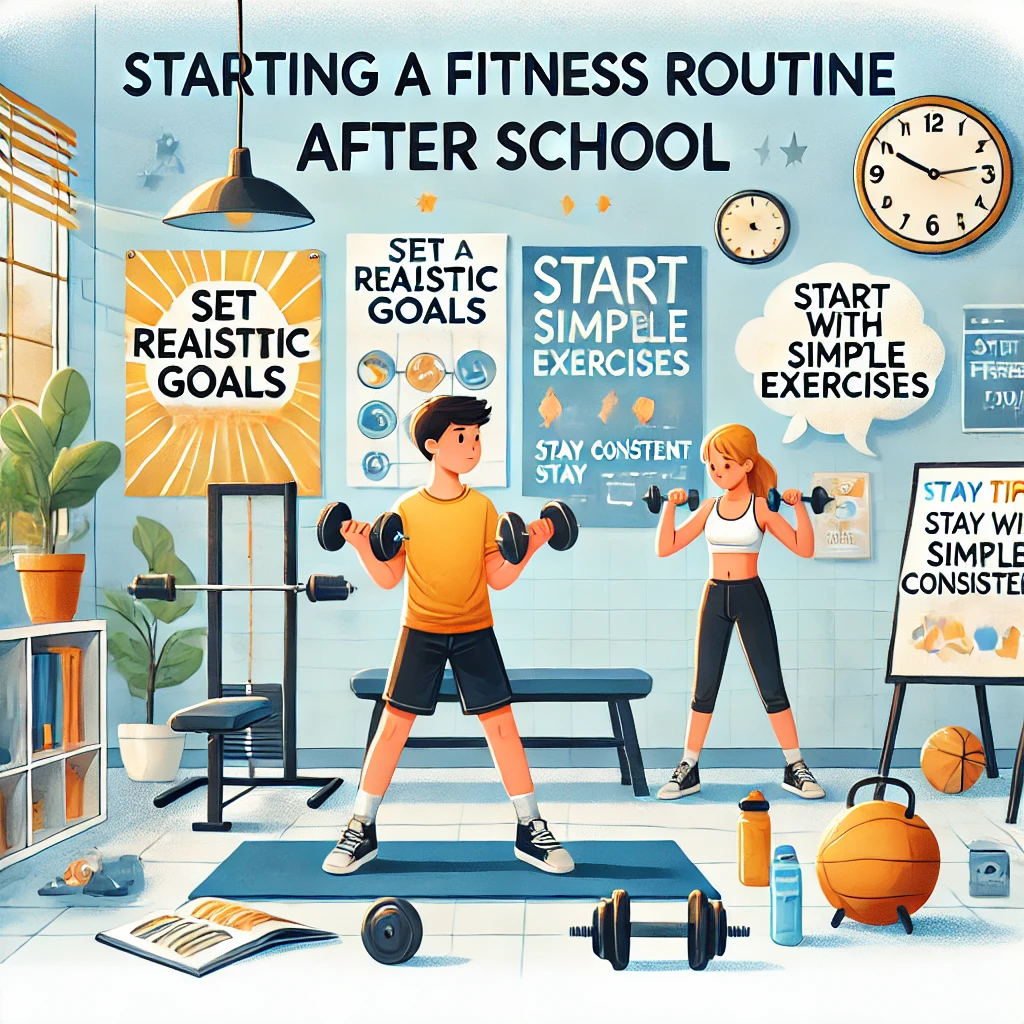
Fitness Routine
Creating a fitness routine after school is a great way to stay active, boost energy, and improve mental and physical health. Whether you’re new to exercise or looking to build consistency, here’s how to start a routine that fits your lifestyle and goals.
1. Define Your Fitness Goals
Why It Helps:
Setting clear goals gives you direction and keeps you motivated.
How to Do It:
- Decide what you want to achieve: build strength, improve endurance, increase flexibility, or simply stay active.
- Set specific, measurable goals, like running a mile in under 10 minutes or doing 20 push-ups.
- Break larger goals into smaller milestones to track progress.
Tip: Write down your goals and revisit them regularly to stay focused.
2. Choose Activities You Enjoy
Why It Helps:
Fun activities are easier to stick with over time.
How to Do It:
- Explore options like jogging, dancing, yoga, swimming, or team sports.
- Try a mix of cardio, strength training, and flexibility exercises for a balanced routine.
- Consider activities you can do with friends, such as basketball or group fitness classes.
Tip: Experiment with different workouts to discover what you enjoy most.
3. Create a Schedule
Why It Helps:
Having a consistent routine ensures fitness becomes a regular part of your day.
How to Do It:
- Pick specific days and times for your workouts, like right after school or before dinner.
- Start with 2–3 sessions per week and gradually increase as you build endurance.
- Keep sessions manageable, aiming for 30–60 minutes per workout.
Tip: Use a calendar or fitness app to set reminders and stay on track.
4. Start Slow and Build Gradually
Why It Helps:
Easing into a routine reduces the risk of injury and keeps you motivated.
How to Do It:
- Begin with light exercises or shorter workouts to get used to the routine.
- Gradually increase intensity, duration, or weight as your fitness improves.
- Listen to your body and rest when needed to avoid burnout.
Tip: Consistency is more important than intensity when you’re starting out.
5. Warm Up and Cool Down
Why It Helps:
Proper preparation and recovery prevent injuries and improve performance.
How to Do It:
- Spend 5–10 minutes warming up with light cardio or dynamic stretches before working out.
- Cool down with static stretches or yoga poses to relax your muscles.
- Focus on major muscle groups, especially those you’ve worked during your session.
Tip: A good warm-up and cool-down routine enhances flexibility and reduces soreness.
6. Stay Hydrated and Eat Right
Why It Helps:
Proper nutrition and hydration fuel your workouts and aid recovery.
How to Do It:
- Drink water before, during, and after exercise to stay hydrated.
- Eat a balanced snack with protein and carbs 30–60 minutes before your workout.
- Replenish energy post-workout with foods like yogurt, fruits, or a smoothie.
Tip: Avoid heavy or sugary meals right before exercising.
7. Track Your Progress
Why It Helps:
Monitoring your achievements keeps you motivated and identifies areas for improvement.
How to Do It:
- Keep a journal or use a fitness app to log workouts, times, and results.
- Note how you feel after each session to track improvements in energy and strength.
- Celebrate small milestones, like increasing weights or running longer distances.
Tip: Use visual tools like charts or photos to see your progress over time.
8. Incorporate Variety
Why It Helps:
Mixing up your routine prevents boredom and challenges different muscle groups.
How to Do It:
- Alternate between activities like cardio one day and strength training the next.
- Try new workouts, such as kickboxing or Pilates, to keep things fresh.
- Adjust your routine every few weeks to avoid hitting a fitness plateau.
Tip: Make each workout a new adventure by trying outdoor exercises or group classes.
9. Stay Consistent
Why It Helps:
Regular exercise builds habits and delivers long-term benefits.
How to Do It:
- Treat your workouts as non-negotiable appointments in your schedule.
- Find a workout buddy to hold each other accountable.
- Reward yourself for sticking to your routine, like enjoying a relaxing activity or buying new fitness gear.
Tip: Even on busy days, squeeze in a quick 15-minute workout to maintain momentum.
10. Make Rest and Recovery a Priority
Why It Helps:
Rest days allow your muscles to repair and grow stronger.
How to Do It:
- Schedule at least one or two rest days per week.
- Use rest days for light activities like walking or gentle stretching.
- Get enough sleep to help your body recover from exercise.
Tip: Balance active days with recovery to avoid overtraining and fatigue.
Sample Fitness Routine
| Day | Activity | Duration |
|---|---|---|
| Monday | Jogging and stretching | 30 minutes |
| Wednesday | Strength training (bodyweight exercises) | 40 minutes |
| Friday | Yoga or Pilates for flexibility | 30 minutes |
| Saturday | Team sports or outdoor adventure | 60 minutes |
Final Thoughts
Starting a fitness routine after school is an excellent way to stay active and relieve stress. By setting clear goals, creating a consistent schedule, and enjoying the process, you’ll build a routine that works for you. Remember to listen to your body, stay motivated, and celebrate your progress along the way.
For more tips and resources on fitness and wellness, explore helpful guides to support your journey!
Добавить комментарий