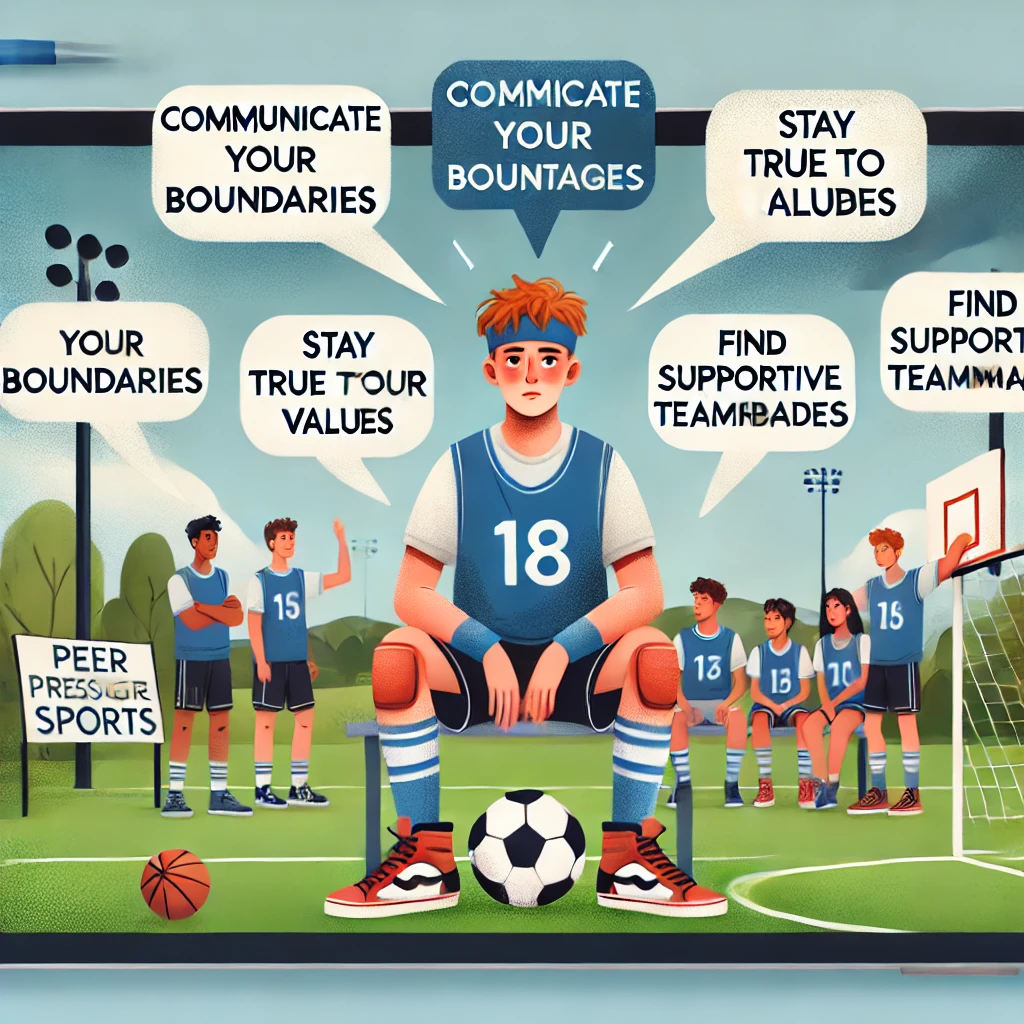
Peer Pressure in Sports
Peer pressure is a common challenge for athletes, whether it comes from teammates, coaches, or friends. While sports can be a great way to build confidence and teamwork, the competitive environment can sometimes lead to unhealthy behaviors or decisions. Here are practical tips to help you navigate peer pressure in sports while staying true to your values and goals.
1. Know Your Values and Goals
Why It Helps:
Understanding your priorities helps you stand firm when faced with pressure.
How to Do It:
- Write down your personal goals, such as improving your skills, staying healthy, or enjoying the game.
- Reflect on what matters most to you—your integrity, long-term success, or overall well-being.
- Remind yourself of your goals whenever you feel pressured to compromise.
Tip: Keep a list of your goals in your locker, sports bag, or phone for motivation.
2. Recognize Peer Pressure
Why It Helps:
Identifying when you’re being pressured allows you to take control of the situation.
How to Do It:
- Notice behaviors like teasing, exclusion, or constant persuasion to do something you’re uncomfortable with.
- Recognize emotional pressure, such as feeling obligated to fit in or avoid disappointing others.
- Trust your instincts—if something feels wrong, it probably is.
Tip: Acknowledge the pressure instead of ignoring it, so you can address it directly.
3. Learn to Say No Confidently
Why It Helps:
Standing up for yourself shows maturity and protects your values.
How to Do It:
- Practice polite but firm responses like, “I’m not comfortable with that,” or “Thanks, but I’ll pass.”
- Avoid giving lengthy explanations—stating your decision clearly is enough.
- Use humor to deflect the situation, such as, “I’m saving my energy to crush the next practice!”
Tip: Rehearse responses ahead of time to feel more prepared during real situations.
4. Surround Yourself with Supportive Teammates
Why It Helps:
Positive influences encourage you to make healthy and ethical choices.
How to Do It:
- Gravitate toward teammates who respect your boundaries and share similar values.
- Encourage open conversations about respecting each other’s choices.
- Offer support to others who may also be dealing with peer pressure.
Tip: A strong support system can help you feel less isolated when facing tough decisions.
5. Focus on the Team’s Success
Why It Helps:
Prioritizing the team’s goals over individual pressure keeps you grounded.
How to Do It:
- Remind yourself that the team’s performance depends on everyone acting responsibly.
- Speak up if peer pressure is negatively affecting the team dynamic or morale.
- Emphasize teamwork and sportsmanship during practices and games.
Tip: Use phrases like, “Let’s focus on doing what’s best for the team.”
6. Talk to a Trusted Adult or Coach
Why It Helps:
Guidance from a mentor provides perspective and solutions for managing peer pressure.
How to Do It:
- Share your concerns with a coach, parent, or school counselor.
- Ask for advice on handling specific situations, like being pressured to overtrain or break rules.
- Suggest team discussions about peer pressure to foster a more supportive environment.
Tip: Coaches are often trained to handle team dynamics and can intervene when necessary.
7. Stay True to Healthy Habits
Why It Helps:
Maintaining routines like proper nutrition, rest, and practice keeps you focused and resilient.
How to Do It:
- Avoid activities or behaviors that could jeopardize your health or performance, such as overtraining, skipping meals, or substance use.
- Use your habits as a reason to decline pressure, like, “I need to rest for tomorrow’s game.”
- Set boundaries around your time to balance sports, academics, and relaxation.
Tip: Prioritize self-care to stay at your best, both physically and mentally.
8. Stay Calm Under Pressure
Why It Helps:
Keeping a level head helps you make rational decisions instead of giving in.
How to Do It:
- Practice deep breathing or visualization techniques to manage stress.
- Focus on what you can control, such as your effort and attitude.
- Remind yourself that peer pressure is temporary, but your choices have lasting consequences.
Tip: Stay composed by repeating affirmations like, “I’m in control of my actions.”
9. Lead by Example
Why It Helps:
Being a role model shows others that standing firm is possible and respected.
How to Do It:
- Demonstrate integrity by making responsible decisions, even in tough situations.
- Support teammates who might also be resisting pressure.
- Show that success doesn’t require compromising your values.
Tip: Your actions can inspire others to follow your lead.
10. Learn from Past Experiences
Why It Helps:
Reflecting on past situations helps you improve your responses to future challenges.
How to Do It:
- Think about times when you handled peer pressure well and what strategies worked.
- Identify moments where you struggled and consider how you could respond differently next time.
- Use each experience as an opportunity to grow stronger and more confident.
Tip: Keep a journal to track your thoughts and progress in dealing with pressure.
Final Thoughts
Dealing with peer pressure in sports is a valuable skill that builds character, confidence, and resilience. By staying true to your values, setting boundaries, and seeking support when needed, you can thrive both on and off the field. Remember, your decisions today shape your future, so choose actions that reflect your best self.
For more tips on personal growth and navigating challenges, explore helpful resources to support your journey!
Добавить комментарий