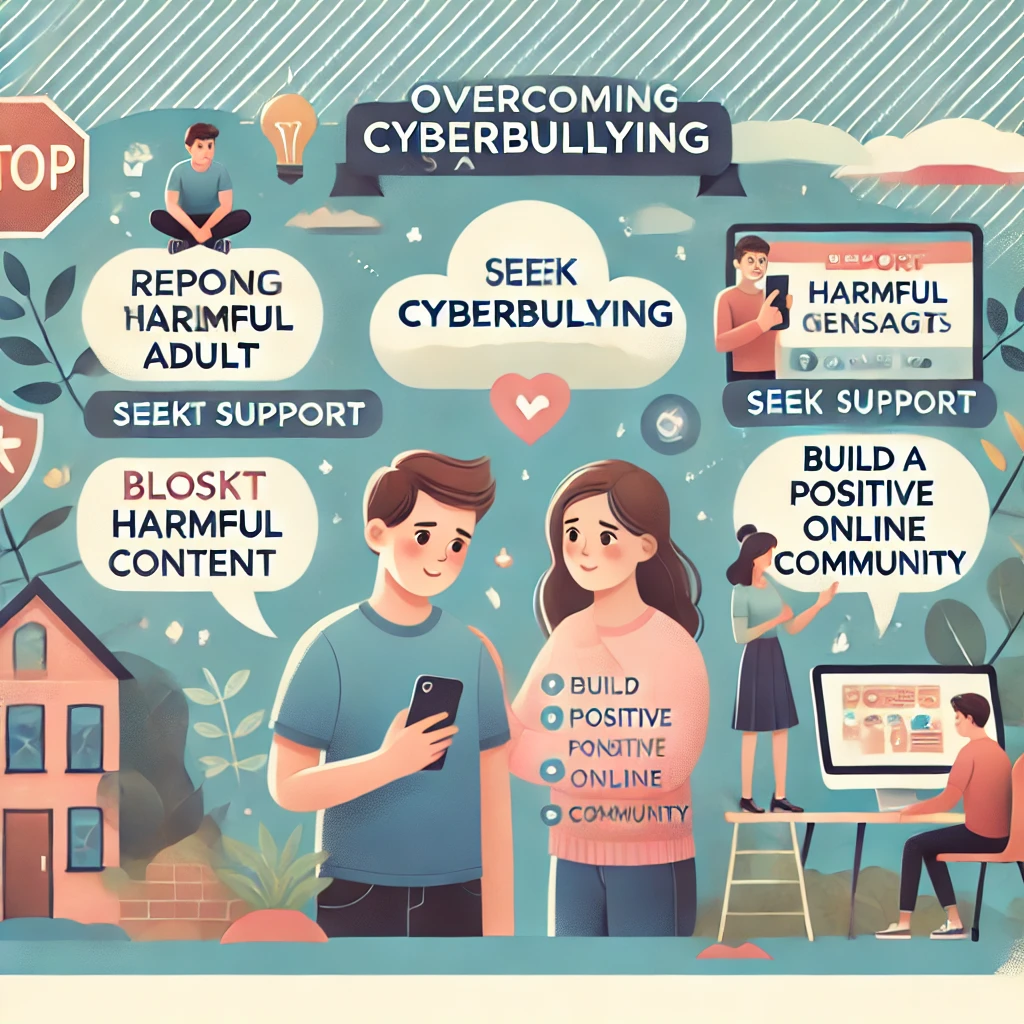
Cyberbullying
Cyberbullying can be a painful and overwhelming experience, but it’s important to remember that you are not alone and there are ways to overcome it. By taking the right steps, you can protect yourself, regain your confidence, and find support to navigate this challenging situation.
1. Recognize Cyberbullying
Why It’s Important:
Understanding what counts as cyberbullying helps you identify and address it effectively.
Examples of Cyberbullying:
- Hurtful messages, comments, or posts online.
- Sharing private information or embarrassing photos without consent.
- Spreading rumors or creating fake profiles to harass someone.
- Excluding someone intentionally in group chats or online platforms.
Tip: Trust your instincts—if an interaction makes you feel uncomfortable or unsafe, it’s worth addressing.
2. Don’t Respond Immediately
Why It’s Important:
Reacting emotionally can escalate the situation or give bullies the attention they want.
How to Handle It:
- Take a deep breath and pause before responding.
- Avoid engaging in arguments or retaliating with similar behavior.
- Block the person if they continue to send harmful messages.
Tip: Remember, not every comment deserves a response—your peace of mind comes first.
3. Save Evidence
Why It’s Important:
Documenting instances of cyberbullying can be crucial for reporting and resolving the issue.
How to Do It:
- Take screenshots of messages, posts, or chats.
- Record dates, times, and platforms where the bullying occurred.
- Save any relevant emails or text messages.
Tip: Store evidence securely in case you need to share it with school authorities or law enforcement.
4. Block and Report the Bully
Why It’s Important:
Blocking limits the bully’s access to you, and reporting ensures their behavior is flagged.
How to Do It:
- Use the “block” feature on social media platforms to prevent further contact.
- Report the abusive account or content to the platform’s moderators.
- Follow the platform’s guidelines for reporting harassment.
Tip: Many platforms allow you to report anonymously, protecting your identity.
5. Talk to a Trusted Adult
Why It’s Important:
Sharing your experience with someone you trust provides emotional support and practical advice.
Who to Turn To:
- Parents or guardians.
- Teachers, school counselors, or coaches.
- Mentors or community leaders.
Tip: Be honest about what’s happening and how it’s affecting you—they are there to help.
6. Strengthen Your Privacy Settings
Why It’s Important:
Limiting who can interact with you online reduces opportunities for cyberbullying.
How to Do It:
- Set your social media profiles to private.
- Restrict who can comment, message, or tag you.
- Regularly review your friend or follower lists and remove unknown or suspicious accounts.
Tip: Use strong passwords and enable two-factor authentication to protect your accounts.
7. Build a Support System
Why It’s Important:
A strong network of friends and family helps you feel less isolated and more empowered.
How to Do It:
- Spend time with positive, supportive friends who uplift you.
- Join clubs, groups, or activities to expand your social circle.
- Talk to peers who may have experienced similar challenges and learn how they handled them.
Tip: Sharing your feelings can be a powerful step toward healing.
8. Focus on Your Strengths and Interests
Why It’s Important:
Building self-esteem and pursuing hobbies helps you feel more in control of your life.
Ideas:
- Engage in activities you enjoy, like art, sports, or music.
- Set personal goals and work toward them to boost confidence.
- Celebrate your achievements, no matter how small.
Tip: Remind yourself that the bully’s behavior reflects their issues, not your worth.
9. Seek Professional Help if Needed
Why It’s Important:
Counselors or therapists can provide tools to cope with the emotional impact of cyberbullying.
How to Find Support:
- Talk to your school counselor about available resources.
- Seek online or community-based support groups for teens.
- Consider therapy to process your feelings and develop coping strategies.
Tip: Reaching out for help is a sign of strength, not weakness.
10. Spread Awareness
Why It’s Important:
Raising awareness about cyberbullying can help create a safer environment for everyone.
How to Do It:
- Share your story (if you’re comfortable) to inspire and support others.
- Participate in anti-cyberbullying campaigns or initiatives.
- Encourage your school to implement anti-bullying policies and workshops.
Tip: Being an advocate for change can empower you and others who are affected.
Final Thoughts
Cyberbullying is a serious issue, but it’s one you can overcome with the right support and strategies. Remember, you are not alone, and there are people and resources ready to help. By taking proactive steps to protect yourself and building resilience, you can rise above the negativity and thrive.
For more tips and resources on handling online challenges, explore helpful guides to empower yourself and others!
Добавить комментарий