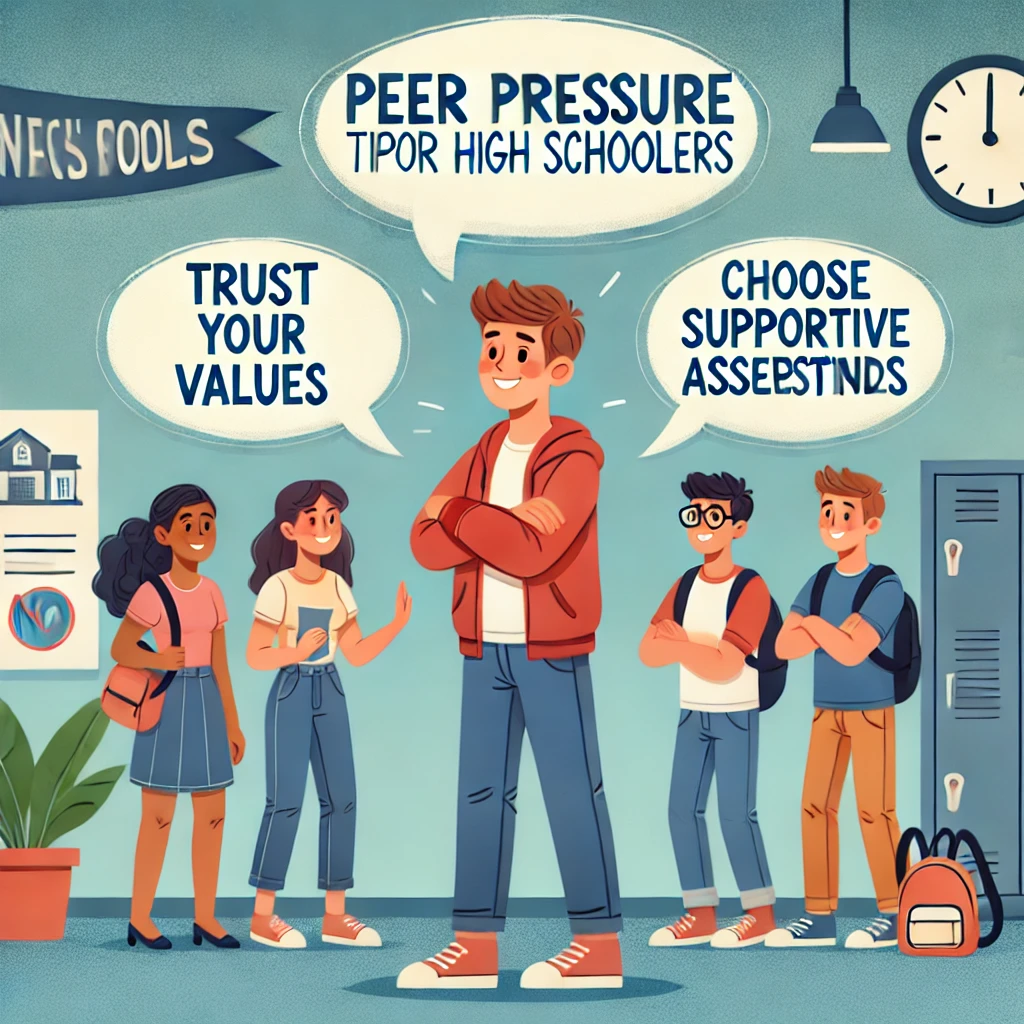
Tips for High Schoolers
Peer pressure is a common experience for high school students, and it can come in both positive and negative forms. Learning how to navigate peer pressure while staying true to yourself is essential for making healthy choices and maintaining self-confidence. Here are practical tips to help high schoolers handle peer pressure effectively.
1. Understand Peer Pressure
Why It’s Important:
Recognizing peer pressure helps you make conscious choices instead of reacting impulsively.
Types of Peer Pressure:
- Direct: Being explicitly asked or pressured to do something.
- Indirect: Feeling the need to fit in by copying others.
- Positive: Encouragement to make good decisions, like studying or joining a club.
- Negative: Pressure to engage in harmful activities, like skipping school or drinking.
Tip: Reflect on how peer pressure affects your decisions and how you feel about them.
2. Build Self-Confidence
Why It’s Important:
When you believe in yourself, it’s easier to resist pressure and stand your ground.
How to Do It:
- Focus on your strengths and achievements.
- Set personal goals and work toward them.
- Surround yourself with supportive friends who respect your values.
Tip: Practice positive self-talk, like reminding yourself, “I have the strength to make my own choices.”
3. Know Your Values and Boundaries
Why It’s Important:
Knowing what you stand for helps you make decisions that align with your beliefs.
How to Do It:
- Think about what’s most important to you, like honesty, safety, or academics.
- Decide ahead of time what behaviors you’re comfortable with and what you’re not.
- Practice saying “no” firmly but politely.
Tip: Write down your values to reinforce them in moments of doubt.
4. Practice Saying “No”
Why It’s Important:
Learning how to say no confidently helps you avoid situations you’re uncomfortable with.
How to Do It:
- Use clear, simple language: “No, I’m not interested,” or “That’s not my thing.”
- Offer an alternative: “Let’s do something else instead.”
- Use humor to deflect pressure: “I’d rather not—I’m saving my energy for something fun later!”
Tip: Practice responses in advance so you’re ready when the moment comes.
5. Choose Friends Wisely
Why It’s Important:
The right friends will respect your decisions and encourage positive choices.
How to Do It:
- Gravitate toward people who share your interests and values.
- Distance yourself from individuals who pressure you to do things you’re uncomfortable with.
- Build relationships with peers who support your goals and inspire you.
Tip: Trust your instincts—if someone makes you feel uneasy, it’s okay to step back.
6. Use the “Buddy System”
Why It’s Important:
Having a trusted friend by your side can make it easier to resist group pressure.
How to Do It:
- Find a friend who shares your values and is willing to support you.
- Make a pact to watch out for each other in social situations.
- Lean on each other for encouragement when facing challenging scenarios.
Tip: Team up with a friend when attending parties or new social events.
7. Delay Your Response
Why It’s Important:
Taking a moment to think prevents you from making rash decisions.
How to Do It:
- Say, “Let me think about it,” or “I’ll get back to you later.”
- Use the time to consider if the action aligns with your values.
- Seek advice from a trusted adult or friend if you’re unsure.
Tip: Pausing can often deflate the immediate pressure from others.
8. Seek Support from Trusted Adults
Why It’s Important:
Talking to someone with experience can provide guidance and reassurance.
How to Do It:
- Share your experiences with a parent, teacher, counselor, or mentor.
- Ask for advice on how to handle specific situations.
- Discuss your feelings and concerns to gain perspective.
Tip: Build a support network you can turn to whenever you face peer pressure.
9. Avoid High-Pressure Situations
Why It’s Important:
Steering clear of risky scenarios reduces the likelihood of being pressured.
How to Do It:
- Avoid places or events where you know negative pressure might occur.
- Have an exit plan, like texting a parent or friend to pick you up if needed.
- Stick with friends who share your boundaries and can help you navigate the situation.
Tip: Trust your instincts—if something feels off, it’s okay to leave.
10. Focus on Long-Term Goals
Why It’s Important:
Keeping your goals in mind helps you resist short-term temptations.
How to Do It:
- Visualize how saying no will benefit you in the future.
- Remind yourself of the consequences of negative actions, like academic or personal setbacks.
- Use your aspirations as motivation to stay true to yourself.
Tip: Write your goals in a journal or on a vision board to keep them front and center.
11. Learn from Mistakes
Why It’s Important:
Making mistakes is part of growing, and each experience teaches valuable lessons.
How to Do It:
- Reflect on situations where you gave in to peer pressure—what would you do differently?
- Forgive yourself and focus on making better choices next time.
- Use setbacks as opportunities to strengthen your resolve.
Tip: Every experience, good or bad, helps you grow stronger and wiser.
Final Thoughts
Peer pressure is a normal part of high school life, but it doesn’t have to control your decisions. By building self-confidence, setting boundaries, and surrounding yourself with supportive friends, you can navigate peer pressure with ease and integrity.
Remember, it’s okay to say no and prioritize your well-being. For more tips and resources on building resilience, explore helpful guides to empower yourself!
Добавить комментарий