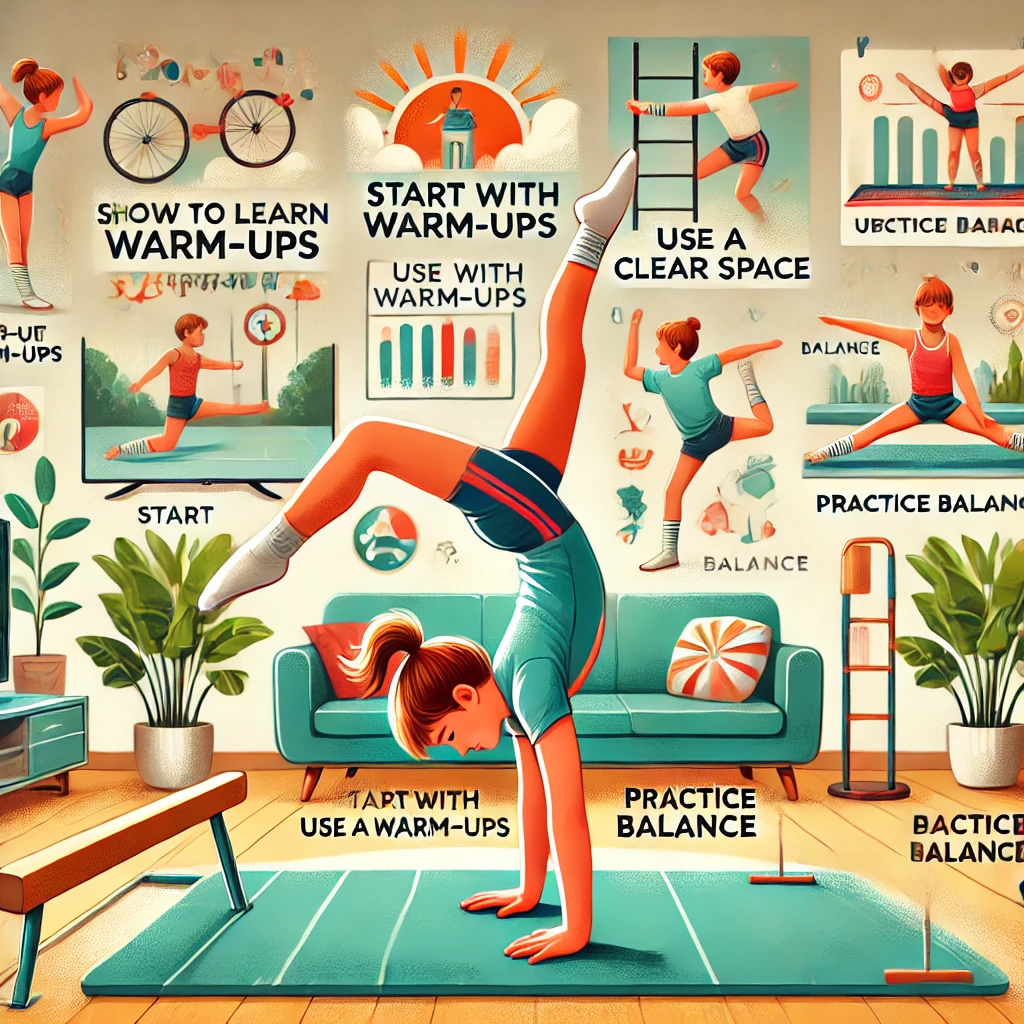
Basic Gymnastic
Learning gymnastics at home can be a fun and rewarding way to build strength, flexibility, and coordination. While advanced moves require professional training, there are plenty of beginner-friendly skills you can practice safely at home. Here’s a guide to help you get started.
1. Prepare Your Space
Why It’s Important:
A safe environment prevents injuries and helps you practice effectively.
How to Do It:
- Clear the Area: Remove furniture, toys, and obstacles from your practice space.
Use Soft Surfaces: Practice on a yoga mat, carpet, or grass to cushion falls.
- Wear Comfortable Clothing: Choose stretchy, fitted clothes to allow free movement.
Tip: Avoid practicing on hard surfaces like tile or concrete.
2. Warm Up Properly
Why It’s Important:
A good warm-up prepares your muscles and reduces the risk of injuries.
Warm-Up Routine:
- Jumping Jacks: 1–2 minutes to increase heart rate.
- Arm Circles: 10–15 forward and backward.
- Leg Swings: Swing each leg forward and backward 10 times.
- Light Jogging: 2–3 minutes to loosen up.
Tip: Spend at least 5–10 minutes warming up before starting gymnastics moves.
3. Improve Your Flexibility
Why It’s Important:
Flexibility is essential for most gymnastics moves.
Stretches to Practice:
- Forward Fold: Reach for your toes while keeping your legs straight.
- Butterfly Stretch: Sit with your feet together and gently press your knees down.
- Bridge Pose: Lie on your back, push your hips up, and arch your back.
- Splits Practice: Stretch your legs into a split position as far as you can without pain.
Tip: Hold each stretch for 20–30 seconds and avoid bouncing.
4. Practice Basic Gymnastics Skills
Why It’s Important:
Starting with simple skills helps you build confidence and strength.
Moves to Learn:
- Forward Roll:
- Squat down and tuck your chin.
- Roll forward over your shoulders and finish in a sitting or standing position.
- Cartwheel:
- Start in a lunge position with your dominant leg forward.
- Place your hands on the ground one at a time and kick your legs over.
- Land with your opposite leg forward.
- Handstand (Against a Wall):
- Face a wall and place your hands on the ground about a foot away.
- Kick your legs up gently to touch the wall for balance.
- Hold the position for a few seconds, then come down safely.
- Bridge:
- Lie on your back with knees bent and feet flat.
- Push through your hands and feet to lift your body into an arch.
- Balance Practice:
- Stand on one foot and hold your arms out for balance.
- Walk heel-to-toe in a straight line to improve stability.
Tip: Take your time with each skill and don’t rush progression.
5. Build Strength for Gymnastics
Why It’s Important:
Strength helps you perform moves more effectively and safely.
Strength Exercises:
- Plank Hold: Hold a plank position for 20–30 seconds.
- Push-Ups: 3 sets of 10–15 reps to build upper body strength.
- Squats: 3 sets of 15 reps to strengthen your legs.
- Superman Hold: Lie on your stomach and lift your arms and legs off the ground, holding for 20 seconds.
Tip: Incorporate strength exercises into your daily routine for faster progress.
6. Work on Balance and Coordination
Why It’s Important:
Balance and coordination are key for performing gymnastics moves with control.
Drills to Try:
- One-Leg Balancing: Stand on one leg for 20–30 seconds, then switch legs.
- Heel Raises: Stand on your toes and lower back down for 10–15 reps.
- Line Walking: Walk in a straight line, focusing on heel-to-toe placement.
Tip: Use a sturdy object for support if needed while practicing balance.
7. Watch Tutorials and Learn from Experts
Why It’s Important:
Seeing demonstrations helps you understand the correct technique.
Where to Look:
- YouTube Channels: Watch beginner-friendly tutorials like those on «Nastya Liukin Gymnastics» or «My Gym Trainer.»
- Apps: Use gymnastics apps like «TrainHeroic» or «Home Gymnastics» for structured guidance.
Tip: Pause and replay videos to study movements carefully.
8. Practice Regularly
Why It’s Important:
Consistency is key to mastering gymnastics skills.
How to Do It:
- Dedicate 3–4 days a week to practice.
- Focus on one or two skills per session to avoid feeling overwhelmed.
- Track your progress to stay motivated.
Tip: Rest on alternate days to let your body recover.
9. Stay Safe While Practicing
Why It’s Important:
Preventing injuries allows you to enjoy gymnastics and progress steadily.
Safety Tips:
- Never force your body into a position—it should feel like a stretch, not pain.
- Have a parent or friend spot you for moves like handstands or cartwheels.
- Use soft mats or cushions to break falls.
Tip: If something feels uncomfortable, stop and revisit it later.
10. Celebrate Small Wins
Why It’s Important:
Acknowledging progress keeps you motivated and excited to continue.
Examples:
- Successfully holding a handstand for 5 seconds.
- Improving flexibility in your splits.
- Completing a smooth forward roll.
Tip: Take photos or videos to see how far you’ve come!
Final Thoughts
Learning basic gymnastics at home is a fun way to stay active and develop new skills. Focus on safety, practice consistently, and enjoy the journey. With patience and effort, you’ll master the basics and set a strong foundation for more advanced moves. Happy flipping!
Добавить комментарий