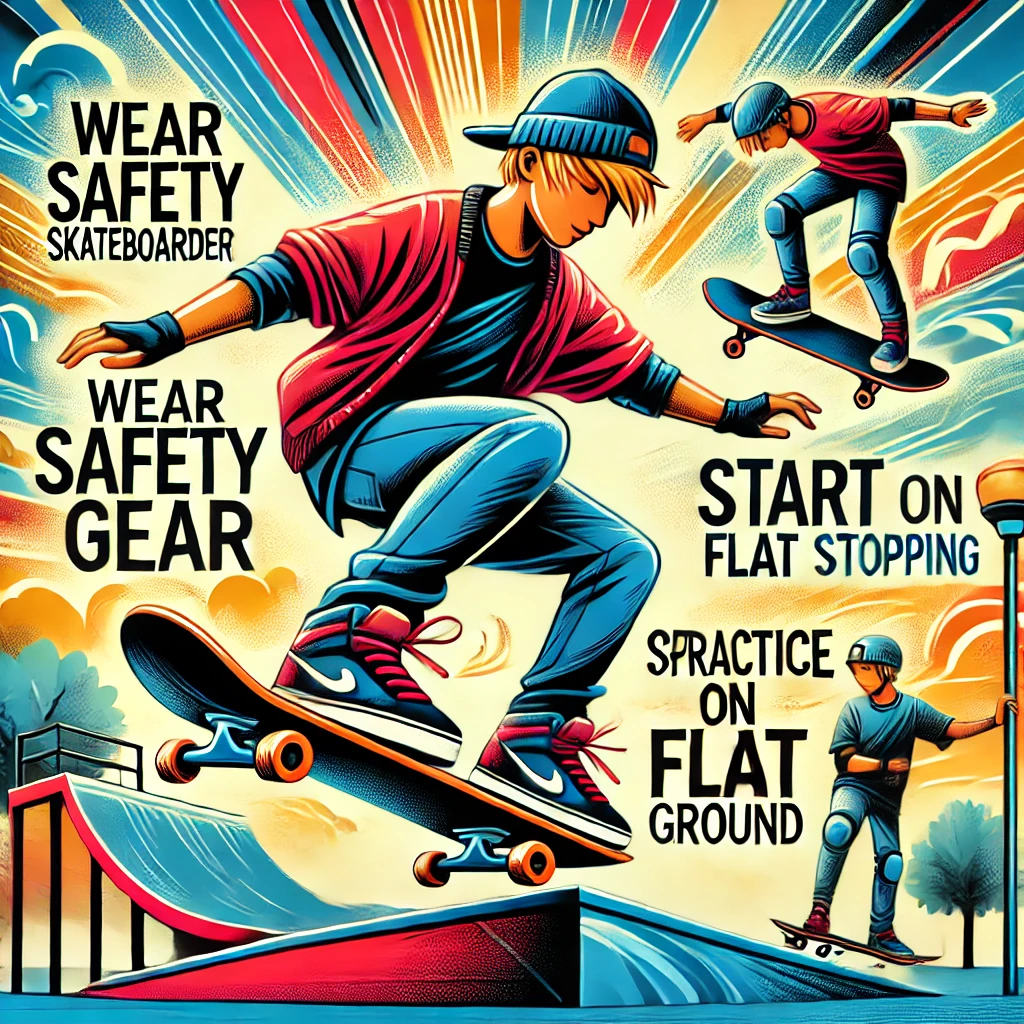
Beginner Skateboarders
Starting skateboarding can be both exciting and challenging. With the right approach and practice, you can quickly build confidence and master the basics. Here are essential tips to help beginners get started on the right foot—literally!
1. Choose the Right Gear
Why It’s Important:
Proper equipment keeps you safe and enhances your learning experience.
What You Need:
- Skateboard: Start with a standard deck (7.5–8 inches wide) for general use.
- Helmet: Protect your head with a well-fitting skate helmet.
- Pads: Use elbow pads, knee pads, and wrist guards to prevent injuries.
- Skate Shoes: Wear flat-soled shoes with good grip, like Vans or Nike SBs.
Tip: Don’t skimp on safety gear—it’s worth the investment.
2. Find the Right Spot to Practice
Why It’s Important:
A smooth, open area allows you to focus on learning without distractions.
Ideal Locations:
- Empty parking lots.
- Smooth sidewalks or driveways.
- Beginner-friendly skateparks with flat areas.
Tip: Avoid busy streets or areas with rough surfaces when starting out.
3. Learn to Balance
Why It’s Important:
Good balance is the foundation of skateboarding.
How to Practice:
- Place your board on a soft surface like grass or carpet to prevent it from rolling.
- Stand on the board with one foot near the front bolts and the other near the back bolts.
- Bend your knees slightly and practice shifting your weight side to side.
Tip: Use a wall or rail for support until you feel comfortable.
4. Find Your Stance
Why It’s Important:
Knowing your natural stance helps you control the board better.
Types of Stances:
- Regular: Left foot in front and right foot at the back.
- Goofy: Right foot in front and left foot at the back.
Test Your Stance:
- Stand naturally on the board and see which foot feels more comfortable in the front.
- Push yourself gently from behind—whichever foot you put forward to catch yourself is likely your front foot.
5. Master Pushing and Stopping
Why It’s Important:
Pushing propels you forward, and stopping keeps you safe.
How to Push:
- Place your front foot on the board near the front bolts.
- Use your back foot to push off the ground.
- Place your back foot on the board once you gain momentum.
How to Stop:
- Foot Brake: Drag your back foot on the ground gently to slow down.
- Heel Drag: Let the heel of your back foot touch the ground while still on the board.
Tip: Start slowly and practice stopping often.
6. Get Comfortable Turning
Why It’s Important:
Turning helps you navigate and control your direction.
How to Turn:
- Lean Turns: Shift your weight toward your toes or heels to tilt the board and turn.
- Kick Turns: Place your back foot on the tail of the board, lift the front wheels, and pivot in the desired direction.
Tip: Practice lean turns first, then move to kick turns as you gain confidence.
7. Practice Falling Safely
Why It’s Important:
Learning how to fall minimizes injuries.
How to Fall Safely:
- Roll: Try to roll when you hit the ground to reduce impact.
- Use Pads: Let your knee or elbow pads absorb the fall.
- Avoid Stiff Arms: Don’t brace yourself with straight arms; it increases the risk of wrist injuries.
Tip: Accept that falling is part of the learning process—it’s okay to stumble!
8. Build Your Confidence with Simple Tricks
Why It’s Important:
Small achievements keep you motivated and make learning fun.
Beginner Tricks:
- Ollie (Jumping): A simple pop-and-jump move to get the board off the ground.
- Manual (Wheelie): Balance on the back wheels while moving forward.
- Kickturn: Lift the front wheels and pivot to change direction.
Tip: Master the basics before attempting more advanced tricks.
9. Watch and Learn from Others
Why It’s Important:
Seeing techniques in action helps you understand how to perform them.
How to Learn:
- Watch tutorials on YouTube (e.g., Braille Skateboarding, Aaron Kyro).
- Observe experienced skaters at skateparks.
- Ask for tips from friends or other skaters.
Tip: Don’t compare yourself to advanced skaters—everyone starts somewhere!
10. Stay Consistent and Have Fun
Why It’s Important:
Regular practice is the key to improvement, and fun keeps you motivated.
Tips:
- Set aside time each week to practice.
- Celebrate small wins, like riding confidently or completing a turn.
- Experiment with different styles and tricks to find what you enjoy.
Tip: Don’t be too hard on yourself—progress takes time and persistence.
Sample Practice Routine
- Warm-Up (5 Minutes): Stretch and practice balancing on the board.
- Pushing Practice (10 Minutes): Focus on smooth pushes and stopping techniques.
- Turning Practice (10 Minutes): Try lean turns and basic kick turns.
- Trick Practice (5 Minutes): Work on a simple trick like the manual or ollie.
Final Thoughts
Skateboarding is all about
practice, patience, and having fun. As a beginner, focus on building confidence with the basics before moving on to advanced tricks. Stay consistent, wear protective gear, and enjoy the thrill of riding!
Добавить комментарий