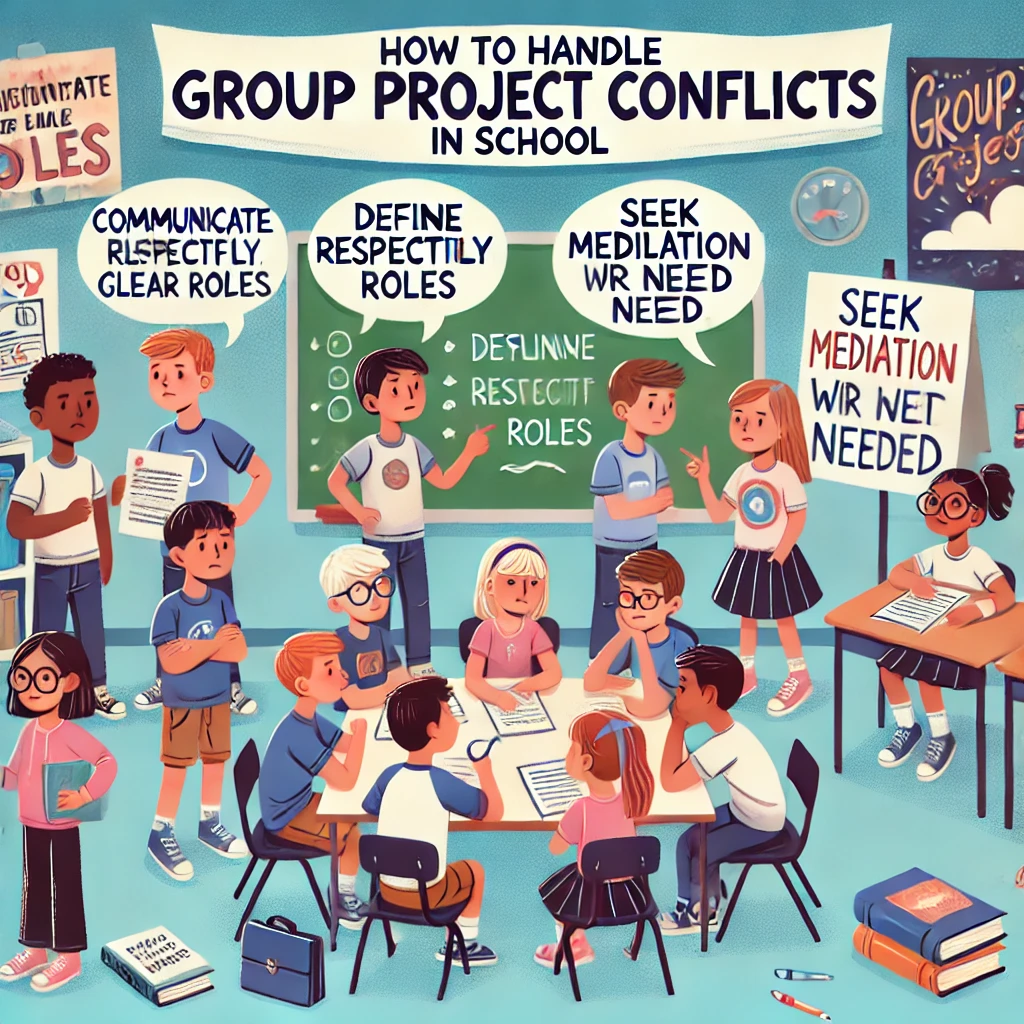
Project Conflicts
Group projects are a great way to learn collaboration and teamwork, but they can also bring conflicts when members have different ideas, work styles, or levels of effort. Handling these conflicts effectively ensures a smoother experience and better results. Here’s how to manage group project conflicts at school.
1. Identify the Root of the Conflict
Why It Helps:
Understanding the source of the problem is the first step to resolving it.
How to Do It:
- Observe the situation to see if the conflict stems from communication issues, unequal work distribution, or personality clashes.
- Talk to group members individually or as a team to hear their perspectives.
- Avoid jumping to conclusions—focus on facts, not assumptions.
Tip: Keep the discussion neutral and avoid blaming anyone during this step.
2. Communicate Openly and Respectfully
Why It Helps:
Clear and respectful communication prevents misunderstandings and helps resolve disagreements.
How to Do It:
- Use “I” statements, like “I feel frustrated when deadlines aren’t met,” instead of blaming others.
- Listen actively to each group member’s concerns and acknowledge their points.
- Stay calm, even if tensions rise, to keep the conversation productive.
Tip: Avoid discussing issues through texts or emails; face-to-face or virtual meetings are better for clarity.
3. Establish Clear Roles and Responsibilities
Why It Helps:
Assigning specific tasks ensures accountability and reduces confusion.
How to Do It:
- Break the project into smaller tasks and assign them based on each member’s strengths and interests.
- Write down who is responsible for what and set deadlines for each task.
- Use tools like Google Docs, Trello, or a shared calendar to track progress.
Tip: Rotate responsibilities if one person feels stuck with repetitive or unfair tasks.
4. Set Ground Rules for Collaboration
Why It Helps:
Rules create structure and prevent conflicts from escalating.
How to Do It:
- Agree on rules like respecting everyone’s input, meeting deadlines, and staying focused during discussions.
- Decide how you’ll handle disputes, such as voting or discussing solutions together.
- Revisit the rules if new conflicts arise or the group dynamics change.
Tip: Keep rules simple and focus on teamwork, respect, and accountability.
5. Manage Unequal Workloads
Why It Helps:
Conflicts often arise when some members feel they’re doing more than others.
How to Do It:
- Have an open discussion about the workload and redistribute tasks if necessary.
- Set up regular check-ins to review everyone’s progress.
- If a member is consistently not contributing, let them know how their behavior impacts the group.
Tip: In extreme cases, inform the teacher if one person refuses to participate despite multiple attempts to involve them.
6. Compromise When Disagreements Arise
Why It Helps:
Compromise ensures everyone feels heard and helps the group move forward.
How to Do It:
- List the pros and cons of each option when there’s a disagreement on ideas.
- Combine different suggestions into one solution if possible.
- Take a vote if the group can’t agree after discussing all options.
Tip: Focus on the project’s success rather than individual preferences.
7. Stay Focused on the Goal
Why It Helps:
Shifting attention back to the project’s objectives minimizes personal conflicts.
How to Do It:
- Remind the group of the overall goal and the deadline.
- Emphasize how resolving conflicts will improve the final outcome.
- Encourage a solution-oriented mindset rather than dwelling on problems.
Tip: Use phrases like, “Let’s focus on how we can get this done” to redirect the group.
8. Seek Help from a Teacher When Necessary
Why It Helps:
If conflicts persist, a teacher can provide guidance and mediate the situation.
How to Do It:
- Approach your teacher with specific examples of the conflict and your attempts to resolve it.
- Ask for advice on how to improve group dynamics or adjust workloads.
- Be open to suggestions and implement the teacher’s recommendations as a group.
Tip: Avoid using the teacher as the first resort; try resolving the issue within the group first.
9. Reflect on the Experience
Why It Helps:
Reflecting helps you learn from the conflict and improve teamwork skills for future projects.
How to Do It:
- After the project ends, discuss what went well and what could have been handled better.
- Identify personal contributions to the conflict and areas for improvement.
- Apply these lessons to future group projects to avoid repeating mistakes.
Tip: Keep notes on what worked and didn’t work for reference in future collaborations.
Conflict Resolution Cheat Sheet
| Step | Action |
|---|---|
| Identify the conflict | Understand the root cause of disagreements. |
| Communicate openly | Share concerns respectfully and listen actively. |
| Define roles | Assign tasks to ensure fairness and accountability. |
| Compromise | Find middle ground for disagreements. |
| Involve a teacher | Seek help if the conflict remains unresolved. |
Final Thoughts
Conflicts in group projects are natural, but handling them effectively can lead to better teamwork and outcomes. By staying respectful, focusing on the goal, and being willing to compromise, you can turn challenges into opportunities for growth.
For more tips on collaboration and academic success, explore helpful resources and build stronger group dynamics today!
Добавить комментарий