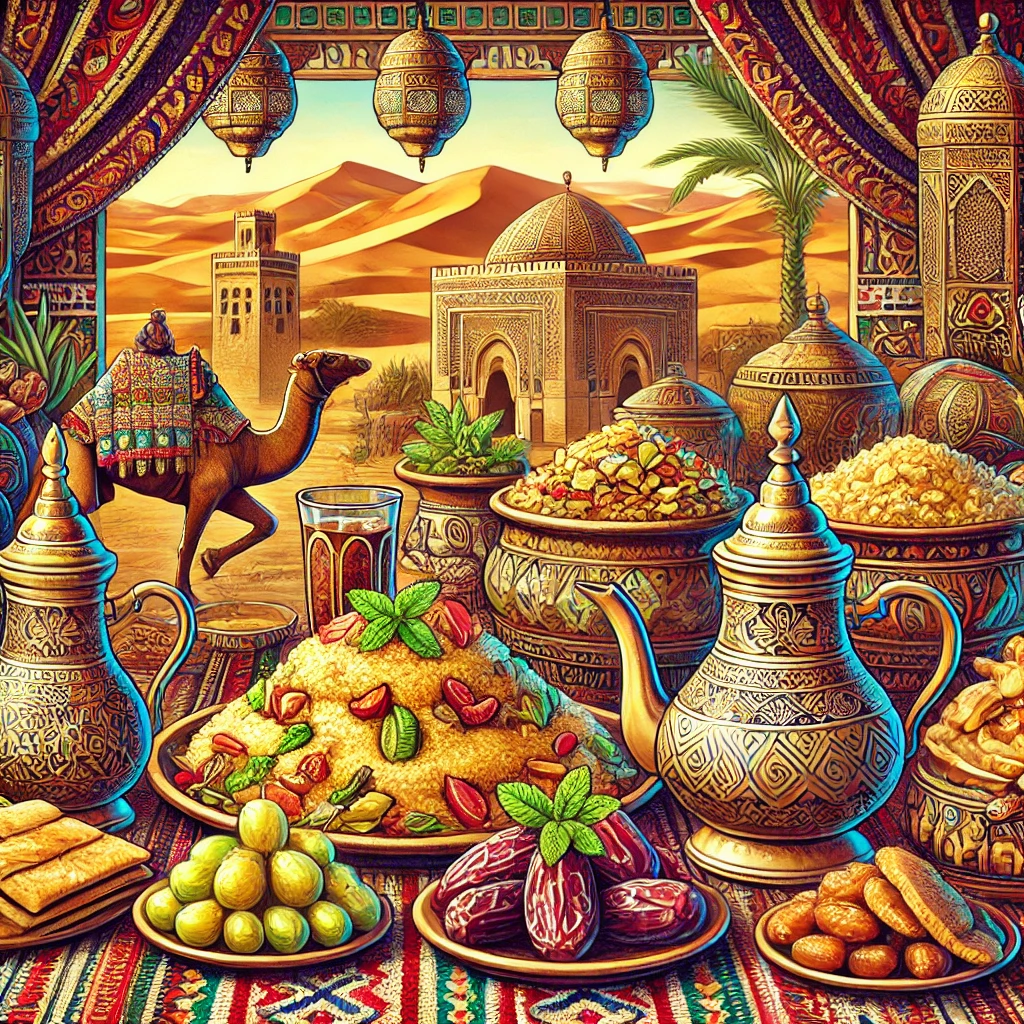
Desert Cuisine of Algeria
Algeria’s desert regions, dominated by the vast and captivating Sahara, are home to a unique culinary tradition shaped by the arid climate and the nomadic lifestyle of its people. The desert cuisine of Algeria is a rich blend of simplicity and resourcefulness, relying on staple ingredients and ancient cooking techniques passed down through generations. Here’s a closer look at the flavors and dishes that define this fascinating aspect of Algerian gastronomy.
1. Staple Ingredients
In the desert, food resources are often scarce, so the cuisine revolves around a few key staples that are both durable and versatile:
- Grains: Wheat and barley are central to many dishes, used in bread, couscous, and porridge.
- Dates: Known as “the bread of the desert,” dates are a vital source of nutrition and energy, often eaten fresh or dried.
- Meat: Lamb, goat, and camel are commonly used, providing essential protein. Meat is often preserved through drying techniques like kaddid to ensure its longevity.
- Milk: Camel and goat milk are dietary staples, consumed fresh or used to make cheese and yogurt.
2. Traditional Dishes
The dishes of Algeria’s desert regions are designed to sustain and nourish, yet they’re full of flavor and tradition. Here are some standout examples:
- Kesra: This flatbread, made from semolina flour, is a cornerstone of desert cuisine. It’s baked over an open flame or in a clay oven and served with olive oil, honey, or date syrup.
- Couscous: While couscous is a national dish throughout Algeria, desert versions often include dried meats, hearty vegetables like pumpkin, and a generous topping of spiced broth.
- Mechoui: This dish involves roasting a whole lamb over an open fire, a method perfect for communal meals in the desert. The meat is seasoned with simple spices like cumin, salt, and pepper to highlight its natural flavor.
- Tamina: A dessert made from semolina, honey, and butter, Tamina is often prepared for celebrations or as a comforting treat in harsh conditions.
- Camel Milk Dishes: Camel milk, prized for its nutritional value, is used in beverages and fermented to create thick, tangy yogurt.
3. Cooking Methods
The harsh desert environment requires innovative cooking techniques. Nomadic communities traditionally cook over open flames or bury pots in hot sand to create slow-cooked, flavorful meals. Clay tagines are also used to trap moisture and infuse food with rich, earthy flavors.
4. Cultural Significance
Food in the desert is more than sustenance; it reflects hospitality and tradition. Sharing a meal is a sacred act, with families and guests gathering around a communal dish, such as couscous or mechoui. Tea, often prepared with mint and poured from high above the glass, is a symbolic gesture of welcome and togetherness.
5. Sustainability and Adaptability
Desert cuisine embodies sustainability, with a deep respect for ingredients and minimal waste. For instance, every part of an animal is used, and food preservation methods like drying and salting are essential for survival in such extreme conditions.
Conclusion
The desert cuisine of Algeria is a testament to resilience and creativity, rooted in centuries of adaptation to one of the world’s harshest environments. Each bite tells a story of tradition, survival, and community. Whether it’s a piece of freshly baked kesra or a sweet date plucked from a palm tree, the flavors of the desert reflect the heart of Algerian culture.
For more tips on improving your photography and editing skills, check out helpful guides to take your selfies to the next level.
Добавить комментарий