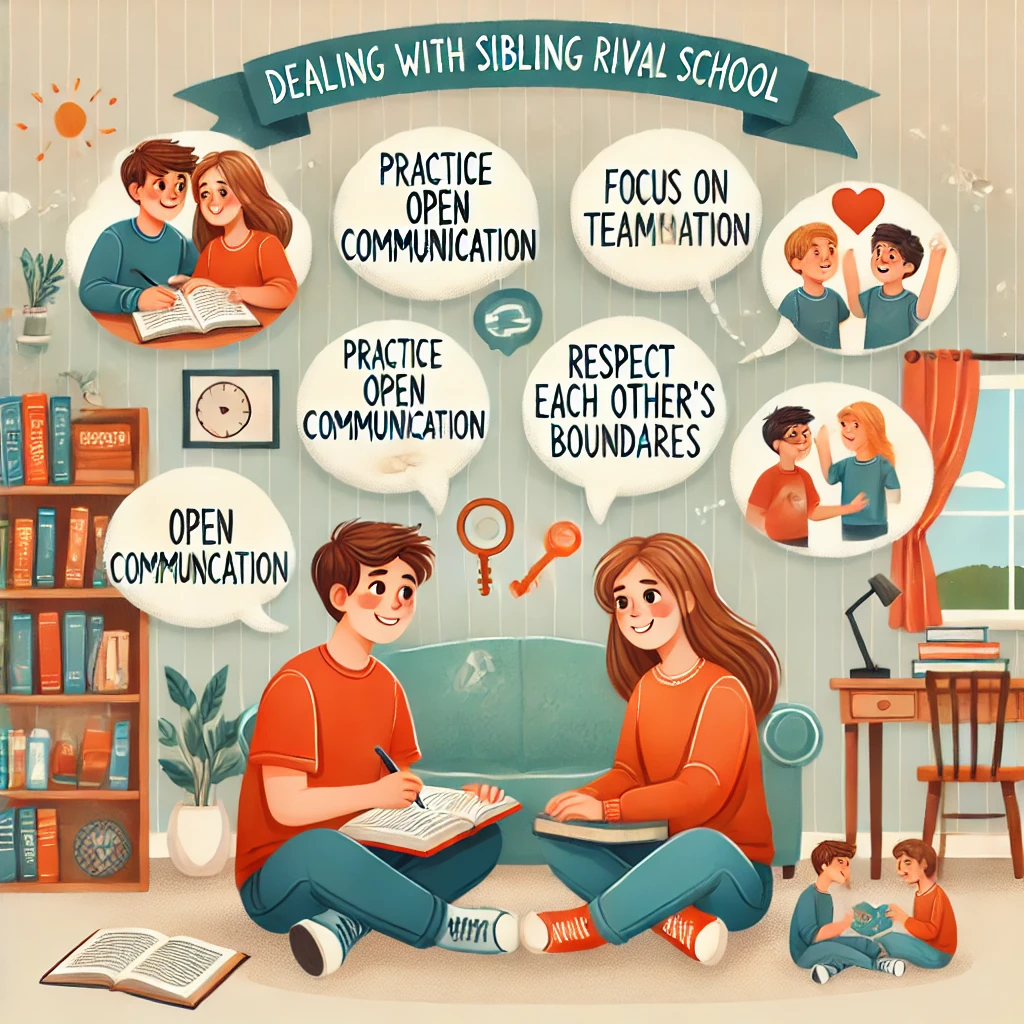
Rivalry in High School
Sibling rivalry is a common challenge, especially during high school, when academic, social, and personal pressures are at their peak. The good news is that rivalry doesn’t have to define your relationship. With some strategies and communication, you can manage conflicts and build a stronger bond with your siblings.
1. Understand the Root of the Rivalry
Why It Helps:
Knowing why conflicts arise makes it easier to address them.
How to Do It:
- Reflect on potential triggers, such as competition for attention, comparisons, or differences in interests.
- Acknowledge external pressures, like parental expectations or school stress, that may exacerbate tension.
- Discuss feelings with your sibling to better understand their perspective.
Tip: Avoid assuming the worst intentions; rivalry often stems from misunderstandings.
2. Avoid Comparisons
Why It Helps:
Comparisons between siblings can intensify feelings of jealousy or inadequacy.
How to Do It:
- Focus on your unique strengths rather than competing with your sibling.
- Encourage your parents to celebrate each child’s achievements without comparing.
- Compliment your sibling’s talents to create a positive atmosphere.
Tip: Remember that you’re both on different paths, and success looks different for everyone.
3. Communicate Openly and Respectfully
Why It Helps:
Clear communication prevents small disagreements from escalating into bigger conflicts.
How to Do It:
- Use “I” statements to express your feelings without blaming (e.g., “I feel upset when…”).
- Listen actively to your sibling’s concerns without interrupting.
- Discuss issues calmly rather than arguing in the heat of the moment.
Tip: Set aside time to talk when you’re both relaxed and open to resolving issues.
4. Set Boundaries
Why It Helps:
Healthy boundaries reduce tension and respect personal space.
How to Do It:
- Agree on rules for shared spaces, such as bedrooms or study areas.
- Respect each other’s privacy by asking before borrowing items or entering their space.
- Create a mutual understanding of limits, like when it’s okay to joke and when it’s not.
Tip: Boundaries help both siblings feel valued and respected.
5. Celebrate Each Other’s Successes
Why It Helps:
Acknowledging your sibling’s achievements reduces rivalry and fosters support.
How to Do It:
- Congratulate your sibling on their successes, no matter how big or small.
- Offer to help them prepare for important events, like tests or performances.
- Share your pride in their accomplishments with others.
Tip: A supportive sibling relationship benefits both of you in the long run.
6. Spend Quality Time Together
Why It Helps:
Positive shared experiences strengthen your bond and reduce competition.
How to Do It:
- Plan activities you both enjoy, like watching movies, playing games, or cooking.
- Use family outings or holidays as opportunities to connect without focusing on rivalry.
- Share inside jokes or memories to reinforce your unique connection.
Tip: Balancing fun and serious moments helps build a well-rounded relationship.
7. Avoid Involving Parents in Every Disagreement
Why It Helps:
Solving conflicts on your own builds maturity and mutual respect.
How to Do It:
- Try to work out disagreements directly with your sibling before involving parents.
- Focus on compromise rather than “winning” the argument.
- Seek parental guidance only when the issue is serious or can’t be resolved alone.
Tip: Handling conflicts independently shows both maturity and responsibility.
8. Focus on Teamwork, Not Competition
Why It Helps:
Working together toward common goals strengthens your relationship.
How to Do It:
- Collaborate on family chores, school projects, or hobbies.
- Share advice or tips to help each other succeed academically or socially.
- Cheer each other on during school events or extracurricular activities.
Tip: Treat your sibling as an ally rather than a rival.
9. Manage Your Stress Levels
Why It Helps:
Reducing personal stress helps you respond more calmly during conflicts.
How to Do It:
- Practice relaxation techniques like deep breathing or journaling.
- Maintain a healthy balance between schoolwork, friends, and family time.
- Recognize when your frustrations are unrelated to your sibling and avoid taking them out on them.
Tip: A calm and collected mindset can de-escalate most disagreements.
10. Seek Outside Support if Needed
Why It Helps:
An external perspective can help you and your sibling navigate persistent challenges.
How to Do It:
- Talk to a trusted friend, teacher, or counselor about your feelings.
- Consider family counseling if rivalry is affecting your household’s overall harmony.
- Join a peer group to gain insights into managing sibling relationships.
Tip: Professional advice can provide strategies tailored to your unique situation.
Final Thoughts
Sibling rivalry in high school is natural but manageable. By communicating openly, setting boundaries, and celebrating each other’s successes, you can foster a healthier and more supportive relationship. Remember, your sibling is likely one of your longest-lasting relationships—investing in it now can lead to a lifetime of mutual support and friendship.
For more tips on managing relationships and personal growth, explore helpful guides to strengthen your connections!
Добавить комментарий