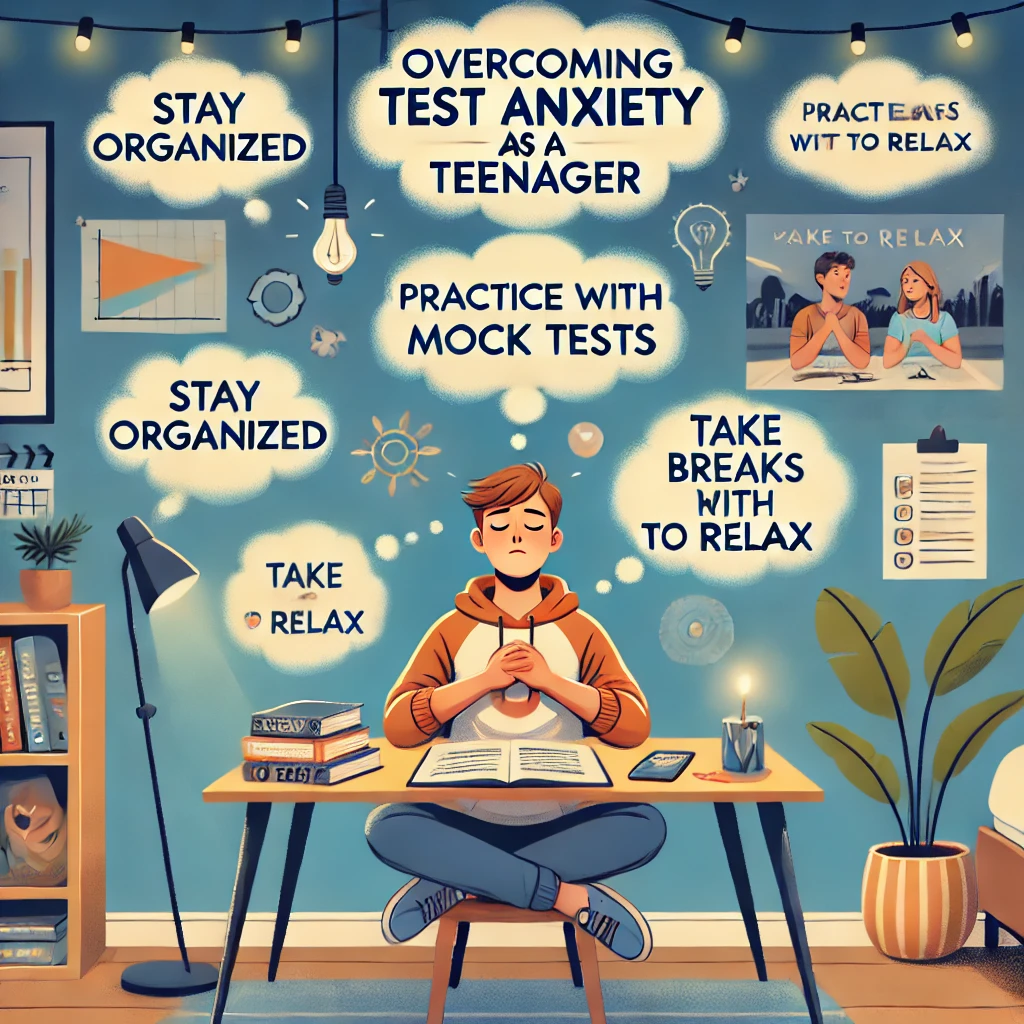
Test as a Teenager
Test anxiety can feel overwhelming, but with the right strategies, you can take control and perform your best. Whether it’s a quiz, midterm, or standardized test, these tips can help you manage your nerves and build confidence.
1. Understand What Test Anxiety Is
Why It Helps:
Knowing the cause of your anxiety makes it easier to address.
How to Do It:
- Recognize the symptoms, like sweating, racing thoughts, or feeling blank.
- Understand that anxiety is a natural response to stress, but it can be managed.
- Reflect on specific fears, like forgetting material or disappointing others.
Tip: Write down your concerns to identify what’s triggering your anxiety.
2. Prepare Thoroughly
Why It Helps:
Feeling confident in your knowledge reduces worry about being unprepared.
How to Do It:
- Create a study schedule and stick to it, starting well before the test.
- Use active learning techniques, like summarizing notes, teaching others, or practicing problems.
- Take practice tests under timed conditions to simulate the real experience.
Tip: Focus on understanding concepts rather than memorizing facts.
3. Develop Relaxation Techniques
Why It Helps:
Calming your body and mind reduces physical symptoms of anxiety.
How to Do It:
- Practice deep breathing: inhale for 4 seconds, hold for 4 seconds, and exhale for 4 seconds.
- Try progressive muscle relaxation by tensing and releasing different muscle groups.
- Use mindfulness or meditation apps like Calm or Headspace to stay grounded.
Tip: Spend a few minutes relaxing before starting your test.
4. Focus on Positive Self-Talk
Why It Helps:
Reframing negative thoughts builds confidence and reduces self-doubt.
How to Do It:
- Replace “I’m going to fail” with “I’ve prepared, and I’ll do my best.”
- Write affirmations like, “I am capable and ready,” and repeat them to yourself.
- Remind yourself that one test does not define your worth or abilities.
Tip: Keep a list of encouraging phrases to review when feeling anxious.
5. Use Time Management During the Test
Why It Helps:
Having a plan for the test day helps you stay calm and focused.
How to Do It:
- Skim through the test to understand its structure and prioritize easier questions.
- Allocate time for each section, leaving room to review your answers.
- Skip questions that stump you and return to them later to maintain momentum.
Tip: Bring a watch to track time without relying on the clock in the room.
6. Practice Healthy Lifestyle Habits
Why It Helps:
Good physical health supports mental clarity and reduces stress.
How to Do It:
- Get 7–9 hours of sleep each night, especially before the test.
- Eat a balanced diet with brain-boosting foods like fruits, nuts, and whole grains.
- Stay active with regular exercise, like walking, swimming, or yoga.
Tip: Avoid caffeine or sugary snacks before the test, as they can increase jitters.
7. Visualize Success
Why It Helps:
Imagining a positive outcome boosts confidence and reduces fear.
How to Do It:
- Close your eyes and picture yourself calmly taking the test and answering questions correctly.
- Visualize walking out of the test feeling proud of your effort.
- Repeat this exercise daily leading up to the test.
Tip: Pair visualization with relaxation techniques for maximum effect.
8. Manage Your Environment on Test Day
Why It Helps:
A comfortable and prepared setup helps you focus and stay calm.
How to Do It:
- Arrive early to avoid rushing and choose a seat where you feel comfortable.
- Bring all necessary supplies, like pencils, a calculator, and water.
- Wear layers so you can adjust to the room’s temperature.
Tip: Avoid discussing the test with classmates right before it starts to stay focused.
9. Accept Imperfection
Why It Helps:
Letting go of the need to be perfect reduces pressure and allows you to perform better.
How to Do It:
- Acknowledge that mistakes are a natural part of learning.
- Focus on doing your best rather than achieving a perfect score.
- Learn from each test to improve for the next one.
Tip: Celebrate effort over results to build resilience and self-esteem.
10. Seek Support if Needed
Why It Helps:
Talking to someone about your anxiety can provide relief and perspective.
How to Do It:
- Share your feelings with a trusted friend, family member, or teacher.
- Join a study group to feel more prepared and supported.
- Reach out to a school counselor or therapist for professional strategies if anxiety persists.
Tip: Remember, asking for help is a sign of strength, not weakness.
Final Thoughts
Overcoming test anxiety as a teenager takes practice, but with preparation, relaxation techniques, and a positive mindset, you can manage your nerves and perform your best. Remember, one test doesn’t define your future—progress and effort matter most.
For more tips and tools to conquer test anxiety, explore helpful resources and start building confidence today!
Добавить комментарий