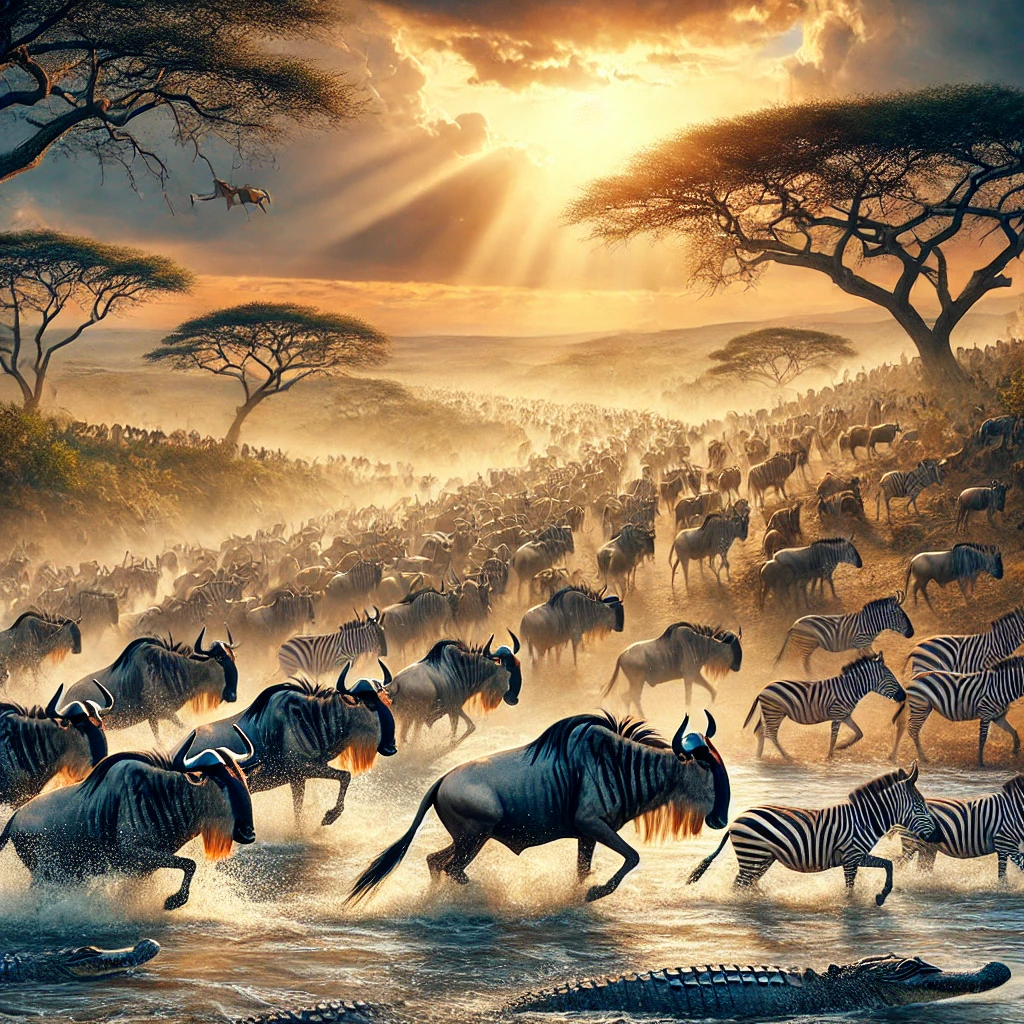
Wildlife Migration in Serengeti
The Great Migration in the Serengeti is one of the most spectacular wildlife events on Earth. Each year, over 1.5 million wildebeest, accompanied by zebras, gazelles, and other herbivores, embark on a circular journey of nearly 1,200 miles across the Serengeti-Mara ecosystem in search of fresh grazing lands. This natural phenomenon, driven by rainfall and food availability, is also one of the most dramatic survival stories, as predators and river crossings add to the peril of the journey.
1. The Migration Cycle: A Year-Round Journey
The Great Migration follows a predictable annual cycle, passing through different regions of Tanzania’s Serengeti National Park and Kenya’s Maasai Mara Reserve.
A. January – March: Calving Season (Southern Serengeti & Ndutu Plains)
- Around 500,000 wildebeest calves are born within a few weeks in February, providing an easy target for lions, cheetahs, and hyenas.
- The short grass plains of Ndutu and the Ngorongoro Conservation Area offer abundant grazing, making it a prime birthing ground.
B. April – May: Movement Toward Central Serengeti
- As the dry season begins, the herds start moving north toward the Seronera Valley and Western Corridor, where they encounter wooded savannas and more predators.
- This is the rutting season, when male wildebeest engage in dramatic battles for dominance.
C. June – July: Grumeti River Crossing & Entry into the Northern Serengeti
- The herds reach the Grumeti River, their first major obstacle, where crocodiles lie in wait.
- Many animals perish in these crossings, but survivors continue their journey toward Kenya’s Maasai Mara.
D. August – October: Mara River Crossing & Maasai Mara Grazing
- The famous Mara River crossing is the most dramatic part of the migration, as thousands of wildebeest leap into crocodile-infested waters.
- The surviving herds enjoy lush grazing lands in the Maasai Mara before the journey reverses.
E. November – December: Return to the Serengeti
- The short rains begin, prompting the herds to move south back into Tanzania.
- By December, they reach the Ndutu Plains, completing the cycle.
2. Key Animals in the Migration
While wildebeest dominate the migration, they are accompanied by:
- 200,000 zebras, which help lead the herds to fresh pastures.
- 500,000 gazelles, which follow behind the larger herbivores.
- Lions, cheetahs, leopards, and hyenas, which hunt the migrating animals.
- Crocodiles, which ambush wildebeest during river crossings.
3. Best Time to See the Migration
- Calving Season (January–March): Best for witnessing newborn wildebeest and predator activity.
- Grumeti River Crossings (June–July): Great for dramatic wildlife action.
- Mara River Crossings (August–October): Most thrilling part of the migration.
4. Conservation Challenges & Efforts
Despite its grandeur, the Great Migration faces threats from:
- Climate change, affecting rainfall patterns and grass growth.
- Poaching and habitat loss due to human expansion.
- Fencing and infrastructure, which can disrupt migration routes.
Conservationists and park authorities are working to maintain protected corridors and promote sustainable tourism.
Conclusion
The Great Migration in the Serengeti is an awe-inspiring natural event that showcases the resilience of wildlife. Whether witnessing the thrilling river crossings or the tender moments of calving season, this annual journey is one of the greatest spectacles in the animal kingdom.
For more tips on improving your photography and editing skills, check out helpful guides to take your selfies to the next level.
Добавить комментарий