Why Is Wi-Fi So Slow in the US?
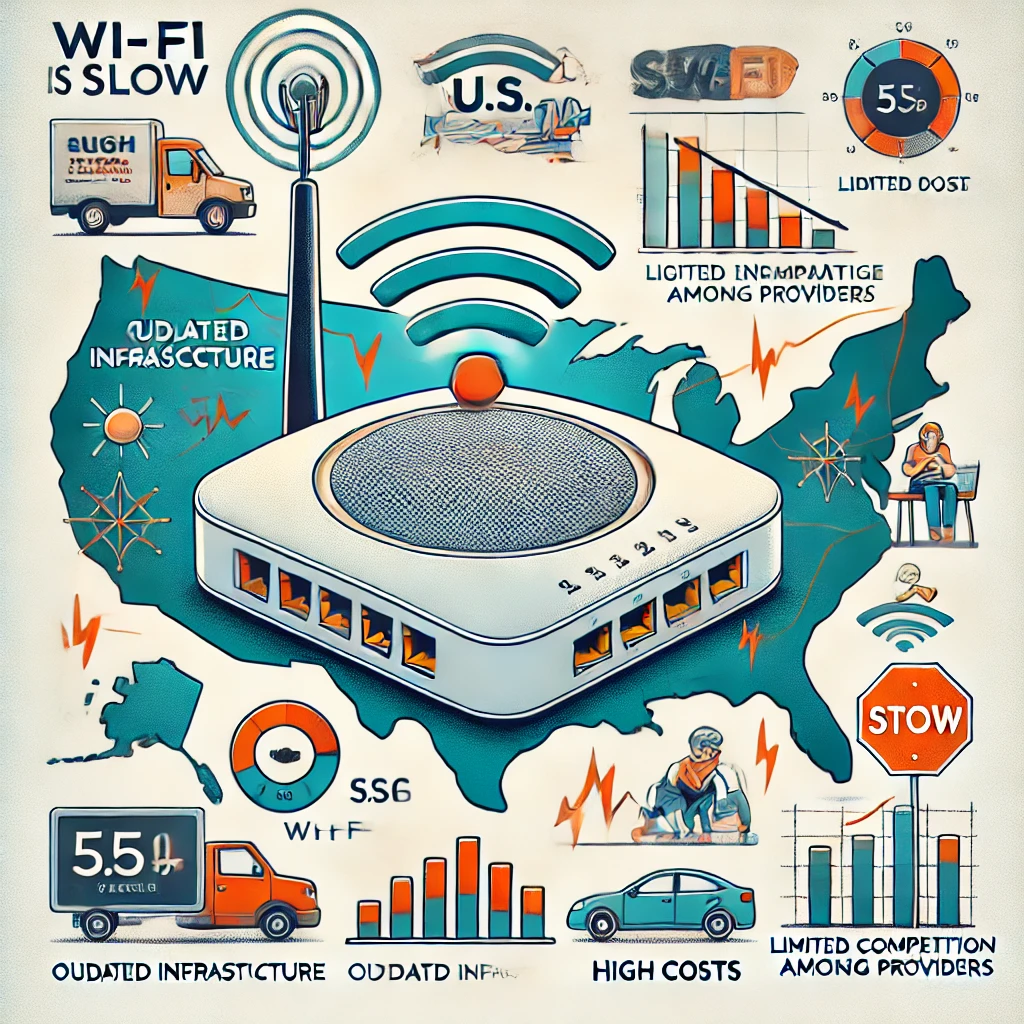
If you’ve ever been frustrated by slow internet speeds in the United States, you’re not alone. Despite being a global tech leader, the US often lags behind other developed countries in terms of Wi-Fi speeds and broadband performance. But why is this the case? Let’s explore the key reasons why Wi-Fi in the US can be so slow and what contributes to the inconsistency in internet quality across the country.
1. Lack of Competition Among Internet Providers
One of the biggest reasons for slow Wi-Fi in the US is the limited competition in the broadband market.
- Monopolies and Duopolies: In many areas, only one or two internet service providers (ISPs) dominate the market, leaving consumers with little choice.
- Impact on Prices and Quality: With limited competition, ISPs have less incentive to invest in infrastructure or improve speeds, yet they continue to charge high prices.
- Urban vs. Rural Divide: Urban areas may have multiple ISPs, but rural areas often have only one option, leading to slower speeds and outdated technology.
2. Outdated Infrastructure
The US relies heavily on older infrastructure, particularly in less populated areas.
- DSL and Copper Wiring: Many rural and suburban areas still use older DSL lines or copper wiring instead of modern fiber-optic cables, resulting in slower speeds.
- Lack of Fiber Coverage: While fiber-optic internet can provide speeds up to 1 Gbps or higher, its rollout has been limited, with coverage concentrated in major cities.
- Cost of Upgrades: ISPs often hesitate to invest in upgrading infrastructure in areas with fewer customers due to the high costs involved.
3. Geographic Challenges
The sheer size of the United States poses logistical challenges for delivering high-speed internet to everyone.
- Rural Areas: Sparse populations in rural regions make it expensive for ISPs to build infrastructure, resulting in slower speeds compared to urban areas.
- Long Distances: Data has to travel over long distances in some parts of the country, which can slow down connection speeds.
- Terrain: Remote areas with mountainous or difficult terrain make installing and maintaining infrastructure even more challenging.
4. Expensive Internet Costs
While slow internet speeds are frustrating, many Americans also pay more for internet compared to other countries.
- High Prices: The US has some of the highest internet prices globally, averaging about $61 per month compared to $35-$40 per month in Europe.
- Speed vs. Cost: Even when customers pay for higher-tier plans, they often don’t get the advertised speeds due to network congestion or poor infrastructure.
5. Network Congestion
Wi-Fi speed can slow down significantly during peak usage times due to network congestion.
- High Demand: During evenings or weekends, when more people are streaming, gaming, or working online, network speeds can drop.
- Shared Networks: Many ISPs use shared networks, meaning that multiple households share the same bandwidth, causing slower speeds when demand is high.
- Oversubscription: ISPs often oversubscribe their services, promising speeds they cannot consistently deliver to every user.
6. Limited Regulation of ISPs
The US government has taken a relatively hands-off approach to regulating ISPs, which has contributed to slow speeds and high prices.
- Net Neutrality Repeal: The 2017 repeal of net neutrality rules allows ISPs to throttle speeds or prioritize certain types of traffic, potentially affecting Wi-Fi performance.
- Lack of Oversight: Without stricter regulations, ISPs have less accountability to improve service quality or expand access to underserved areas.
7. Rural Internet Challenges
Rural America faces some of the slowest internet speeds in the country.
- Lack of Fiber Access: Fiber-optic internet is rare in rural areas, with many residents relying on satellite internet or DSL, which are significantly slower.
- Satellite Internet Limitations: While satellite providers like Starlink are expanding access, latency issues and data caps still limit performance compared to urban broadband.
- Government Programs: Initiatives like the Rural Digital Opportunity Fund aim to improve rural connectivity, but progress has been slow.
8. Reliance on Private Companies
Unlike some countries where the government plays a significant role in developing broadband infrastructure, the US relies heavily on private companies.
- Profit-Driven Investments: ISPs focus on areas where they can maximize profits, often neglecting underserved communities.
- Lack of Public Networks: Publicly funded broadband networks are rare in the US, despite their success in countries like South Korea or Sweden.
9. Wi-Fi Equipment and Setup
Sometimes, slow Wi-Fi isn’t the fault of the ISP but rather the equipment and setup in your home.
- Outdated Routers: Using an old or low-quality router can limit your Wi-Fi speeds, even if your internet plan offers higher speeds.
- Signal Interference: Thick walls, metal objects, and other electronics can weaken your Wi-Fi signal.
- Placement Issues: If your router is placed far from the devices you use, it can result in slower speeds.
- Solutions: Upgrading to a modern router, using a Wi-Fi extender, or placing your router in a central location can improve performance.
10. Comparison to Other Countries
Many Americans wonder why their internet speeds lag behind those in countries like South Korea or the Netherlands.
- Government Investment: Countries with faster internet often have governments that heavily subsidize broadband infrastructure, ensuring widespread access.
- Smaller Geography: Countries with smaller land areas have an easier time rolling out high-speed internet to the majority of the population.
- Competition: In countries like Japan and Sweden, there are more providers competing for customers, leading to lower prices and better service.
How to Improve Your Wi-Fi Speeds
If you’re dealing with slow Wi-Fi, here are some steps you can take:
- Upgrade Your Internet Plan: Ensure your plan offers adequate speeds for your needs.
- Update Your Router: Use a modern router that supports higher speeds and better range.
- Use Ethernet: A wired connection is faster and more reliable than Wi-Fi.
- Optimize Placement: Place your router in a central, elevated location away from interference.
- Contact Your ISP: If you’re not getting the speeds you’re paying for, contact your ISP for troubleshooting or upgrades.
Final Thoughts
The slow Wi-Fi speeds in the US are a result of limited competition, outdated infrastructure, and the vast geographic challenges of connecting such a large and diverse country. While improvements are happening in some areas, significant changes—like increased government investment or stronger regulations—are needed to bring faster, more affordable internet to all Americans.
For more tips on improving your Wi-Fi and understanding internet trends, check out helpful guides for actionable advice tailored to your needs.
Добавить комментарий