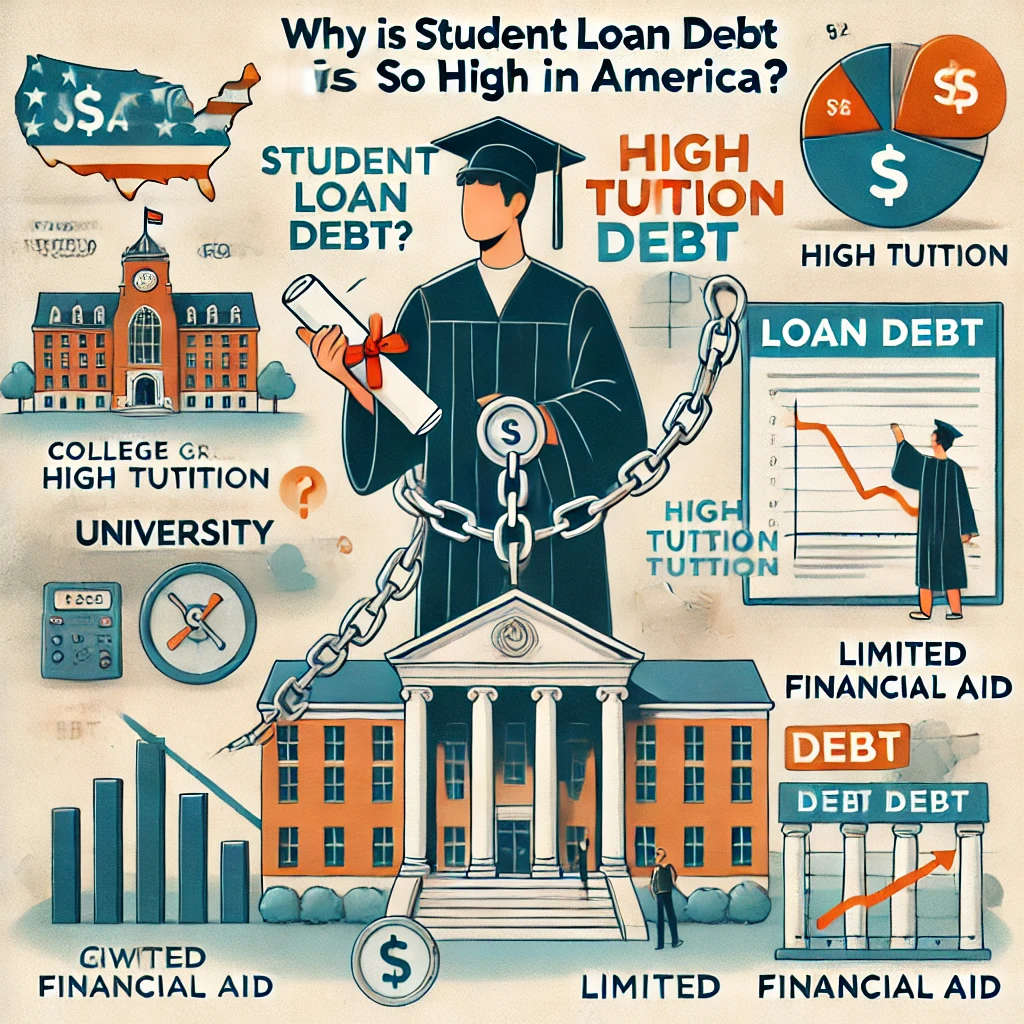
Why Is Student Loan Debt So High in America?
Student loan debt in America has reached staggering levels, with borrowers collectively owing over $1.7 trillion as of recent years. For millions of Americans, paying for college has become synonymous with taking on significant debt that can take decades to repay. But why is student loan debt so high in the US? The reasons are multifaceted, involving rising tuition costs, government policies, economic factors, and societal expectations. Let’s break down the major causes of this crisis.
1. Rising College Tuition Costs
The most obvious factor driving student loan debt is the skyrocketing cost of college tuition.
- Tuition Inflation: Between 1980 and 2020, the cost of college tuition rose by more than 1,200%, far outpacing inflation and wage growth.
- Public vs. Private Colleges: Both public and private institutions have seen tuition increases, but private colleges tend to cost significantly more, often exceeding $50,000 per year.
- Additional Fees: Tuition is just one part of the cost—students also pay for room and board, textbooks, and other fees, which add thousands to their total bill.
2. Decreased Public Funding for Education
Public colleges and universities used to rely more heavily on state and federal funding, which helped keep tuition costs low.
- Budget Cuts: Over the past few decades, states have reduced funding for higher education, shifting more of the financial burden onto students.
- Rising Tuition as a Result: To make up for these budget cuts, public universities have steadily increased tuition.
- Less Aid for Students: With reduced public investment, students are left with fewer grants or scholarships, making loans their primary option.
3. Overreliance on Loans
The widespread availability of student loans has contributed to rising debt levels.
- Easy Access to Loans: Federal student loans are relatively easy to obtain, with few credit checks or repayment ability requirements. While this makes higher education accessible, it also allows students to borrow more than they can realistically repay.
- Rising Borrowing Limits: Over time, borrowing limits for federal loans have increased, enabling students to take on larger amounts of debt.
- Private Loans: Many students turn to private lenders when federal loans don’t cover their costs, often taking on loans with higher interest rates and fewer protections.
4. The Growing Demand for Higher Education
Societal pressures and economic factors have made a college degree seem like a necessity.
- The “College-for-All” Mentality: Over the past few decades, a college education has been marketed as the primary pathway to success, leading more people to enroll.
- Credential Inflation: Many jobs that used to require only a high school diploma now require a bachelor’s degree or higher, increasing the demand for college education.
- Higher Enrollment: More students attending college has driven up demand, which allows schools to increase tuition prices.
5. Lack of Financial Literacy
Many students enter into loan agreements without fully understanding the long-term implications.
- Young Borrowers: Most students are in their late teens or early 20s when they borrow, with limited experience managing large amounts of money or understanding interest rates.
- Limited Guidance: High schools often don’t provide sufficient education on personal finance or the realities of student loans.
- Deferred Consequences: The ability to delay payments until after graduation may lead students to borrow more than they need, without considering their future earning potential.
6. For-Profit Colleges
The rise of for-profit colleges has also contributed to the student debt crisis.
- High Tuition, Low Value: For-profit institutions often charge high tuition rates while providing lower-quality education and poor job placement outcomes.
- Aggressive Marketing: Many of these schools target low-income and minority students with misleading promises about career prospects, leading to higher debt levels for vulnerable populations.
- Loan Defaults: Students from for-profit colleges are more likely to default on their loans, as they often struggle to find well-paying jobs after graduation.
7. Interest Accumulation
Interest on student loans significantly increases the total amount borrowers must repay.
- Unsubsidized Loans: For many loans, interest begins accruing immediately, even while the student is still in school.
- High Interest Rates: Federal student loan interest rates typically range from 4% to 7%, while private loans can have even higher rates.
- Long Repayment Periods: Standard repayment plans last 10 years, but many borrowers take 20 years or more to pay off their loans, leading to substantial interest payments over time.
8. Graduate School and Professional Degrees
Students pursuing advanced degrees often take on significantly more debt.
- High Costs: Graduate and professional programs, such as law school, medical school, or MBAs, often come with tuition costs that far exceed those of undergraduate programs.
- Limited Federal Aid: Federal loans for graduate students have higher interest rates and fewer subsidized options.
- Debt Accumulation: Many students leave graduate school with six-figure debt, particularly in fields like medicine or law.
9. Repayment Challenges
The repayment process for student loans can be difficult to manage, leading to prolonged debt.
- Income-Based Repayment Plans: While these plans lower monthly payments, they often extend the repayment period, increasing the total amount paid due to interest.
- Loan Defaults: Many borrowers struggle to make payments, leading to default, which can damage credit scores and create financial instability.
- Lack of Bankruptcy Protections: Unlike most other forms of debt, student loans are nearly impossible to discharge in bankruptcy, trapping borrowers in long-term financial strain.
10. Inequality in Higher Education
Student loan debt disproportionately impacts certain groups of people.
- Low-Income Students: Students from low-income families often rely heavily on loans to cover tuition and living expenses.
- First-Generation College Students: Those who are the first in their family to attend college may lack guidance on how to minimize debt or choose affordable schools.
- Racial Disparities: Black borrowers, on average, take on more student debt and are more likely to struggle with repayment than their white counterparts.
11. Lack of Cost Regulation
Unlike healthcare or utilities, the cost of higher education in the US is not tightly regulated.
- Unlimited Pricing Power: Colleges and universities set their own tuition rates, often with little oversight.
- Luxury Spending: Many institutions spend heavily on non-academic amenities like state-of-the-art gyms, dorms, and dining facilities, driving up costs.
- Demand Insulation: The widespread availability of loans means colleges can increase tuition without losing students, as borrowers can always take out more loans to cover the cost.
12. Impact of the Student Debt Crisis
The high levels of student loan debt have far-reaching consequences for individuals and the economy:
- Delayed Life Milestones: Many borrowers delay buying homes, starting families, or saving for retirement due to loan repayment burdens.
- Mental Health: The stress of carrying significant debt has been linked to anxiety and depression.
- Economic Growth: High debt levels limit consumer spending, potentially slowing economic growth.
Final Thoughts
The student loan debt crisis in America is the result of a complex web of rising tuition, decreased public funding, and economic policies that have shifted the cost burden onto students. Addressing the issue will require systemic changes, including greater investment in public education, better financial literacy education, and reforming loan policies to reduce the burden on borrowers.
For more insights on managing student loans and navigating the cost of higher education, check out helpful guides to make informed financial decisions.
Добавить комментарий