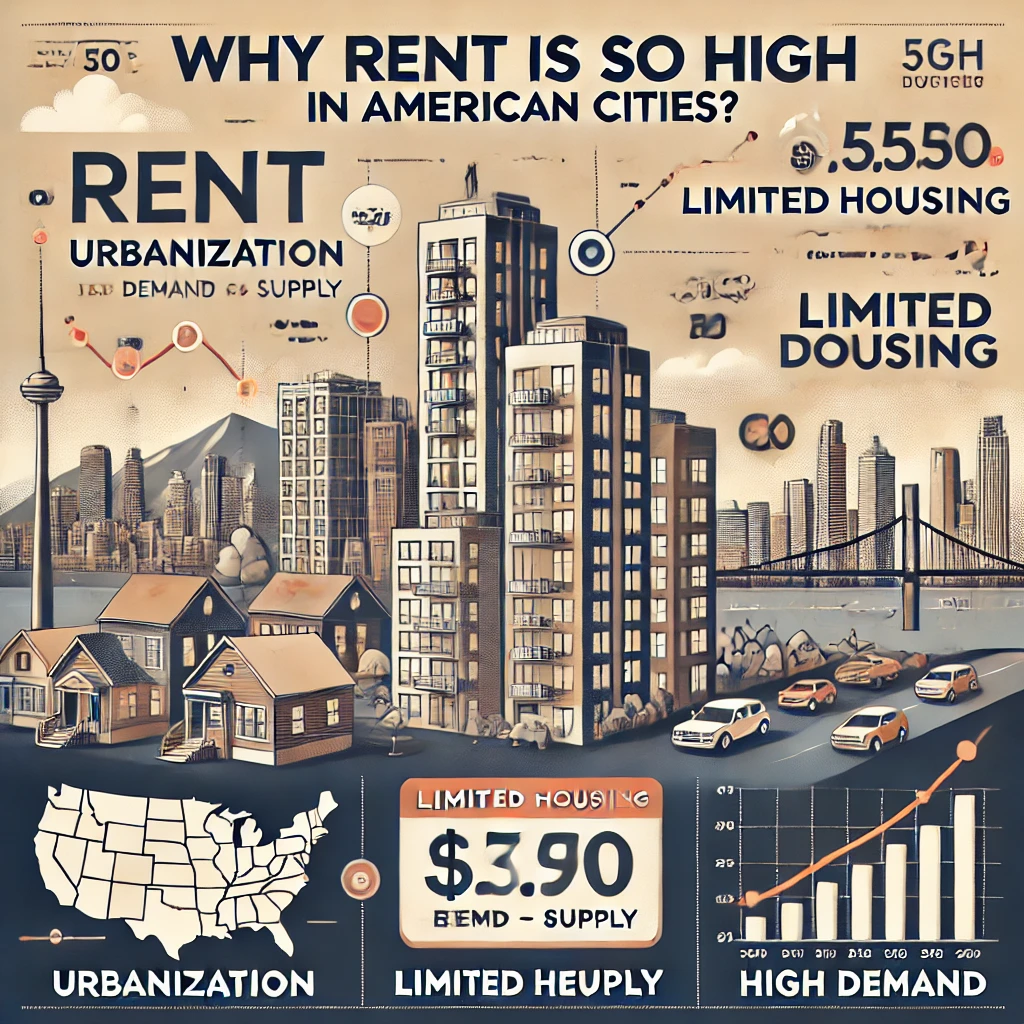
Why Is Rent So High in American Cities?
The rising cost of rent has become a major issue in American cities, with millions of people struggling to afford housing. Over the past decade, rents have soared in urban areas, far outpacing wage growth. But why is rent so high in American cities? The answer lies in a combination of economic, demographic, and policy factors. Here’s a closer look at what drives high rental costs in the US.
1. Supply and Demand Imbalance
The most significant reason for high rent in American cities is the mismatch between housing supply and demand.
- Population Growth in Cities:
- Many urban areas have seen significant population growth as people move to cities for job opportunities, education, and amenities.
- This rapid urbanization has outpaced the construction of new housing.
- Limited New Construction:
- In many cities, the number of new rental units being built is not enough to meet the growing demand.
- This scarcity drives up competition for available units, leading to higher rents.
Why It Matters: When there’s more demand than supply, landlords can charge higher rents because renters have fewer alternatives.
2. Zoning and Land Use Regulations
Restrictive zoning laws and land use policies make it harder to build new housing in many American cities.
- Single-Family Zoning:
- In some cities, large areas are zoned exclusively for single-family homes, limiting the construction of higher-density housing like apartment buildings.
- Lengthy Approval Processes:
- Developers often face long and expensive approval processes for new housing projects, which slows construction.
- NIMBYism («Not in My Backyard»):
- Local opposition to new developments, especially affordable housing, can block or delay projects.
Why It Matters: These restrictions reduce the supply of housing, especially affordable rental units, contributing to higher rents.
3. Rising Construction Costs
The cost of building new housing has increased significantly in recent years, adding to the overall cost of rent.
- Materials Costs:
- Prices for materials like lumber, steel, and concrete have risen due to supply chain disruptions and inflation.
- Labor Shortages:
- A shortage of skilled construction workers has driven up wages, making it more expensive to build new housing.
- Regulatory Costs:
- Developers often face additional costs related to permits, inspections, and meeting building codes.
Why It Matters: Higher construction costs make it more expensive for developers to build housing, and these costs are passed on to renters in the form of higher rents.
4. Economic Factors and Inflation
Broader economic trends also play a role in rising rents.
- Inflation:
- Inflation increases the cost of goods and services, including property maintenance, utilities, and insurance, which landlords often pass on to tenants.
- Interest Rates:
- Higher interest rates make it more expensive for developers to finance new projects, discouraging construction and limiting supply.
- Wealthy Renters:
- In some cities, an influx of high-income renters, such as tech workers, has driven up prices in traditionally affordable neighborhoods.
Why It Matters: Economic forces impact both the cost of providing housing and the competition for available rentals.
5. Affordable Housing Shortages
Many cities face a significant shortage of affordable housing, particularly for low- and middle-income renters.
- Focus on Luxury Units:
- Developers often prioritize building luxury apartments because they yield higher profits, leaving fewer affordable units available.
- Decline in Public Housing:
- Public housing programs have been underfunded for decades, leading to fewer options for low-income renters.
- Gentrification:
- As neighborhoods gentrify, older, affordable housing is often replaced with higher-cost developments.
Why It Matters: Without enough affordable housing, renters at the lower end of the income spectrum are left competing for the same limited options, driving up rents.
6. Investors and Corporate Ownership
The increasing role of investors and corporations in the rental market has contributed to rising rents.
- Corporate Landlords:
- Large investment firms and real estate corporations now own significant portions of the rental market in some cities.
- These landlords are often more focused on maximizing profits, which can lead to higher rent increases.
- Short-Term Rentals:
- Platforms like Airbnb have reduced the supply of long-term rental units in some areas, as property owners convert them into vacation rentals.
Why It Matters: Investor-driven markets prioritize profit over affordability, exacerbating the rental crisis.
7. Urban Desirability and Amenities
Many renters are drawn to cities for their amenities, job opportunities, and vibrant culture, which drives up prices.
- Job Opportunities: Cities like New York, San Francisco, and Austin are hubs for high-paying industries, attracting an influx of workers.
- Cultural Appeal: Entertainment, restaurants, and public transportation make cities desirable places to live.
- Proximity to Services: Urban areas often provide better access to healthcare, schools, and other services.
Why It Matters: The desirability of cities creates higher demand for housing, especially in central and well-connected neighborhoods.
8. Economic Inequality
Widening income inequality has contributed to disparities in the rental market.
- High-Income Renters: Wealthy individuals are able to pay higher rents, driving up prices in desirable areas.
- Cost Burden for Low-Income Renters: Lower-income households often spend more than 30% of their income on rent, leaving less for other necessities.
- Displacement: Rising rents force low-income renters out of their neighborhoods, creating further economic and social inequality.
Why It Matters: Economic inequality fuels competition for affordable housing and contributes to rising rents.
9. Limited Government Intervention
Policies to address high rents have been insufficient in many parts of the US.
- Rent Control: While some cities like New York and San Francisco have rent control policies, these are often limited in scope and don’t apply to all units.
- Lack of Federal Support: Federal programs like Section 8 vouchers often have long waiting lists and limited availability.
- Inadequate Funding: Affordable housing initiatives are underfunded at both the state and federal levels.
Why It Matters: Without significant government intervention, the private market struggles to provide enough affordable housing.
10. The COVID-19 Pandemic’s Impact
The pandemic created unique pressures that affected the rental market.
- Eviction Moratoriums: While these provided temporary relief, they created financial strain for landlords, some of whom raised rents to recover lost income.
- Migration Trends: Many people relocated during the pandemic, with some moving to cities and driving up demand.
- Construction Delays: Supply chain disruptions and labor shortages slowed the construction of new housing.
Why It Matters: The pandemic accelerated existing trends and introduced new challenges, further straining the rental market.
Final Thoughts
The high cost of rent in American cities is driven by a mix of economic, social, and policy factors. From supply shortages and restrictive zoning laws to rising construction costs and investor-driven markets, there are no simple solutions to this complex issue. Addressing the rental crisis will require coordinated efforts, including increasing housing supply, reforming zoning laws, and investing in affordable housing initiatives. Until then, renters will continue to face significant challenges in securing affordable homes.
For more tips on improving your photography and editing skills, check out helpful guides to take your selfies to the next level.
Добавить комментарий