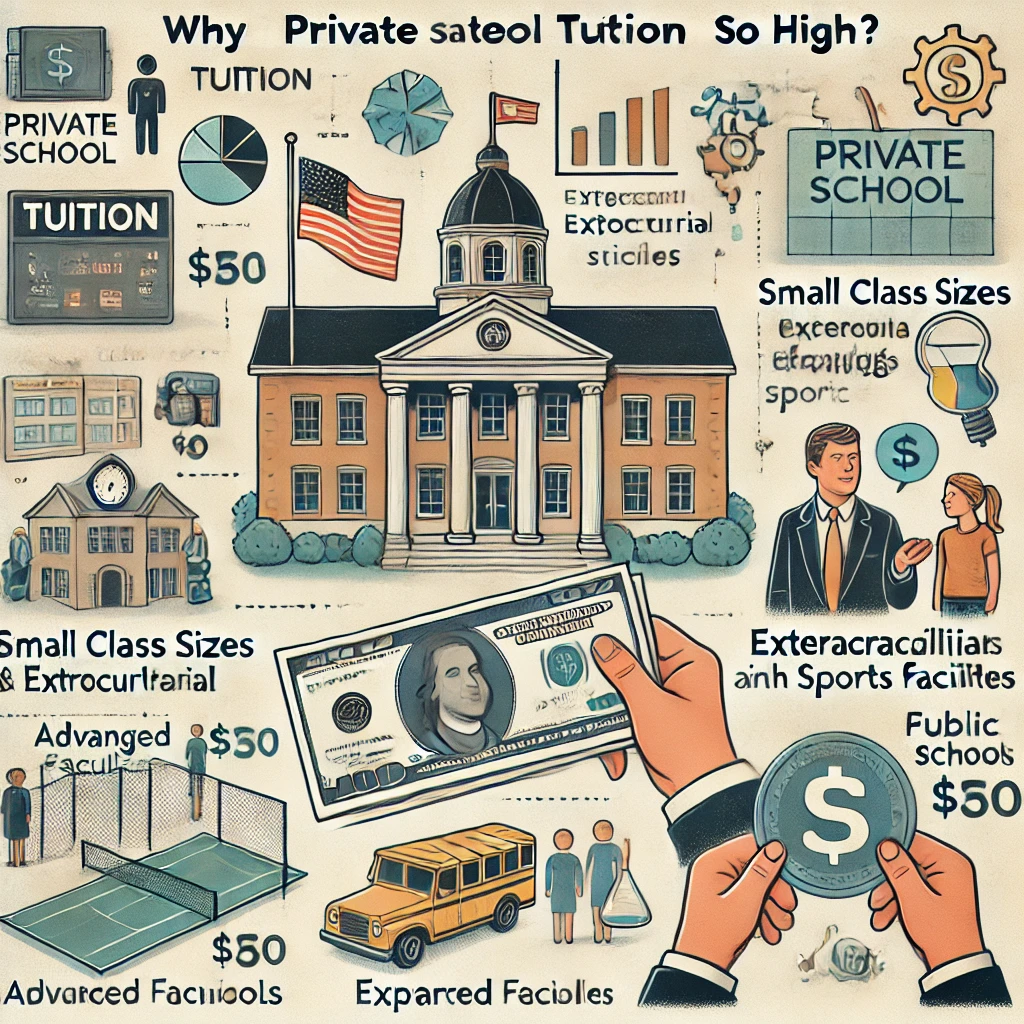
Why Is Private School Tuition So High in the US?
Private school tuition in the United States can be shockingly expensive, often costing tens of thousands of dollars per year. Whether it’s elite K-12 institutions or private colleges, the price tag can make private education feel out of reach for many families. So why is private school tuition so high? The answer lies in a combination of factors, including funding sources, operational costs, exclusivity, and demand. Let’s break it down.
1. Private Schools Don’t Receive Public Funding
Unlike public schools, which are funded through taxes, private schools rely almost entirely on tuition and private donations.
- No Government Subsidies: Private schools don’t receive state or federal funding, so all operating costs must be covered by tuition and fundraising.
- Financial Independence: This independence allows private schools to develop their own curricula and policies but also contributes to higher tuition costs.
2. Smaller Class Sizes
One of the main selling points of private schools is smaller class sizes, which require more teachers and higher operating costs.
- Lower Student-to-Teacher Ratios: Smaller classes mean more individualized attention, but they also mean more teachers are needed.
- Higher Salaries: Private schools often hire highly qualified educators and may pay competitive salaries to attract and retain them.
3. Enhanced Academic and Extracurricular Offerings
Private schools often provide advanced academic programs and extensive extracurricular opportunities that drive up costs.
- Specialized Programs: Private schools frequently offer unique programs like advanced placement (AP) classes, International Baccalaureate (IB) programs, or specialized STEM curricula.
- Extracurricular Activities: From sports teams to arts programs, private schools invest heavily in extracurricular activities, which require funding for coaches, instructors, equipment, and facilities.
- College Counseling Services: Many private high schools offer dedicated college counseling to help students gain admission to top universities, which adds to the tuition.
4. Luxurious Facilities and Amenities
Private schools are known for their state-of-the-art facilities, which set them apart from many public schools.
- Modern Infrastructure: Private schools often feature updated classrooms, advanced science labs, high-tech libraries, and spacious campuses.
- Athletic Complexes: Many private schools invest in professional-grade athletic facilities, swimming pools, and fitness centers.
- Aesthetic Appeal: Maintaining beautifully landscaped campuses and historic buildings adds to operational costs.
5. Teacher Salaries and Professional Development
Private schools often prioritize hiring top-tier teachers, which can lead to higher salary expenses.
- Highly Qualified Staff: Teachers at private schools may have advanced degrees or specialized training, which commands higher pay.
- Professional Development: Private schools often invest in ongoing training and development for their faculty, increasing costs further.
6. Limited Economies of Scale
Private schools tend to operate on a smaller scale than public schools, which makes them less cost-efficient.
- Fewer Students: Private schools typically have smaller enrollments, so they don’t benefit from the cost efficiencies of serving larger student populations.
- More Resources Per Student: A smaller student body often means higher per-student spending on resources and facilities.
7. Exclusivity and Prestige
Private schools often market themselves as exclusive institutions that provide a premium education, which can drive up costs.
- Reputation Building: Many private schools invest in building a prestigious reputation by maintaining high academic standards, competitive admissions, and alumni success stories.
- Branding: The exclusivity of private education makes it a status symbol for many families, allowing schools to charge premium prices.
8. Demand for Private Education
The demand for private education has risen in recent years, especially as parents seek alternatives to public schools.
- Perceived Quality: Many families believe private schools offer better education, safer environments, and more opportunities for success.
- Waiting Lists: Some elite private schools have limited spots, allowing them to charge high tuition due to strong demand.
- Parental Priorities: Families willing to make sacrifices for their child’s education often prioritize private school tuition, even if it strains their budget.
9. Extracurricular Costs and Enrichment Programs
Private schools go beyond academics to offer a wide range of enrichment opportunities.
- Sports Programs: Private schools often fund competitive sports teams with professional coaches and top-tier equipment.
- Arts and Music: Programs in music, theater, and visual arts require investments in materials, instruments, and performance spaces.
- Field Trips and Travel: Many private schools offer international trips, exchange programs, and off-campus experiences, all of which add to tuition costs.
10. Scholarships and Financial Aid
Ironically, tuition at private schools is often higher because schools provide financial aid to help lower-income families afford the cost.
- Tuition Redistribution: Families who can afford to pay full tuition often subsidize the cost for families receiving financial aid.
- Scholarship Funds: Schools maintain scholarship and grant programs that are funded, in part, by higher tuition rates.
11. Administrative Costs
Running a private school involves significant administrative expenses.
- Admissions and Marketing: Private schools spend heavily on recruitment, admissions processes, and marketing campaigns to attract families.
- Development Offices: Many schools have dedicated staff for fundraising and alumni relations, which adds to overhead costs.
- Compliance and Accreditation: Private schools often pursue accreditation from prestigious organizations, which can be a costly and ongoing process.
12. Inflation and Rising Operational Costs
Like any organization, private schools are subject to rising costs due to inflation and other economic pressures.
- Energy and Utilities: Operating large campuses with advanced facilities requires significant spending on utilities and maintenance.
- Health and Safety: In the wake of COVID-19, many private schools increased spending on health protocols, air filtration systems, and other safety measures.
- Technology Upgrades: Many private schools invest in cutting-edge technology to remain competitive, which adds to their budgets.
13. Comparison to Public Schools
Public schools benefit from taxpayer funding, which significantly reduces costs for families.
- Funding Sources: Public schools are funded through federal, state, and local taxes, allowing them to offer free education to residents.
- Standardized Resources: Public schools typically operate on standardized budgets, with fewer specialized programs or facilities compared to private schools.
14. Is Private School Worth It?
Whether private school tuition is worth the cost depends on individual priorities and circumstances.
- Academic Advantages: Private schools often provide more rigorous curricula and access to resources like college counseling.
- Smaller Classes: Many families value the personalized attention and close-knit community of private schools.
- Return on Investment: Alumni networks and college preparation can offer long-term benefits, but they don’t guarantee success.
Final Thoughts
Private school tuition is high in the US because of the unique benefits these institutions offer, including smaller class sizes, enhanced academic programs, and state-of-the-art facilities. However, the lack of public funding, rising operational costs, and a focus on exclusivity also play significant roles. Families considering private schools should carefully weigh the costs and benefits to determine if this investment aligns with their financial and educational goals.
For more insights into education and financial planning, check out helpful guides to make informed decisions about your child’s future.
Добавить комментарий