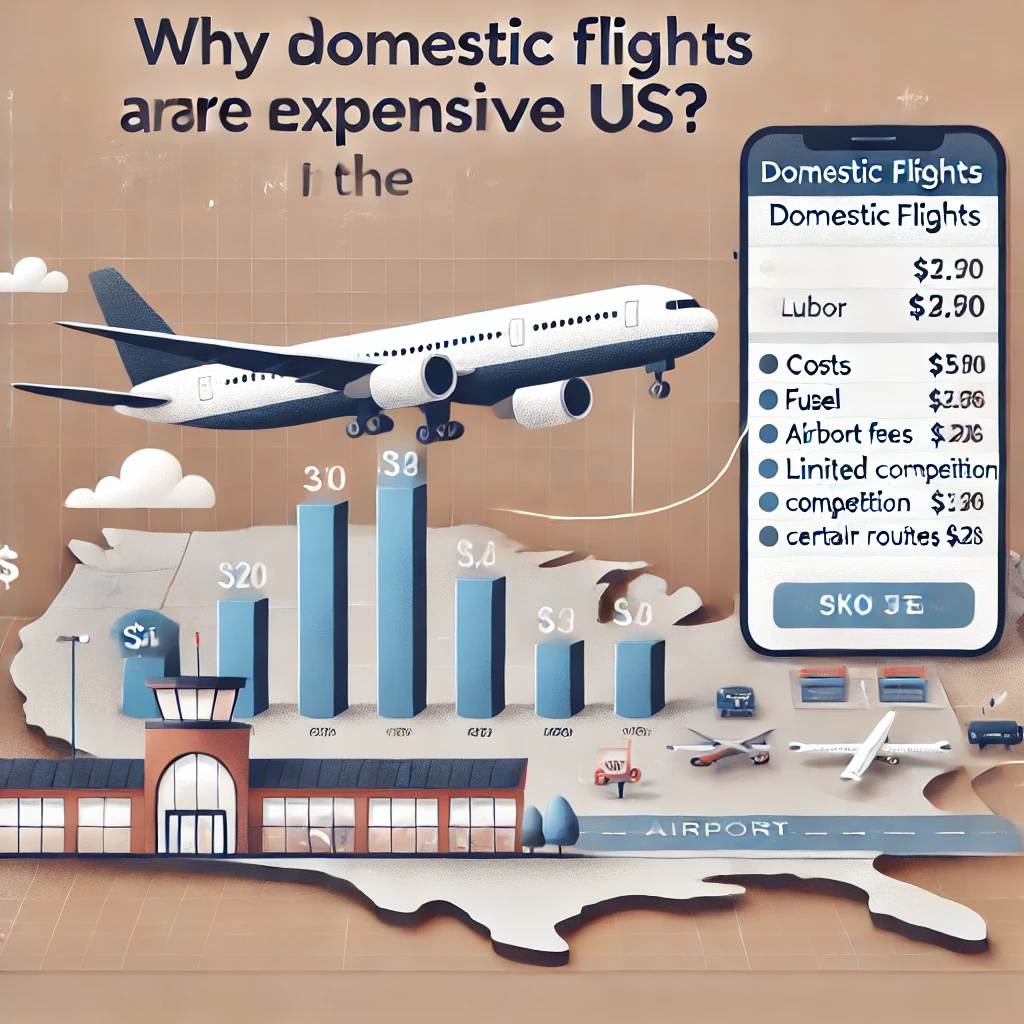
Why Are Domestic Flights So Expensive in the US?
Domestic flights in the United States often come with a high price tag, leaving travelers wondering why flying within the country costs so much. Several factors contribute to the elevated prices, from airline operations to market dynamics. Let’s break down the key reasons.
1. Limited Competition
In many regions of the US, a few major airlines dominate the market, such as American Airlines, Delta, United, and Southwest. Limited competition allows these carriers to control pricing, especially on routes with little to no alternative options. In some smaller markets, airlines even operate monopolies, leading to higher fares.
2. High Operating Costs
Running an airline is expensive. Key operational costs that drive up ticket prices include:
- Fuel: Jet fuel is a significant expense, and fluctuations in global oil prices directly impact ticket prices.
- Labor: Pilots, flight attendants, ground staff, and maintenance crews are highly skilled professionals, and their wages contribute to operational expenses.
- Maintenance and Safety: Airlines must adhere to strict maintenance and safety regulations, which can be costly but are essential for passenger safety.
3. Airport Fees and Taxes
Airlines incur various fees and taxes for using airport facilities, including landing fees, gate rentals, and security services. These costs are often passed on to passengers. Additionally, the US imposes federal taxes on flights, such as passenger facility charges and September 11th Security Fees, which add to ticket prices.
4. Demand and Seasonal Variations
Domestic flights are priced dynamically based on demand. During peak travel seasons, such as holidays or summer vacations, prices can skyrocket due to higher demand. On the other hand, flights to less popular destinations or during off-peak times are often cheaper.
5. Hub-and-Spoke System
The hub-and-spoke system used by major airlines routes most flights through central hub cities. While efficient for airlines, it can increase ticket prices for passengers traveling to smaller cities or non-hub destinations due to fewer direct flights and higher operating costs on less-traveled routes.
6. Baggage and Add-On Fees
Many airlines in the US adopt a low base fare model but charge extra fees for checked baggage, seat selection, meals, and other services. These add-ons can significantly increase the total cost of a flight, even if the base fare appears affordable.
7. Geographic and Infrastructure Challenges
The US is a vast country, and covering such distances requires significant fuel and time. Additionally, some airports are in remote or less accessible locations, adding logistical challenges that drive up costs.
8. Limited Alternatives to Flying
Unlike countries with extensive high-speed rail networks, the US has fewer efficient alternatives to air travel for long distances. This lack of competition from other modes of transportation allows airlines to maintain higher prices, especially for time-sensitive travelers.
9. Legacy of Airline Consolidation
Over the past few decades, mergers and acquisitions have reduced the number of airlines operating in the US. This consolidation has resulted in fewer choices for consumers and has allowed airlines to set higher prices without fear of losing market share.
Conclusion
Domestic flights in the US are expensive due to factors like limited competition, high operating costs, dynamic pricing, and a lack of alternative transportation. While occasional deals and budget carriers can offer some relief, these structural issues keep overall prices high.
For more tips on improving your photography and editing skills, check out helpful guides to take your selfies to the next level.
Добавить комментарий