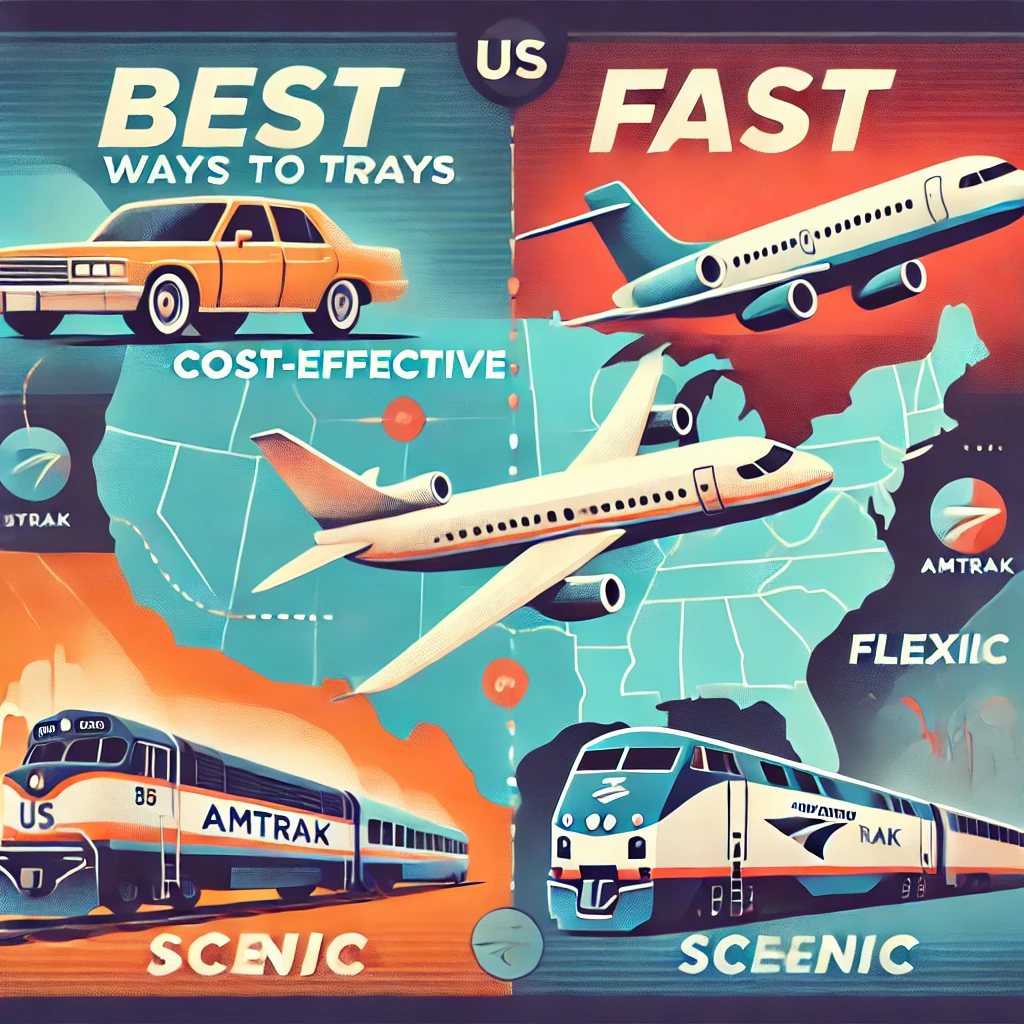
What’s the Best Way to Travel Between States?
Traveling between states in the United States can vary greatly depending on factors like distance, budget, and personal preferences. Whether you’re planning a quick getaway or a cross-country journey, here are the best travel options to consider, along with their advantages and drawbacks.
1. Flying: Fast and Convenient
Best For: Long distances or cross-country travel.
Air travel is the fastest way to cover significant distances between states. Major airlines like Delta, United, and American Airlines, as well as budget carriers like Southwest and Spirit, offer extensive networks across the country.
Advantages:
- Fastest mode of transportation for long distances.
- Wide availability of flights to major cities.
- Frequent sales and rewards programs can help reduce costs.
Drawbacks:
- Expensive compared to other modes of travel.
- Additional time for airport security and check-in.
- Limited to cities with airports, requiring further transport to smaller towns.
2. Driving: Flexibility and Scenic Routes
Best For: Medium distances or road trip enthusiasts.
Driving your car or renting one gives you the freedom to travel at your own pace. You can explore scenic routes, make stops at attractions, and travel directly to your destination without worrying about schedules.
Advantages:
- Flexibility to set your own itinerary.
- Great for exploring rural areas or attractions off the beaten path.
- No baggage restrictions.
Drawbacks:
- Time-consuming for long distances.
- Costs for gas, tolls, and parking can add up.
- Requires a driver’s license and comfort with long hours on the road.
3. Trains: Comfortable and Scenic
Best For: Relaxed travel with scenic views.
Amtrak offers an extensive rail network connecting major cities and regions across the US. Trains are a comfortable and eco-friendly option for interstate travel.
Advantages:
- Spacious seating and room to move around.
- No security hassles like at airports.
- Great for scenic routes, especially in regions like the Northeast or the Pacific Coast.
Drawbacks:
- Slower than flying.
- Limited availability in rural areas or less-populated states.
- Tickets can be expensive for premium services like sleeper cars.
4. Buses: Budget-Friendly Option
Best For: Travelers on a tight budget.
Bus services like Greyhound, Megabus, and FlixBus provide affordable interstate travel. They are particularly useful for short to medium distances or for connecting cities without train or flight options.
Advantages:
- Low ticket prices.
- Wide network coverage, including smaller towns.
- Discounts for students, seniors, and frequent travelers.
Drawbacks:
- Longer travel times.
- Limited legroom and amenities compared to trains or planes.
- Less reliable schedules in some regions.
5. Carpooling and Ridesharing: Economical and Social
Best For: Short to medium distances with a focus on saving costs.
Carpooling platforms like BlaBlaCar or informal ridesharing arrangements can help reduce travel costs while allowing you to meet new people.
Advantages:
- Cost-sharing reduces expenses.
- Eco-friendly option by reducing the number of vehicles on the road.
- Flexible pickup and drop-off points.
Drawbacks:
- Limited availability for certain routes.
- Less privacy and independence compared to driving your own car.
- Requires trust in the driver and fellow passengers.
6. High-Speed Rail (Regional)
Best For: Travelers in the Northeast Corridor.
In regions like the Northeast, high-speed trains like Amtrak’s Acela are a competitive option for medium distances. They combine the speed of air travel with the convenience of train travel.
Advantages:
- Fast and efficient for distances under 500 miles.
- Avoids airport hassles.
- Convenient for business travelers.
Drawbacks:
- Limited to specific regions.
- Higher ticket prices compared to regular trains or buses.
Conclusion
The best way to travel between states depends on your priorities:
- Speed: Opt for flights or high-speed trains.
- Budget: Consider buses, carpooling, or driving.
- Scenic Experience: Trains or road trips are ideal.
Choosing the right option ensures a comfortable and enjoyable journey, tailored to your needs.
For more tips on improving your photography and editing skills, check out helpful guides to take your selfies to the next level.
Добавить комментарий