What Is At-Will Employment in the US?
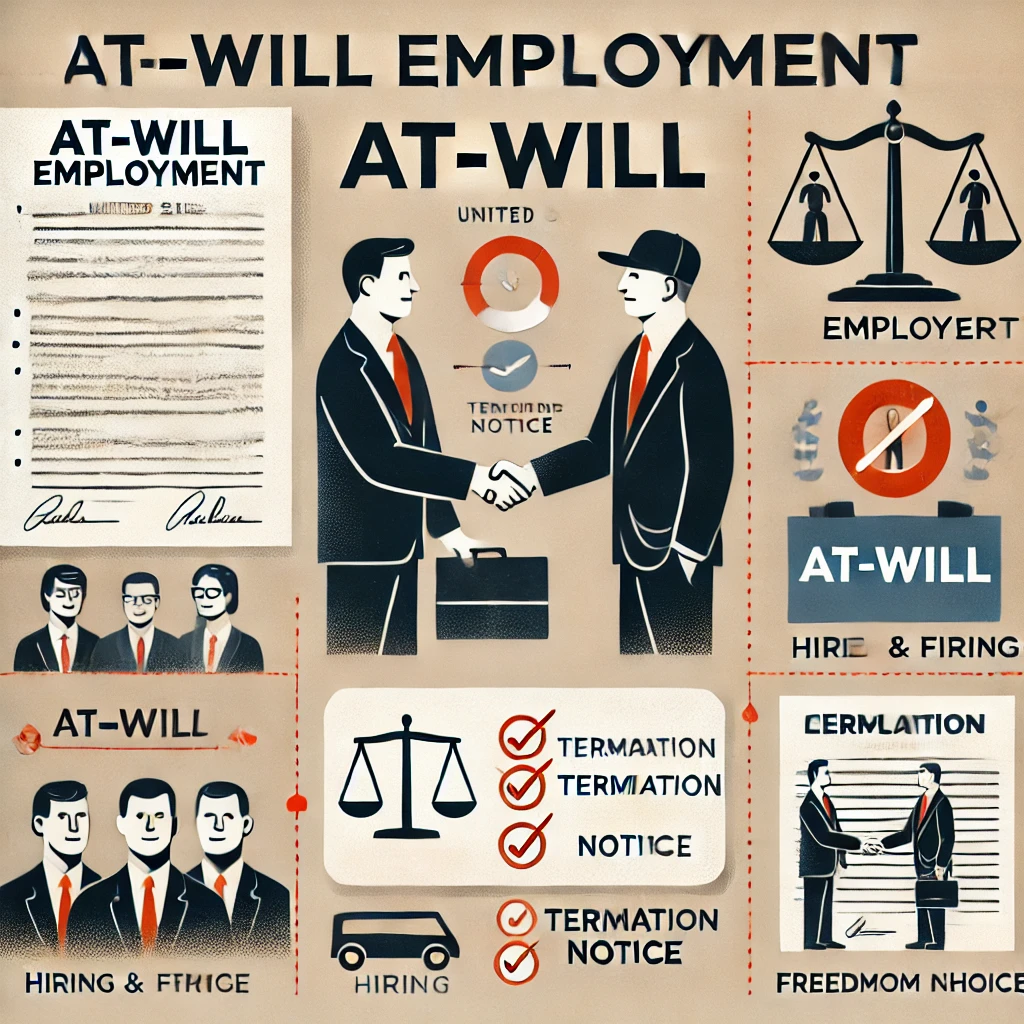
At-will employment is the default employment arrangement in the United States, meaning that employers and employees can terminate their working relationship at any time, for almost any reason, or even for no reason at all. While this arrangement offers flexibility for both parties, it also comes with limitations and misunderstandings about workers’ rights. Below, we’ll break down what at-will employment means, its implications, and the exceptions to this rule.
1. Definition of At-Will Employment
At-will employment allows both employers and employees to end their working relationship without advance notice or cause.
- For Employers: They can fire an employee at any time, for any reason (as long as it’s not illegal), or without any reason at all.
- For Employees: Workers can quit their job at any time, without giving a reason or notice (though providing notice is considered professional).
2. Key Features of At-Will Employment
- No Contract Required: At-will employment typically does not require a formal contract outlining the terms of termination.
- No Termination Notice: Employers are not legally obligated to provide advance notice before terminating an employee, though some companies do so as a courtesy.
- Broad Flexibility: This arrangement provides employers with the flexibility to adjust their workforce as needed and gives employees the freedom to leave when they choose.
3. Where Is At-Will Employment Enforced?
At-will employment is the default rule in all 50 US states, but the extent of its application may vary slightly depending on state laws.
- Exceptions: Some states have laws or legal doctrines that limit the scope of at-will employment, as discussed below.
4. Exceptions to At-Will Employment
While at-will employment allows for termination without cause, there are important exceptions where termination may be deemed unlawful:
a. Discrimination
- Employers cannot terminate an employee for discriminatory reasons based on race, color, religion, sex, national origin, age (40 or older), disability, or genetic information, as protected under federal laws like Title VII of the Civil Rights Act, the Age Discrimination in Employment Act (ADEA), and the Americans with Disabilities Act (ADA).
- Some states also extend protections to include sexual orientation, gender identity, marital status, or other characteristics.
b. Retaliation
- An employer cannot fire an employee for reporting illegal activity (whistleblowing), filing a harassment or discrimination complaint, or participating in an investigation related to workplace violations.
- This protection is enforced under laws like the Occupational Safety and Health Act (OSHA) and the Whistleblower Protection Act.
c. Implied Contracts
- If an employer makes verbal or written promises about job security (e.g., “You’ll always have a job here as long as you meet performance expectations”), this could create an implied contract that overrides at-will employment.
- Courts may enforce these implied agreements even if no formal contract exists.
d. Public Policy Violations
- Terminating an employee for reasons that violate public policy is prohibited. For example:
- Firing someone for refusing to engage in illegal activities.
- Terminating an employee for exercising their legal rights, such as voting or taking family or medical leave under the Family and Medical Leave Act (FMLA).
e. Covenant of Good Faith and Fair Dealing
- In some states, courts recognize a legal doctrine that prevents employers from firing employees in bad faith or in violation of fair dealing. For instance, firing an employee right before they’re due to receive a bonus might violate this covenant.
5. Advantages of At-Will Employment
For both employers and employees, at-will employment offers flexibility and simplicity:
a. For Employers
- Quick Staffing Adjustments: Employers can hire and fire based on business needs without lengthy legal procedures.
- Reduced Liability: Without long-term contracts, employers have fewer obligations to employees beyond complying with labor laws.
- Cost Savings: Employers are not required to provide severance packages unless stipulated by company policy or contract.
b. For Employees
- Freedom to Leave: Employees can leave a job at any time, with or without notice, to pursue better opportunities.
- Career Flexibility: At-will employment allows employees to switch jobs without being tied to restrictive contracts.
6. Disadvantages of At-Will Employment
Despite its flexibility, at-will employment has several downsides, particularly for employees:
a. Job Insecurity
- Employees have no guaranteed job security and can be fired at any time, even without warning.
b. No Legal Requirement for Notice
- Employers can terminate employees immediately, which may leave workers without time to prepare financially or find new employment.
c. Power Imbalance
- At-will employment tends to favor employers, as they hold the power to terminate without much justification, while employees often rely on the job for income and benefits.
7. How to Protect Yourself as an Employee
If you’re working under at-will employment, here are steps you can take to protect your job and career:
a. Know Your Rights
- Familiarize yourself with federal and state labor laws, as well as your company’s policies on termination and discipline.
b. Document Performance
- Keep records of positive feedback, performance reviews, and accomplishments in case you need to dispute a termination.
c. Understand Your Contract
- Review your offer letter or employee handbook for any implied promises or policies that may override at-will terms.
d. Speak Up Cautiously
- While whistleblower protections exist, it’s important to follow proper procedures when reporting workplace violations to avoid potential retaliation.
e. Build an Emergency Fund
- Given the lack of job security, having a financial safety net can help you navigate sudden job loss.
8. When Is a Termination Unlawful?
If you believe you’ve been wrongfully terminated under at-will employment, consider the following steps:
- Evaluate Your Case: Determine whether the termination violated any anti-discrimination laws, implied contracts, or public policy.
- Consult an Attorney: An employment lawyer can help you assess your options and file a claim if necessary.
- File a Complaint: Report unlawful terminations to organizations like the Equal Employment Opportunity Commission (EEOC) or your state’s labor department.
9. At-Will Employment vs. Contracts
In some cases, employees may not be subject to at-will employment if they are working under a contract.
- Employment Contracts: Provide specific terms regarding job security, termination procedures, and notice periods. These contracts override at-will employment.
- Unionized Workers: Members of unions are typically covered by collective bargaining agreements that outline job protections and grievance procedures.
10. States That Modify At-Will Employment
While at-will employment is the default in all 50 states, some states impose limitations:
- Montana: The only state that does not follow at-will employment by default. After a probationary period, employees can only be terminated for cause.
- Other States: Some states provide stronger protections under public policy exceptions, implied contracts, or the covenant of good faith and fair dealing.
Final Thoughts
At-Will Employment in the US is a double-edged sword, offering flexibility but little job security for employees. While it allows employers and workers to part ways easily, it also leaves room for misunderstandings and potential abuses. Understanding your rights, knowing the exceptions to at-will employment, and preparing for unforeseen changes can help you navigate this system more effectively.
For more tips on navigating workplace laws and protecting your rights as an employee, check out helpful guides to stay informed and empowered.
Добавить комментарий