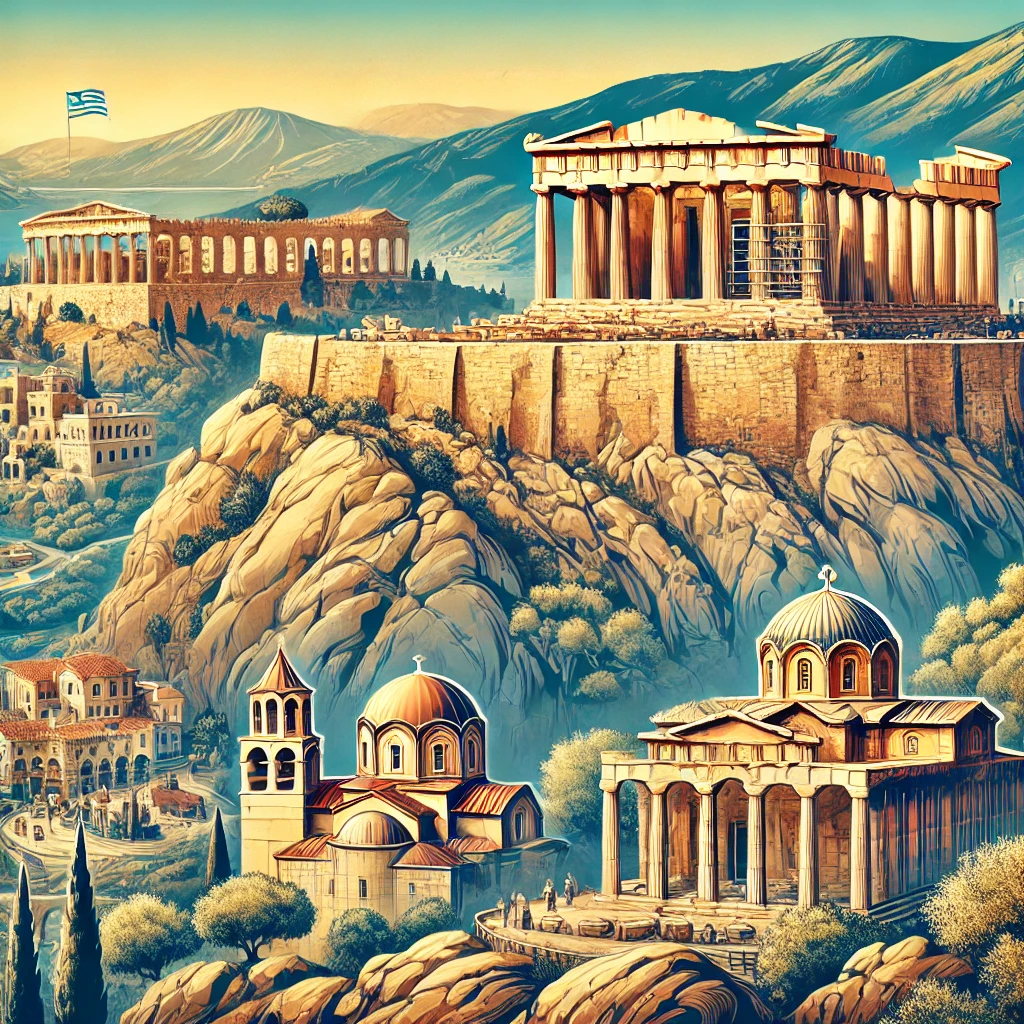
UNESCO World Heritage Sites in Greece
Greece, the cradle of Western civilization, is home to numerous UNESCO World Heritage Sites that reflect its rich history, culture, and natural beauty. These sites span ancient ruins, stunning monasteries, and unique landscapes, offering visitors a deep dive into the country’s storied past. Here is a comprehensive guide to Greece’s UNESCO World Heritage Sites.
1. Acropolis of Athens
- Inscribed: 1987
- Why It’s Special: The Acropolis is a symbol of ancient Greek civilization, featuring iconic structures like the Parthenon, Erechtheion, and Temple of Athena Nike. It represents the pinnacle of classical architecture and artistry.
- Highlights:
- Parthenon’s intricate columns and friezes.
- Panoramic views of Athens.
2. Archaeological Site of Delphi
- Inscribed: 1987
- Why It’s Special: Once considered the center of the world in ancient Greek mythology, Delphi was home to the Oracle of Apollo. It was a major religious and cultural hub.
- Highlights:
- Temple of Apollo.
- Ancient theatre with breathtaking views of Mount Parnassus.
3. Meteora
- Inscribed: 1988
- Why It’s Special: Meteora’s monasteries are perched atop massive rock pillars, blending natural beauty with religious devotion. These monasteries were built by monks seeking isolation and spiritual elevation.
- Highlights:
- Monasteries of Great Meteoron and Varlaam.
- Stunning sunset views over the valley.
4. Mount Athos
- Inscribed: 1988
- Why It’s Special: Known as the «Holy Mountain,» Mount Athos is an autonomous monastic state featuring 20 Eastern Orthodox monasteries. Access is restricted to men, and special permits are required.
- Highlights:
- Rich Byzantine art and manuscripts.
- Scenic landscapes of the Chalkidiki peninsula.
5. Medieval City of Rhodes
- Inscribed: 1988
- Why It’s Special: The medieval city of Rhodes, built by the Knights of St. John, is a stunning blend of Gothic and Ottoman architecture. Its well-preserved fortifications are among the finest in Europe.
- Highlights:
- Palace of the Grand Master.
- Street of the Knights.
6. Archaeological Site of Olympia
- Inscribed: 1989
- Why It’s Special: Olympia was the birthplace of the Olympic Games, held to honor Zeus. It served as a religious sanctuary and athletic venue in ancient Greece.
- Highlights:
- Temple of Zeus (once housing the Statue of Zeus, one of the Seven Wonders of the Ancient World).
- Ancient stadium.
7. Archaeological Site of Mystras
- Inscribed: 1989
- Why It’s Special: Mystras, a Byzantine-era town, is nestled on Mount Taygetos and features impressive medieval churches and a fortress.
- Highlights:
- Metropolis Cathedral.
- Palaces of the Despots.
8. Delos
- Inscribed: 1990
- Why It’s Special: The sacred island of Delos was a significant religious and trade hub in antiquity. According to mythology, it was the birthplace of Apollo and Artemis.
- Highlights:
- Terrace of the Lions.
- Ancient theatre and sanctuaries.
9. Archaeological Site of Epidaurus
- Inscribed: 1988
- Why It’s Special: Famous for its ancient theatre, Epidaurus was a center for healing dedicated to Asclepius, the god of medicine.
- Highlights:
- Theatre of Epidaurus (renowned for its acoustics).
- Sanctuary of Asclepius.
10. Sanctuary of Asklepios at Epidaurus
- Inscribed: 1988
- Why It’s Special: Another major site linked to healing, this sanctuary highlights ancient Greek advancements in medicine and spirituality.
- Highlights:
- Dormitory for patients (Katagogion).
- Tholos and other architectural marvels.
11. Old Town of Corfu
- Inscribed: 2007
- Why It’s Special: This Venetian-inspired town features a mix of Renaissance, Baroque, and classical architecture, showcasing its strategic importance in the Mediterranean.
- Highlights:
- Old Fortress and New Fortress.
- Spianada Square.
12. Archaeological Site of Vergina (Aigai)
- Inscribed: 1996
- Why It’s Special: Vergina was the first capital of the ancient Kingdom of Macedon. It is famous for the royal tombs, including the tomb of Philip II, father of Alexander the Great.
- Highlights:
- Great Tumulus.
- Royal Palace ruins.
13. Monasteries of Daphni, Hosios Loukas, and Nea Moni of Chios
- Inscribed: 1990
- Why It’s Special: These three Byzantine monasteries are masterpieces of architecture, mosaics, and religious art from the Middle Ages.
- Highlights:
- Golden mosaics in Hosios Loukas.
- Stunning mountain settings.
14. Archaeological Site of Mycenae and Tiryns
- Inscribed: 1999
- Why It’s Special: Mycenae and Tiryns are key sites of Mycenaean civilization, famous for their massive stone walls and connections to Homer’s epics.
- Highlights:
- Lion Gate at Mycenae.
- Cyclopean Walls at Tiryns.
15. Temple of Apollo Epicurius at Bassae
- Inscribed: 1986
- Why It’s Special: This well-preserved ancient temple is located in a remote mountain region and is notable for its innovative architectural design.
- Highlights:
- Unique blend of Doric, Ionic, and Corinthian styles.
Conclusion
Greece’s UNESCO World Heritage Sites offer an extraordinary journey through its rich history and culture. Whether it’s exploring ancient ruins, Byzantine monasteries, or picturesque medieval towns, these sites provide a deeper understanding of Greece’s heritage and enduring influence.
For more tips on improving your photography and editing skills, check out helpful guides to take your selfies to the next level.
Добавить комментарий