Tribal Art in Burkina Faso
Burkina Faso, a vibrant country in West Africa, is celebrated for its rich cultural heritage and diverse tribal art traditions. The country is home to over 60 ethnic groups, each contributing unique artistic expressions that are deeply tied to their history, spiritual beliefs, and social structures. From intricate masks to striking sculptures, the tribal art of Burkina Faso is a profound reflection of its people’s identity and creativity.
1. The Role of Tribal Art in Burkinabé Culture
In Burkina Faso, art serves purposes far beyond decoration. It is closely linked to spirituality, rites of passage, and communal identity. Masks and sculptures, for example, often play a central role in ceremonies, representing deities, ancestral spirits, or natural forces. These art forms are traditionally created by skilled artisans who pass their craft down through generations.
2. Iconic Forms of Tribal Art in Burkina Faso
Masks
Masks are one of the most recognizable forms of tribal art in Burkina Faso, used in festivals, initiations, funerals, and agricultural ceremonies. Each ethnic group creates distinct masks, often with symbolic meanings:
- Bwa Masks: These large, colorful plank masks are adorned with geometric patterns and are used in initiation rituals to teach moral and social values.
- Mossi Masks: Representing ancestral spirits, these masks are typically crafted from wood and are highly stylized, featuring elongated forms.
- Lobi Masks: Often simple and abstract, Lobi masks are associated with protection and fertility rituals.
Sculptures
Wooden and bronze sculptures are another significant aspect of Burkina Faso’s tribal art. These pieces often depict human figures, animals, or spiritual beings and serve religious and ceremonial purposes. The Dagomba and Mossi tribes are especially known for their intricate and expressive sculptures.
Pottery
Handcrafted pottery in Burkina Faso is both functional and decorative. Women are traditionally the potters, creating vessels used for cooking, water storage, and ritual purposes. The designs often feature incised patterns that carry cultural significance.
Textiles and Beadwork
Burkinabé textiles, such as handwoven cotton fabrics, are celebrated for their bold patterns and vibrant colors. These textiles are often dyed using natural techniques and are worn during special occasions. Beadwork is another common art form, used to create jewelry and adornments that signify status or identity within a community.
3. Prominent Ethnic Groups and Their Art
Mossi
As the largest ethnic group in Burkina Faso, the Mossi are renowned for their masks and ancestral statues. Their art often emphasizes a connection to the spiritual world and plays a vital role in community rituals.
Bwa
The Bwa people are known for their plank masks, which feature bold geometric patterns painted in red, white, and black. These masks often represent spirits of the wilderness and are used in dances to ensure harmony and prosperity.
Lobi
The Lobi people are celebrated for their simple yet powerful sculptures, often carved from wood. These figures are believed to house spirits that protect families, homes, and crops.
Gurunsi
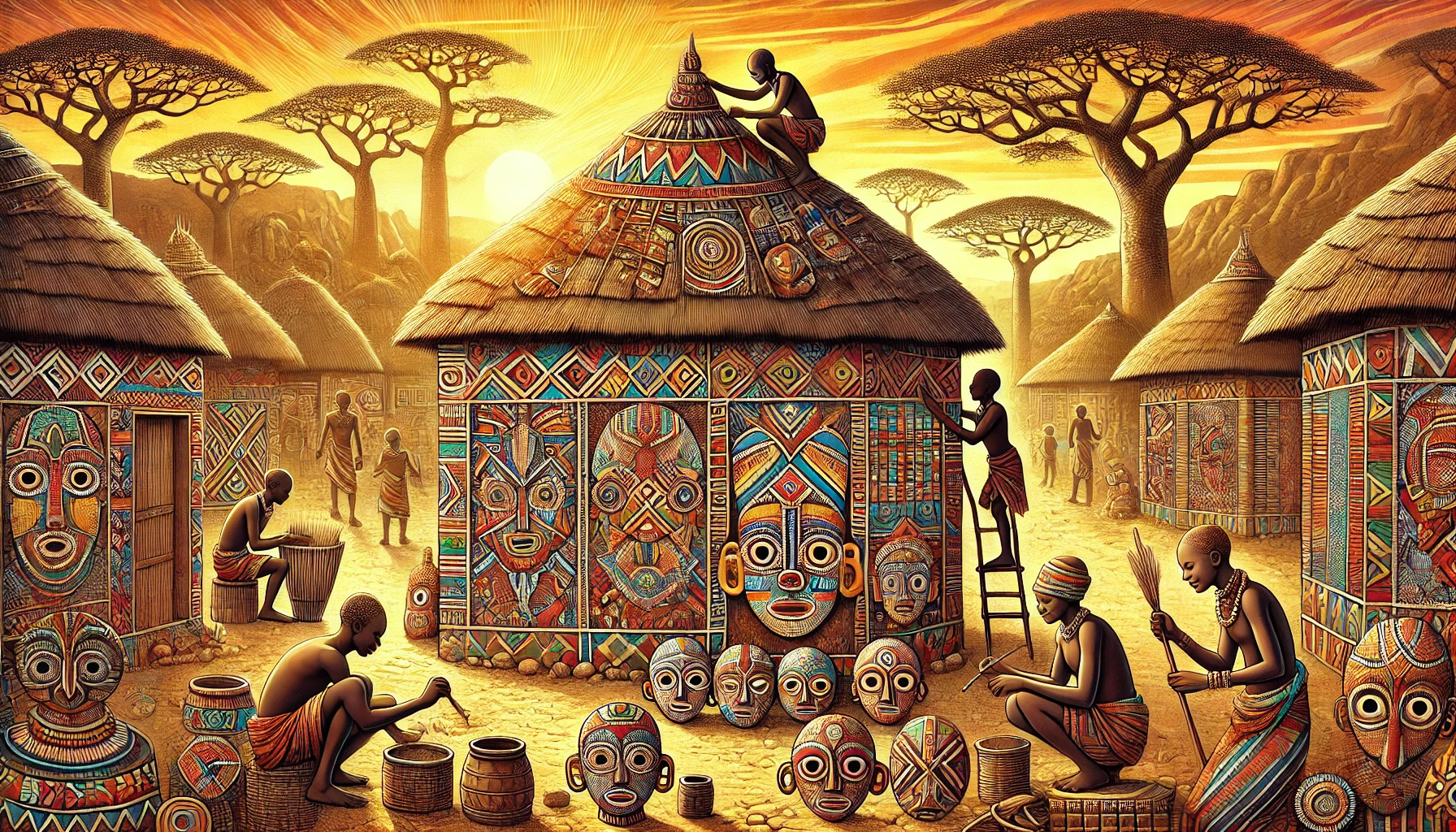
The Gurunsi are famous for their elaborately painted mud houses, which are decorated with symbolic motifs that tell stories and convey cultural values. This architectural art form is a unique aspect of Burkina Faso’s artistic heritage.
4. Festivals Celebrating Tribal Art
SIAO (International Art and Craft Fair of Ouagadougou)
Held biennially in the capital city, SIAO is one of Africa’s largest art fairs, showcasing the incredible diversity of tribal art from Burkina Faso and beyond. Visitors can explore traditional masks, sculptures, textiles, and more, while learning about the cultural significance of these works.
Festima (Festival of Masks and Arts)
This vibrant festival, held in Dédougou, celebrates the mask-making traditions of Burkina Faso. It brings together performers from various ethnic groups who showcase their ceremonial masks through mesmerizing dances and rituals.
5. Why Tribal Art in Burkina Faso is Unique
The tribal art of Burkina Faso stands out for its deep connection to spirituality and community life. Each piece is not only an artistic achievement but also a symbol of cultural identity and heritage. The intricate craftsmanship, symbolic designs, and the stories behind the art make it a captivating aspect of West African culture.
For more tips on improving your photography and editing skills, check out helpful guides to take your selfies to the next level.
Добавить комментарий