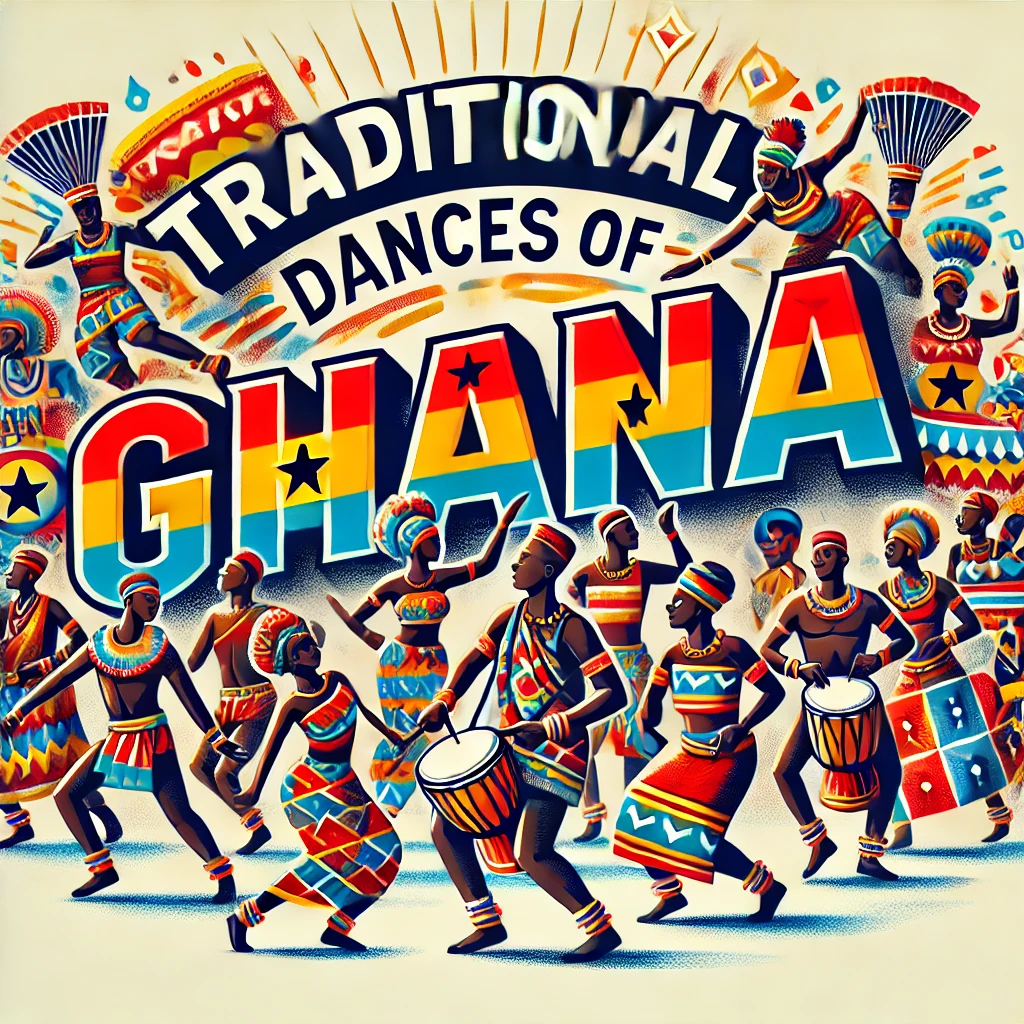
Traditional Dances of Ghana
Ghana, a vibrant West African country, boasts a rich cultural heritage expressed through its traditional dances. These dances are more than just forms of entertainment—they are a way to tell stories, honor ancestors, celebrate milestones, and connect with the spiritual world. Each dance is deeply rooted in the history and traditions of Ghana’s diverse ethnic groups, making them an essential part of the nation’s identity.
Popular Traditional Dances of Ghana
1. Adowa Dance
The Adowa dance originates from the Ashanti people and is one of Ghana’s most iconic traditional dances. Performed during funerals, festivals, and important ceremonies, Adowa is a way to express grief, celebrate life, and communicate emotions. The dance features graceful, flowing hand movements that mimic the elegance of a deer, accompanied by the rhythm of talking drums and other percussion instruments.
2. Kpanlogo Dance
Kpanlogo, known as the «dance of youth,» originated among the Ga people in the Greater Accra Region. It combines traditional rhythms with contemporary elements, making it a lively and energetic dance. Typically performed during festivals and social gatherings, Kpanlogo involves rhythmic drumming, clapping, and dynamic body movements. Its infectious energy makes it a favorite among young people.
3. Agbadza Dance
The Agbadza dance is a traditional dance of the Ewe people, often performed during funerals, festivals, and celebrations. This communal dance features coordinated steps and shoulder movements, accompanied by powerful drumming and singing. Agbadza is both a social and spiritual dance, emphasizing unity and collective expression.
4. Bamaya Dance
Bamaya, a traditional dance of the Dagomba people in northern Ghana, is deeply symbolic. Performed during harvest festivals and ceremonies to invoke rain, it involves male dancers wearing colorful skirts, with intricate footwork and hip movements that mimic the flow of water. The dance reflects themes of gratitude, fertility, and the interconnectedness of nature and humanity.
5. Borborbor Dance
Borborbor, also known as «Boboobo,» is a joyful dance originating from the Volta Region. It is performed during festivals and church gatherings and is characterized by circular formations, lively drumming, and singing. The dance’s name is said to mimic the sound of the drumbeat, and its celebratory nature fosters a sense of community and joy.
The Role of Traditional Dances in Ghanaian Culture
Traditional dances in Ghana are not just artistic expressions—they play a vital role in the social and spiritual fabric of the country. They are used to:
- Preserve History: Many dances tell stories of Ghana’s past, from battles and victories to myths and legends.
- Foster Unity: Dancing together strengthens community bonds and promotes a sense of togetherness.
- Celebrate Milestones: Dances are integral to weddings, naming ceremonies, and festivals, marking key moments in life.
- Connect with the Divine: Many dances are spiritual acts, used to honor ancestors or seek blessings from the gods.
Conclusion
The traditional dances of Ghana are a powerful expression of the nation’s culture, history, and identity. From the elegant movements of Adowa to the vibrant energy of Kpanlogo, each dance offers a unique glimpse into Ghanaian life and traditions. Experiencing these dances firsthand is not just a cultural activity—it’s an opportunity to connect with the soul of Ghana.
For more tips on improving your photography and editing skills, check out helpful guides to take your selfies to the next level.
Добавить комментарий