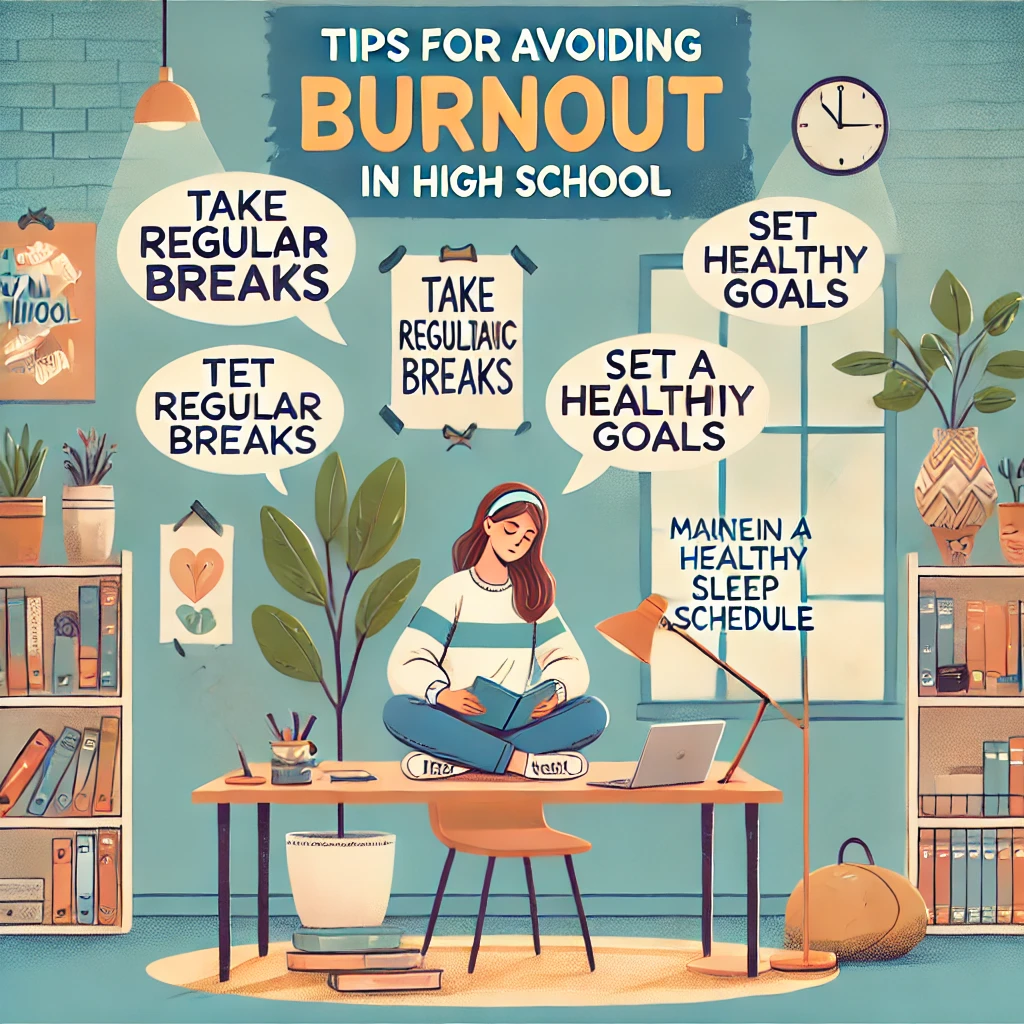
Burnout in High School
High school can be overwhelming with the demands of classes, extracurriculars, social life, and planning for the future. While working hard is important, overloading yourself can lead to burnout—characterized by stress, exhaustion, and loss of motivation. Here are actionable tips to help you avoid burnout and maintain a healthy balance.
1. Prioritize Your Tasks
Why It Helps:
Focusing on what matters most ensures you use your time and energy efficiently.
How to Do It:
- Create a list of tasks and rank them by importance and deadlines.
- Use a planner or app to organize your priorities.
- Say no to unnecessary commitments that add stress without value.
Tip: Practice the “80/20 Rule”—focus on the 20% of tasks that yield 80% of your results.
2. Set Realistic Goals
Why It Helps:
Achievable goals prevent unnecessary pressure and help you stay motivated.
How to Do It:
- Break long-term goals into smaller, manageable steps.
- Focus on progress rather than perfection.
- Celebrate small wins along the way to maintain a positive outlook.
Tip: Write down your goals to keep them clear and actionable.
3. Take Regular Breaks
Why It Helps:
Short breaks refresh your mind and help maintain focus.
How to Do It:
- Use the Pomodoro technique: study for 25 minutes and take a 5-minute break.
- Step away from your desk to stretch, grab a snack, or take a short walk.
- Plan longer breaks after completing major tasks to reward yourself.
Tip: Avoid using breaks for social media, as it can be mentally draining.
4. Practice Good Time Management
Why It Helps:
Managing your time effectively reduces last-minute stress.
How to Do It:
- Use a daily or weekly schedule to allocate time for school, activities, and rest.
- Set aside specific blocks for studying, hobbies, and relaxation.
- Avoid procrastination by tackling small tasks immediately.
Tip: Start with the hardest tasks when your energy levels are highest.
5. Get Enough Sleep
Why It Helps:
Adequate sleep improves focus, mood, and energy levels.
How to Do It:
- Aim for 8–10 hours of sleep per night, as recommended for teens.
- Establish a consistent sleep routine, even on weekends.
- Avoid screens at least an hour before bed to improve sleep quality.
Tip: Create a calming bedtime routine, such as reading or meditating.
6. Maintain a Healthy Diet and Stay Active
Why It Helps:
Proper nutrition and exercise keep your body and mind energized.
How to Do It:
- Eat balanced meals with fruits, vegetables, protein, and whole grains.
- Stay hydrated throughout the day with water instead of sugary drinks.
- Engage in regular physical activity, like walking, dancing, or playing sports.
Tip: Combine exercise with social time by joining a team or working out with friends.
7. Schedule Time for Relaxation
Why It Helps:
Downtime helps you recharge and prevent mental exhaustion.
How to Do It:
- Dedicate time each day for hobbies or activities you enjoy.
- Practice relaxation techniques like deep breathing, yoga, or meditation.
- Spend time outdoors to improve your mood and reduce stress.
Tip: Treat relaxation time as a non-negotiable part of your routine.
8. Seek Support from Others
Why It Helps:
Talking to someone about your feelings can provide perspective and relief.
How to Do It:
- Share your concerns with a trusted friend, family member, or teacher.
- Join a study group to share the workload and motivate each other.
- Reach out to a school counselor or mental health professional if stress becomes overwhelming.
Tip: Remember, asking for help is a sign of strength, not weakness.
9. Avoid Overcommitting
Why It Helps:
Taking on too much can lead to unnecessary stress and fatigue.
How to Do It:
- Limit the number of extracurricular activities you join.
- Focus on activities that align with your interests and goals.
- Assess your schedule regularly and make adjustments if you feel overwhelmed.
Tip: Prioritize quality over quantity in your commitments.
10. Reflect and Adjust Regularly
Why It Helps:
Regular reflection helps you identify stressors and find solutions.
How to Do It:
- Set aside time weekly to evaluate your workload and well-being.
- Identify what’s working and what needs to change in your routine.
- Adjust your goals and schedule based on your current needs and priorities.
Tip: Keep a journal to track your progress and reflect on positive moments.
Final Thoughts
Avoiding burnout in high school requires balance, self-awareness, and proactive planning. By setting realistic goals, managing your time, and prioritizing self-care, you can stay motivated and enjoy your high school experience. Remember, it’s okay to take breaks and ask for help when needed.
For more tips on managing stress and building a healthy routine, check out helpful resources to support your journey!
Добавить комментарий