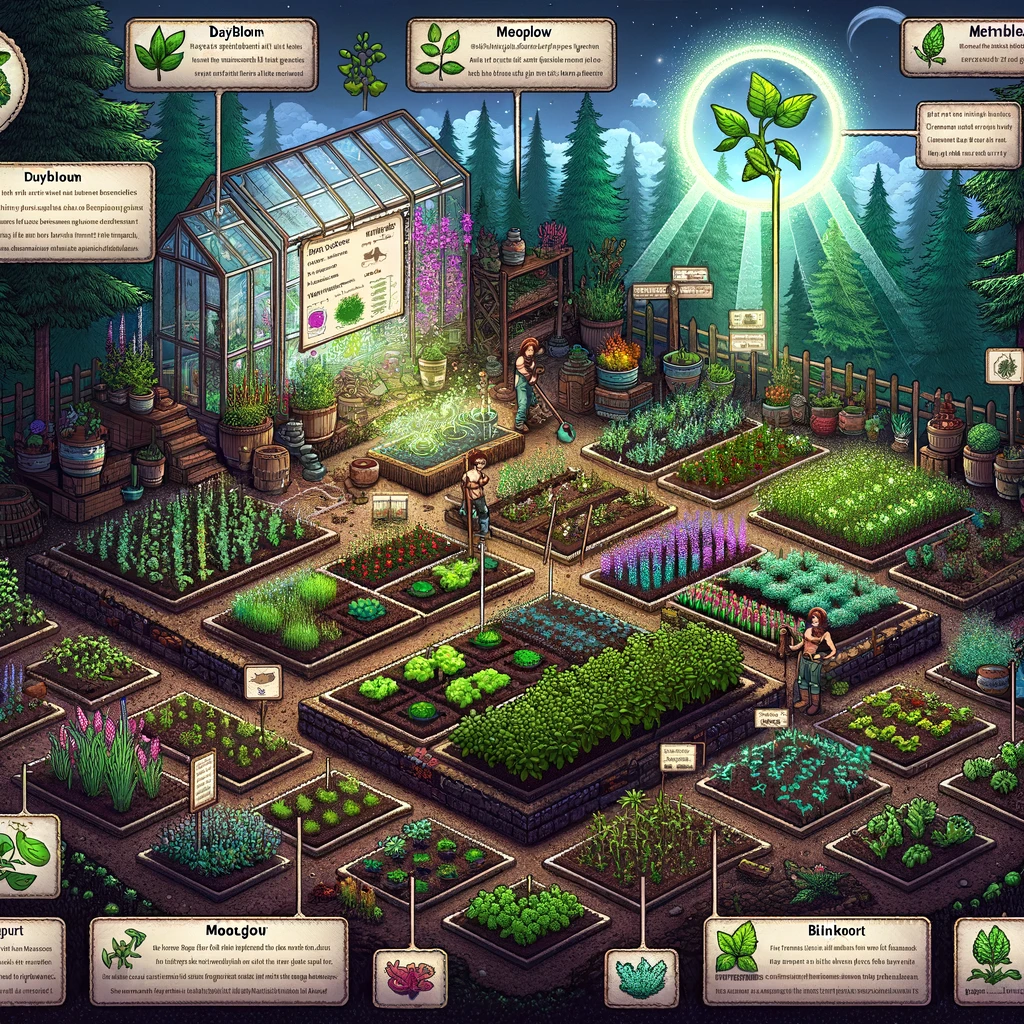
Farming herbs in Terraria is a fundamental activity that supports potion crafting, an essential aspect of the game, especially in Hardmode. Properly set up and managed herb farms can provide a steady supply of necessary ingredients for a wide range of useful potions. Here’s a comprehensive guide on how to set up an efficient herb farm and cultivate various herbs:
Choosing a Location
- Inside or Near Your Base: Herb farms should be easily accessible. Consider building them near your main base or inside a greenhouse structure.
- Climate Control: Some herbs have specific biome or climate requirements (e.g., Waterleaf blooms in the rain). Plan your farm layout to accommodate these needs, possibly using biome blocks or actuators to simulate environments.
Setup and Design
- Planter Boxes: These are available from the Dryad after defeating a boss and are the easiest way to grow herbs as they don’t require any special biome conditions. Each herb has a specific planter box, but any herb can grow in any planter box.
- Clay Pots: Alternatively, you can use Clay Pots, which are crafted from Clay Blocks at a Furnace. Pots are more versatile in placement but take up more space compared to planter boxes.
- Layout: Organize your farm vertically or horizontally depending on your space constraints. Ensure there’s enough space between rows for easy harvesting. You might want a separate section for each type of herb or a large, communal area with different planter boxes.
Herb Types and Their Requirements
- Daybloom: Grows in the Daytime. Requires sunlight, so ensure it’s placed in an area exposed to the sky or use Sun Lamps.
- Moonglow: Blooms at night. Plant these in a shaded or indoor area for easy harvesting during night hours.
- Blinkroot: Grows randomly and doesn’t have specific requirements. Very flexible in terms of placement.
- Deathweed: Blooms during Blood Moons or with Full Moons when planted in Corruption/Crimson. Use respective planter boxes or corrupt/crimson blocks under clay pots.
- Waterleaf: Blooms when it rains. Place near water or create an artificial rain system with actuators to flood the area temporarily.
- Fireblossom: Blooms during the evening (3:45 PM to 7:30 PM in-game time) when near lava. Place pots or boxes near a lava source, or manually activate lava with actuators for controlled blooming.
- Shiverthorn: Grows slowly but has no special bloom conditions, making it low maintenance.
Farming Tips
- Automatic Harvesting: Use actuators to create an automated farm where you can deactivate blocks to drop all plants at once for quick and easy harvesting.
- Efficiency: Plant herbs close to a crafting station or storage area where you keep potion-making materials. This minimizes time spent gathering and crafting.
- Watering: Although not necessary, you can mimic watering by using a Bottomless Water Bucket or a normal Water Bucket to periodically «water» your herbs to fit the aesthetic of a well-maintained garden.
Herb Use in Potions
Once harvested, herbs are primarily used in potion crafting. Here are a few important potions and their herbal ingredients:
- Ironskin Potion: Daybloom + Iron Ore
- Regeneration Potion: Daybloom + Mushroom
- Mana Potion: Moonglow + Glowing Mushroom
- Obsidian Skin Potion: Fireblossom + Waterleaf + Obsidian
- Spelunker Potion: Moonglow + Blinkroot + Gold/Platinum Ore
By following these steps and strategies, you can establish a highly functional and aesthetically pleasing herb farm in Terraria, ensuring you always have a robust supply of herbs for your potion-crafting needs. This not only enhances your effectiveness in various aspects of the game but also adds an enjoyable element of gardening and farming to your Terraria experience.
Добавить комментарий