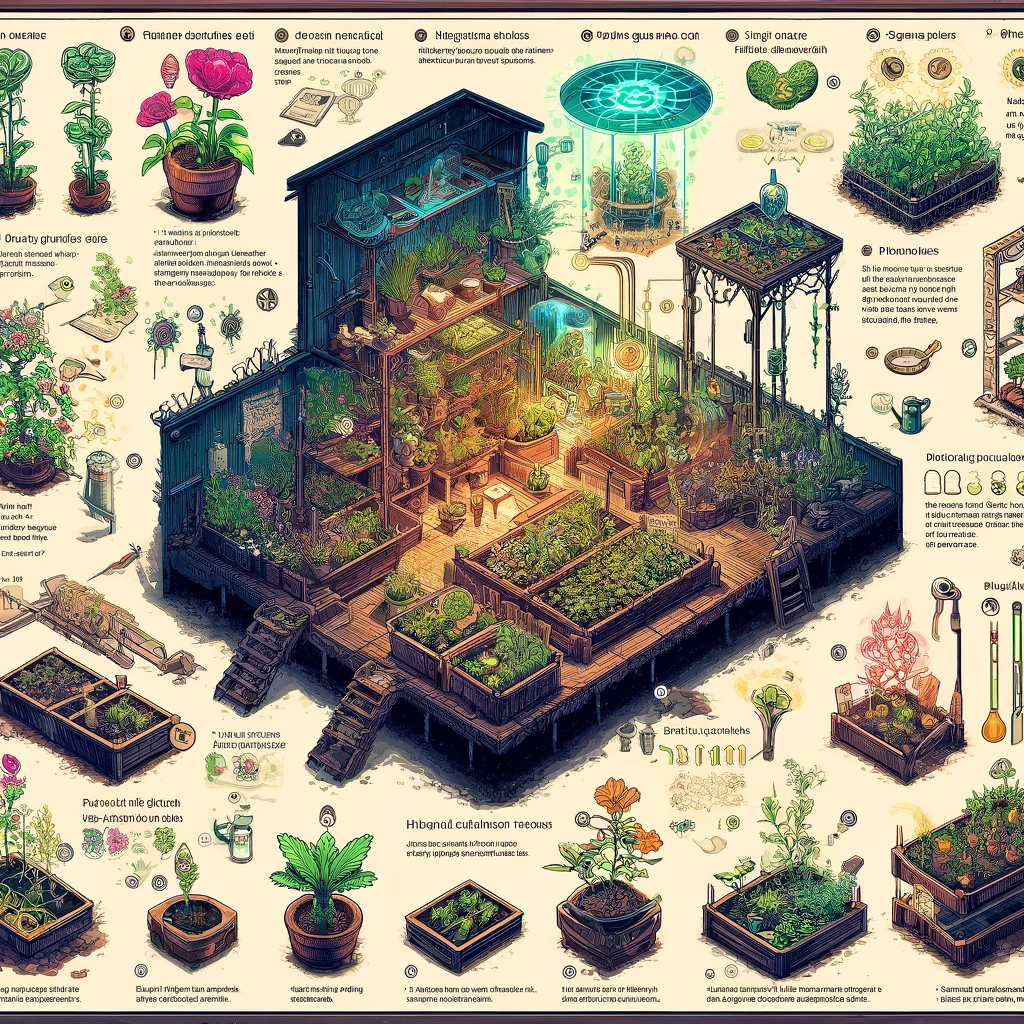
Gardening in Terraria is a rewarding activity that allows players to cultivate plants and resources for crafting potions, dyes, and other useful items. Effective gardening techniques can greatly enhance your ability to sustain and expand your in-game activities. Here’s a comprehensive guide to efficient gardening in Terraria, covering the essentials of planting, managing, and harvesting various flora.
1. Understanding Plant Types
Terraria features several types of plants, each with specific growth requirements:
- Herbs: Daybloom, Blinkroot, Waterleaf, etc., used primarily for potion crafting.
- Mushrooms: Regular and Glowing Mushrooms, used for food, potions, and building materials.
- Dye Plants: Used in the creation of various dyes.
- Trees: Wood and unique varieties like Palm or Boreal, important for building and crafting.
2. Setting Up Gardens
- Herb Gardens: Each herb has specific growth conditions (time of day, location, or proximity to water):
- Daybloom: Grows in daylight on the surface.
- Moonglow: Grows at night in the Jungle biome.
- Waterleaf: Flourishes near water in the Desert biome.
- Planter Boxes: Purchased from the Dryad, these contain soil favorable for any herb and can be placed anywhere, making them extremely versatile for controlled environments.
- Mushroom Farms:
- Surface Mushroom Biome: Create by spreading Mushroom Grass Seeds on Mud Blocks in the surface area. It’s essential for cultivating Glowing Mushrooms and eventually building a house for the Truffle NPC.
- Underground Farms: Similar setup but located underground; better for larger yields of Glowing Mushrooms.
- Tree Orchards:
- Spacing: Plant Acorns in soil or grass at least two tiles apart from each other to ensure growth.
- Biome-specific Trees: Some trees like Palm or Boreal grow only in specific biomes (Beach and Snow respectively), so plan your orchard location accordingly.
3. Automating Watering
- Irrigation: While most plants in Terraria don’t require watering, those like Waterleaf benefit from being near water. Use Buckets or construct channels to guide water near your plants if not using planter boxes.
4. Maximizing Harvest
- Timed Harvests: Many plants yield more resources or are only harvestable under specific conditions (e.g., Blood Moon, during rain, or certain moon phases). Keep track of these conditions and plan your harvests to maximize returns.
- Staff of Regrowth: Use this tool to harvest herbs; it increases yield and ensures seeds are dropped.
5. Using the Dryad’s Offerings
- Purchase Seeds and Planter Boxes: The Dryad offers a variety of seeds and planter boxes that can help you cultivate almost any type of plant in your base, allowing for efficient and organized gardens.
6. Pest and Weed Control
- Sunflowers: Plant these near your gardens to prevent the spread of the Corruption or Crimson biomes, protecting your plants.
- Manual Maintenance: Regularly check and clear unwanted plants or weeds that might compete with your crops.
7. Decorative Gardening
- Living Trees: Use the Living Wood Wand and Leaf Wand to create decorative tree-shaped structures.
- Flower Pots and Vases: Use these for indoor or decorative planting, adding aesthetic value to your home or garden.
By following these gardening techniques, you can efficiently manage your resources in Terraria, ensuring you have a steady supply of materials for your potions, equipment, and other needs. Whether for utility or decoration, your gardens can be both a vital resource and a beautiful part of your Terraria world.
Добавить комментарий