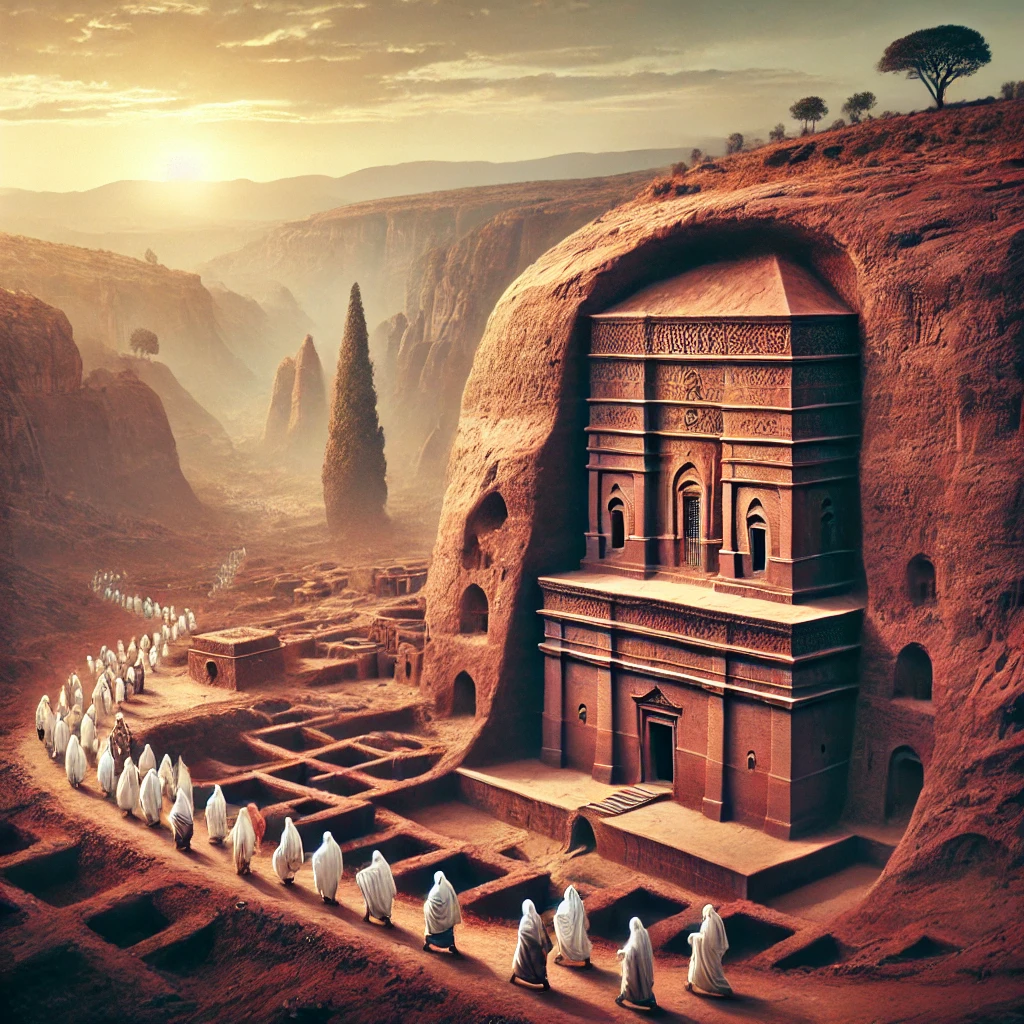
Rock-Hewn Churches in Lalibela
The rock-hewn churches of Lalibela, Ethiopia, are among the world’s most extraordinary architectural and spiritual wonders. Carved directly into volcanic rock in the 12th and 13th centuries, these medieval churches are a UNESCO World Heritage Site and remain an active center of Ethiopian Orthodox Christianity. Often referred to as the “New Jerusalem”, Lalibela’s churches continue to attract pilgrims and visitors from around the world.
1. The History of Lalibela’s Churches
- The churches were built during the reign of King Lalibela (1181–1221) of the Zagwe Dynasty, who sought to create a holy site in response to the Muslim conquest of Jerusalem.
- According to legend, angels helped construct the churches, allowing them to be completed in a miraculous time frame.
- The structures were carved from solid rock, rather than built with traditional masonry, making them unique in both design and execution.
2. The 11 Churches of Lalibela
Lalibela’s churches are divided into two main groups, separated by the Jordan River, which symbolizes the biblical River Jordan.
Northern Group (Old Testament Symbolism)
- Biete Medhane Alem (House of the Savior of the World) – The largest rock-hewn church in the world, believed to house the Ark of the Covenant.
- Biete Maryam (House of Mary) – One of the oldest and most decorated churches.
- Biete Golgotha Mikael – Known for its holy relics and a tomb believed to be King Lalibela’s.
- Biete Meskel (House of the Cross) – A small, beautifully carved church.
- Biete Denagel (House of the Virgins) – Dedicated to martyred Christian women.
Southern Group (New Testament Symbolism)
- Biete Amanuel – Thought to have been the royal chapel.
- Biete Abba Libanos – A church partly detached from the rock, associated with Lalibela’s wife.
- Biete Qeddus Mercoreus – Some believe this was once used as a royal palace.
- Biete Gabriel-Rufael – Possibly a former royal residence before being converted into a church.
- Biete Lehem (House of Holy Bread) – Thought to be a chapel or storage area.
The Most Iconic Church: Biete Giyorgis (Church of St. George)
- Biete Giyorgis, shaped like a perfect cross, is the most famous of Lalibela’s churches.
- It stands alone, with steep walls descending into the ground, symbolizing spiritual ascension.
- Legends say King Lalibela built it after St. George appeared to him in a vision.
3. Religious Significance and Pilgrimage
- The churches remain active places of worship, with priests and monks maintaining religious traditions.
- Lalibela is a major pilgrimage site, especially during Ethiopian Orthodox holidays such as Genna (Ethiopian Christmas) on January 7th.
4. How the Churches Were Carved
- Instead of traditional construction, the churches were excavated downward into solid rock.
- Workers chiseled out windows, doors, and intricate carvings, creating free-standing structures within the earth.
- Interior spaces were hollowed out, complete with pillars, archways, and detailed frescoes.
5. Conservation Challenges and Efforts
The churches face threats from:
- Erosion and weathering due to exposure.
- Tourism impact and foot traffic.
- Structural weakening from centuries of use.
To preserve them, UNESCO and the Ethiopian government have introduced protective shelters and ongoing restoration efforts.
Conclusion
The rock-hewn churches of Lalibela are a masterpiece of faith, engineering, and history. Whether viewed as a religious pilgrimage or an architectural wonder, they remain one of Africa’s most awe-inspiring sites.
For more tips on improving your photography and editing skills, check out helpful guides to take your selfies to the next level.
Добавить комментарий