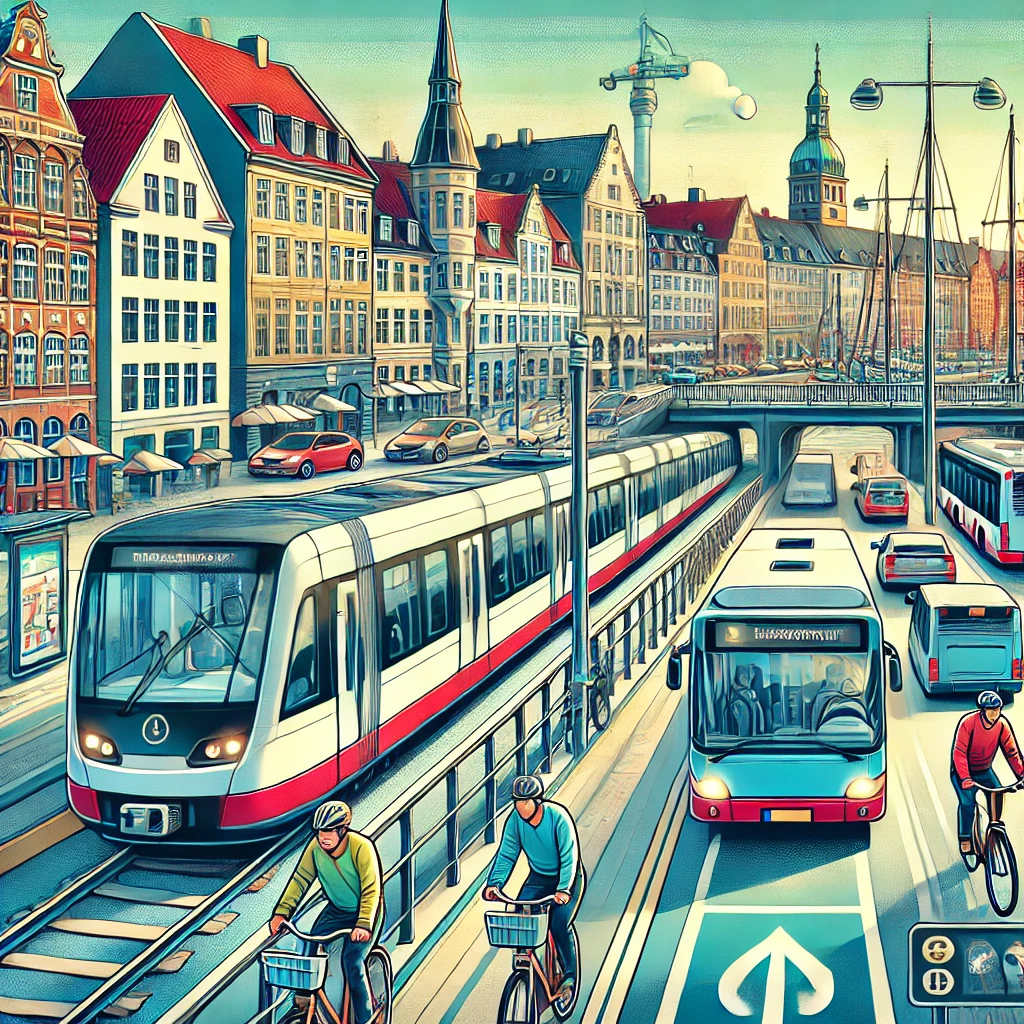
Public Transport in Copenhagen
Copenhagen, the capital of Denmark, boasts one of the most efficient, reliable, and eco-friendly public transport systems in the world. Whether you’re a resident or a visitor, getting around the city is seamless thanks to its interconnected network of buses, trains, metros, and bicycles. Here’s everything you need to know about public transport in Copenhagen.
1. Overview of Copenhagen’s Public Transport System
Copenhagen’s public transport system is well-integrated, making it easy to switch between buses, trains, and the metro. All services are operated under the authority of Movia, DSB, and Metroselskabet.
a. Modes of Transport
- Metro: Fully automated, driverless trains that run 24/7, making it the backbone of public transit in Copenhagen.
- Buses: A dense network of buses, including night buses, covers areas not serviced by the metro or trains.
- S-trains (S-tog): Regional trains connecting Copenhagen with suburban areas and neighboring towns.
- Harbor Buses (Havnebussen): Boats functioning as part of the public transport system, offering scenic routes along the harbor.
- Cycling Infrastructure: Copenhagen is renowned for its cycling culture, and bikes are often integrated into public transport plans.
b. Ticketing
- A unified ticketing system allows passengers to use the same ticket across all modes of public transport, making travel incredibly convenient.
2. Metro System
Copenhagen’s metro system is modern, fast, and efficient, serving both the city center and surrounding areas.
a. Key Features
- Fully automated, driverless system.
- Runs 24/7, with frequent departures (every 2–5 minutes during peak hours).
- Two main lines: M1 (green) and M2 (yellow), as well as newer lines M3 Cityringen (circle line) and M4.
b. Popular Stops
- Kongens Nytorv: A central hub for shopping, dining, and sightseeing.
- Nørreport: A major interchange connecting the metro, S-trains, and regional trains.
- Copenhagen Airport (Kastrup): The metro directly connects the city center to the airport in about 15 minutes.
3. Buses
Copenhagen’s buses provide extensive coverage and are an easy option for getting around areas not served by the metro or trains.
a. Types of Buses
- A Buses: Frequent buses that run through major routes and urban areas.
- S Buses: Express buses with fewer stops, designed for faster travel over longer distances.
- N Buses: Night buses that operate after regular services end, ensuring 24-hour coverage.
b. Real-Time Updates
- Buses are equipped with screens showing the next stops and estimated arrival times.
- Use apps like Rejseplanen or DOT Tickets to track bus schedules in real time.
4. S-Trains (S-tog)
The S-trains are regional trains that connect Copenhagen with its suburbs and neighboring towns, making them perfect for commuters or day trips outside the city.
a. Key Lines
- The S-train network includes seven lines, all converging at Copenhagen Central Station (Hovedbanegården).
- Trains run every 10 minutes during the day, with reduced frequency in the evenings and weekends.
b. Bike-Friendly
- S-trains allow passengers to bring bicycles on board free of charge, a major perk for cyclists exploring Copenhagen’s outskirts.
5. Harbor Buses (Havnebussen)
For a scenic way to travel, the harbor buses are an excellent choice. They function like water taxis but are part of the public transport network.
a. Key Routes
- The harbor buses stop at popular locations like Nyhavn, The Little Mermaid, and Refshaleøen.
- Perfect for sightseeing while getting from point A to point B.
b. Schedule
- Regular services run throughout the day, with departures approximately every 20 minutes.
6. Tickets and Pricing
The Copenhagen public transport system uses a zone-based fare structure. Prices depend on how many zones you travel through.
a. Types of Tickets
- Single Tickets: Valid for all modes of transport within the selected zones.
- City Pass: Unlimited travel within specified zones for 24, 48, 72, or 120 hours.
- Rejsekort: A reusable travel card that offers discounted fares compared to single tickets.
- Copenhagen Card: Includes unlimited public transport and free entry to many attractions, ideal for tourists.
b. Where to Buy Tickets
- At ticket machines in metro and train stations.
- Through the DOT Tickets app or Rejsekort app.
- From bus drivers (cash only, exact change required).
7. Cycling Integration
Copenhagen is one of the most bike-friendly cities in the world, and cycling is seamlessly integrated into the transport system.
a. Bike Rental
- Rent bikes from shops, hotels, or bike-sharing programs like Donkey Republic or Bycyklen (Copenhagen’s official electric bike rental service).
b. Cycling with Public Transport
- Bikes are allowed on S-trains and harbor buses at no extra cost. However, they are not permitted on metro trains during rush hours (7:00–9:00 AM and 3:30–5:30 PM).
c. Cycling Infrastructure
- Dedicated bike lanes make it easy and safe to explore the city by bike.
8. Apps and Tools for Navigating Public Transport
Using digital tools can make navigating Copenhagen’s public transport system even easier.
a. Rejseplanen
- A comprehensive trip planner that provides real-time updates on schedules, routes, and travel times.
b. DOT Tickets
- An app for purchasing tickets and passes for metro, buses, and trains.
c. Google Maps
- Provides accurate directions and transit schedules for Copenhagen’s public transport system.
9. Accessibility
Copenhagen’s public transport is highly accessible for people with disabilities.
a. Metro and Trains
- All metro stations and most train stations are equipped with elevators and ramps.
- Trains have designated spaces for wheelchairs and strollers.
b. Buses
- Low-floor buses with ramps make it easy for passengers with mobility aids or strollers to board.
10. Tips for Using Public Transport in Copenhagen
- Validate Your Ticket: Always ensure your ticket is valid before boarding. Random inspections are frequent, and fines for traveling without a valid ticket can be steep.
- Off-Peak Travel: If possible, travel outside of rush hours to avoid crowded trains and buses.
- Plan Ahead: Use the Rejseplanen app to plan your trips and check for delays or disruptions.
- Explore by Bike: Copenhagen’s bike-friendly streets make cycling a fun and practical alternative to public transport.
Final Thoughts
Copenhagen’s public transport system is a shining example of efficiency and sustainability. With its well-connected network, ease of use, and eco-friendly options, getting around the city is a breeze. Whether you’re commuting to work, exploring iconic attractions, or venturing into the suburbs, Copenhagen’s buses, metros, and trains make every journey convenient and enjoyable.
For more tips on navigating public transport, check out helpful guides to make your travel hassle-free.
Добавить комментарий