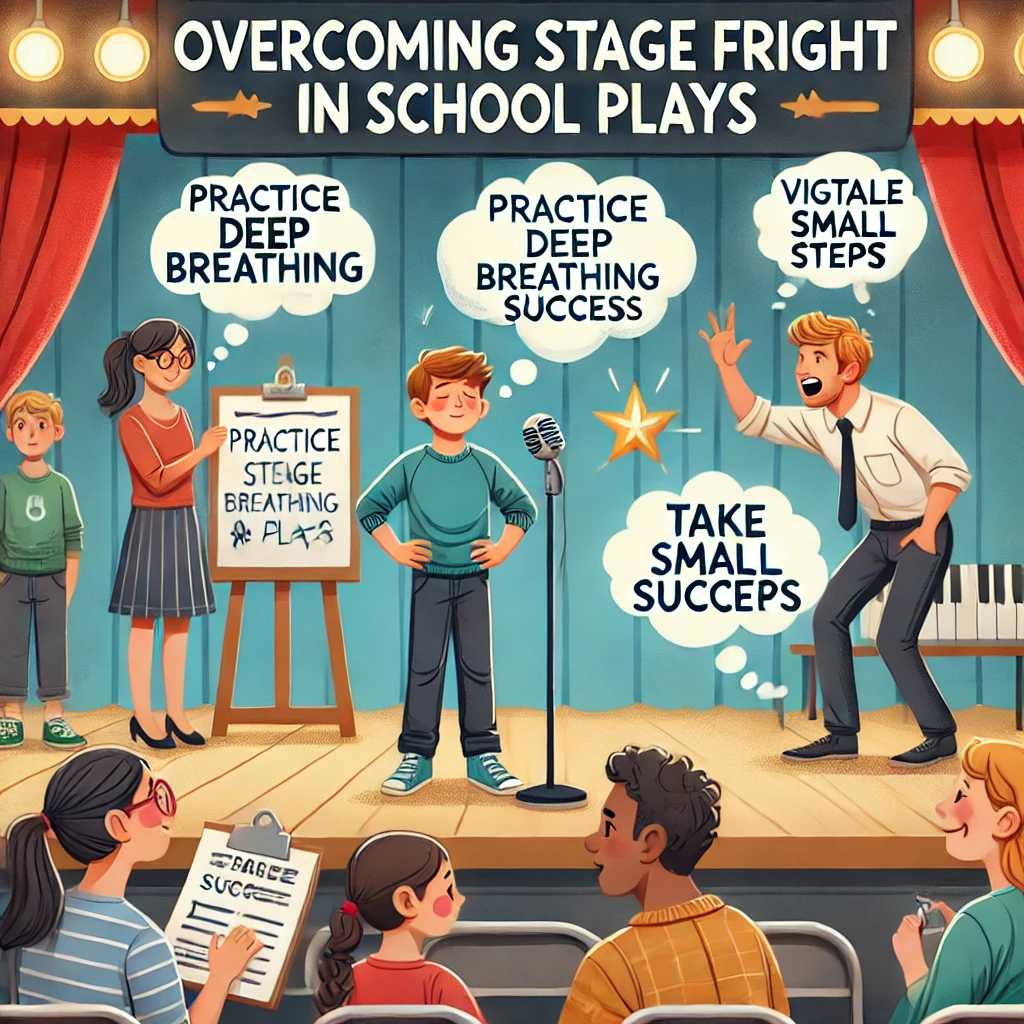
Stage Fright
Performing in a school play can be exciting, but stage fright—those nervous butterflies before stepping into the spotlight—can make the experience feel overwhelming. The good news is that stage fright is natural, and there are effective ways to overcome it. Here’s how to manage and conquer your fear to give your best performance.
1. Understand Your Stage Fright
Why It Helps:
Recognizing that stage fright is normal can help you approach it calmly and constructively.
How to Do It:
- Remind yourself that most performers, even professionals, feel nervous before a show.
- Understand that stage fright stems from a natural adrenaline response.
- See it as excitement rather than fear—your body is preparing to perform well.
Tip: Write down what you’re nervous about and replace those thoughts with positive affirmations.
2. Practice, Practice, Practice
Why It Helps:
The more familiar you are with your lines and movements, the more confident you’ll feel.
How to Do It:
- Rehearse your lines daily, both alone and with your castmates.
- Practice in front of family or friends to simulate an audience experience.
- Visualize yourself performing successfully on stage.
Tip: Repetition turns nervousness into muscle memory, making your performance feel natural.
3. Focus on the Character, Not Yourself
Why It Helps:
Shifting your focus to the role you’re playing reduces self-consciousness.
How to Do It:
- Immerse yourself in your character’s story, emotions, and goals.
- Think about how your performance contributes to the overall play, not just how you’re being perceived.
- Imagine the audience is there to enjoy the character, not critique you personally.
Tip: Stay in character even during minor slip-ups—it’s part of the performance!
4. Use Relaxation Techniques
Why It Helps:
Relaxing your body and mind before stepping on stage helps reduce nervous energy.
How to Do It:
- Practice deep breathing exercises: inhale for 4 seconds, hold for 4 seconds, and exhale for 4 seconds.
- Stretch to release physical tension, especially in your neck, shoulders, and hands.
- Meditate or listen to calming music to quiet your mind before the show.
Tip: Create a pre-show routine that includes these techniques to keep you centered.
5. Arrive Early to Familiarize Yourself with the Stage
Why It Helps:
Getting comfortable in the performance space reduces uncertainty and nerves.
How to Do It:
- Walk around the stage and practice key movements to get a feel for the space.
- Test out props and lighting cues to avoid surprises during the performance.
- Spend a few moments imagining the audience and visualizing your performance.
Tip: Use this time to bond with your castmates and share positive energy.
6. Focus on the Audience’s Enjoyment
Why It Helps:
Shifting your mindset from self-doubt to providing a great experience helps you relax.
How to Do It:
- Remember that the audience is rooting for you—they want to enjoy the play!
- Think of your performance as a gift you’re sharing with others.
- Look for friendly faces in the crowd to build confidence.
Tip: Smile and project positive energy—it’s contagious!
7. Embrace Mistakes as Part of the Experience
Why It Helps:
Knowing it’s okay to make mistakes reduces the pressure to be perfect.
How to Do It:
- If you forget a line or make a mistake, improvise and keep going.
- Trust your castmates to support you if something goes wrong.
- Remind yourself that small mistakes often go unnoticed by the audience.
Tip: Laugh off slip-ups during rehearsals to build resilience and confidence.
8. Stay Positive and Use Affirmations
Why It Helps:
Positive thinking shifts your mindset and builds confidence.
How to Do It:
- Repeat affirmations like, “I am prepared, and I will do great” or “The audience will love my performance.”
- Focus on past successes, such as a rehearsal that went well.
- Avoid negative self-talk and replace it with encouragement.
Tip: Write affirmations on sticky notes and place them in your dressing area for a boost.
9. Lean on Your Cast and Crew for Support
Why It Helps:
Knowing you’re part of a team reduces the pressure of performing alone.
How to Do It:
- Share your nerves with castmates—they probably feel the same way!
- Practice group warm-ups or rituals to create a supportive atmosphere.
- Encourage one another and celebrate successes together.
Tip: A strong bond with your team makes the experience more enjoyable and less intimidating.
10. Reflect on the Experience Afterward
Why It Helps:
Reflecting on your performance helps you learn and grow for future opportunities.
How to Do It:
- Celebrate what went well, even if it’s something small like nailing a difficult line.
- Think about what you’d like to improve for your next performance.
- Thank your castmates, director, and crew for their support.
Tip: Keep a journal of your experiences to track your progress and build confidence over time.
Quick Stage Fright Strategies
| Action | Benefit |
|---|---|
| Practice regularly | Builds confidence through familiarity. |
| Use deep breathing | Calms nerves and reduces tension. |
| Stay in character | Shifts focus away from self-consciousness. |
| Embrace the audience’s support | Reframes nerves as excitement. |
| Reflect and learn | Turns challenges into growth opportunities. |
Final Thoughts
Overcoming stage fright takes time and practice, but the key is to focus on preparation, relaxation, and enjoying the moment. By embracing your role and leaning on your castmates for support, you’ll find that performing can be an incredibly rewarding experience.
For more tips and resources on public speaking and performing, explore helpful guides and step into the spotlight with confidence!
Добавить комментарий