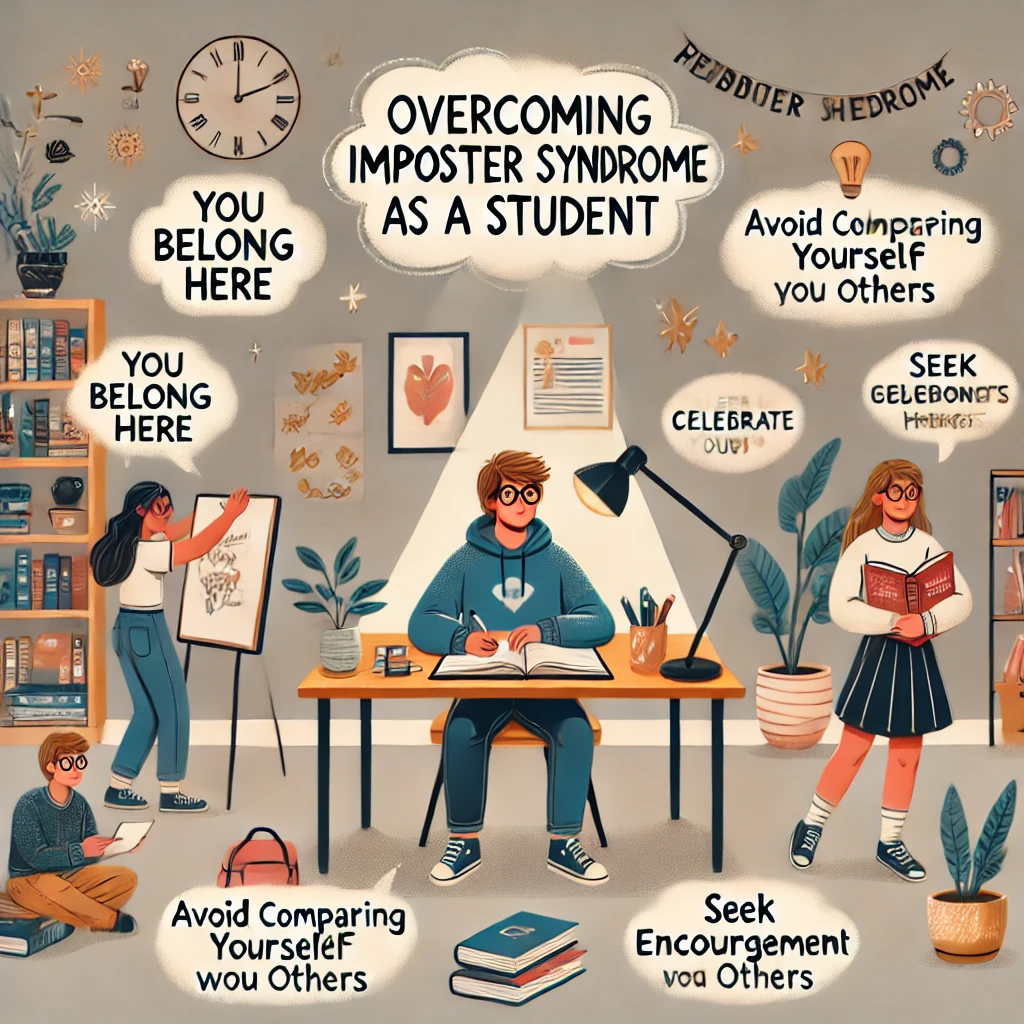
Imposter Syndrome
Imposter syndrome is the feeling that you don’t belong or aren’t good enough, even when you have the skills and achievements to prove otherwise. Many students face this challenge, especially in competitive environments, but it’s possible to overcome these doubts and build confidence. Here’s how to tackle imposter syndrome effectively.
1. Recognize Imposter Syndrome
Why It Helps:
Acknowledging your feelings is the first step toward addressing them.
How to Do It:
- Pay attention to thoughts like “I don’t deserve this” or “I’m not smart enough.”
- Understand that imposter syndrome is common and doesn’t reflect your true abilities.
- Separate your feelings from facts—acknowledge your accomplishments objectively.
Tip: Write down your achievements and review them when self-doubt arises.
2. Reframe Negative Thoughts
Why It Helps:
Changing your mindset can help you focus on growth rather than self-criticism.
How to Do It:
- Replace “I’m not good enough” with “I’m still learning and improving.”
- Challenge perfectionism by reminding yourself that mistakes are part of growth.
- Practice gratitude by focusing on what you’ve achieved rather than what you lack.
Tip: Use affirmations like “I am capable” or “I belong here” to counter self-doubt.
3. Talk About Your Feelings
Why It Helps:
Sharing your experiences can help you realize you’re not alone.
How to Do It:
- Talk to friends or classmates—they may share similar feelings.
- Open up to a trusted teacher, mentor, or school counselor for support.
- Join groups or clubs where you can connect with others who understand your struggles.
Tip: Hearing how others have overcome imposter syndrome can inspire and motivate you.
4. Focus on Your Strengths
Why It Helps:
Recognizing your unique abilities can boost your confidence.
How to Do It:
- Make a list of your skills, achievements, and qualities that make you unique.
- Reflect on past successes and how you overcame challenges.
- Emphasize your strengths during discussions, projects, or presentations.
Tip: Keep a “success journal” where you document accomplishments, big or small.
5. Set Realistic Expectations
Why It Helps:
Unrealistic goals can lead to unnecessary pressure and feelings of inadequacy.
How to Do It:
- Break large tasks into smaller, achievable steps.
- Celebrate progress rather than waiting for perfection.
- Understand that it’s okay to ask for help when needed.
Tip: Focus on learning and improvement rather than trying to meet impossible standards.
6. Accept Compliments Gracefully
Why It Helps:
Acknowledging positive feedback reinforces your sense of worth.
How to Do It:
- Respond with a simple “Thank you” when someone praises your work.
- Avoid downplaying your achievements by saying things like “It was nothing.”
- Reflect on compliments as genuine recognition of your efforts.
Tip: Write down compliments and revisit them during moments of self-doubt.
7. Embrace Failure as a Learning Opportunity
Why It Helps:
Understanding that failure is part of growth helps you take risks and persevere.
How to Do It:
- Reframe failure as feedback—it shows areas for improvement.
- Analyze what went wrong and how you can do better next time.
- Remind yourself that even successful people face setbacks.
Tip: Celebrate lessons learned from failure instead of dwelling on the outcome.
8. Seek Mentorship and Support
Why It Helps:
Guidance from someone experienced can provide perspective and encouragement.
How to Do It:
- Find a mentor, like a teacher, coach, or older student, who can offer advice.
- Ask for constructive feedback to help you improve and gain confidence.
- Join study groups or clubs where you can learn from and support peers.
Tip: Mentors can share their own struggles with imposter syndrome, showing you it’s manageable.
9. Stop Comparing Yourself to Others
Why It Helps:
Comparisons often lead to feelings of inadequacy and overlook personal progress.
How to Do It:
- Focus on your journey rather than measuring yourself against others.
- Limit time on social media, which can amplify comparisons.
- Celebrate others’ successes without diminishing your own achievements.
Tip: Use comparisons as inspiration, not a benchmark for your self-worth.
10. Practice Self-Care
Why It Helps:
Taking care of your mental and physical well-being strengthens resilience.
How to Do It:
- Get enough sleep, eat nutritious meals, and exercise regularly.
- Practice mindfulness techniques like meditation or journaling to manage stress.
- Set aside time for hobbies and activities that bring you joy.
Tip: Self-care reinforces the idea that you are deserving of kindness and support, even from yourself.
Recognizing Your Progress
| Symptom of Imposter Syndrome | How to Address It |
|---|---|
| Feeling like a fraud | Remind yourself of your qualifications. |
| Fear of failure | Reframe failure as a chance to learn. |
| Avoiding challenges | Take small risks to build confidence. |
| Downplaying accomplishments | Celebrate your successes, no matter the size. |
Final Thoughts
Overcoming imposter syndrome as a student requires patience and practice, but the effort is worth it. By recognizing your worth, reframing your thoughts, and seeking support, you can embrace your potential and thrive in both academics and life.
For more resources and tips to boost confidence, explore helpful guides and start building a strong foundation for success today!
Добавить комментарий