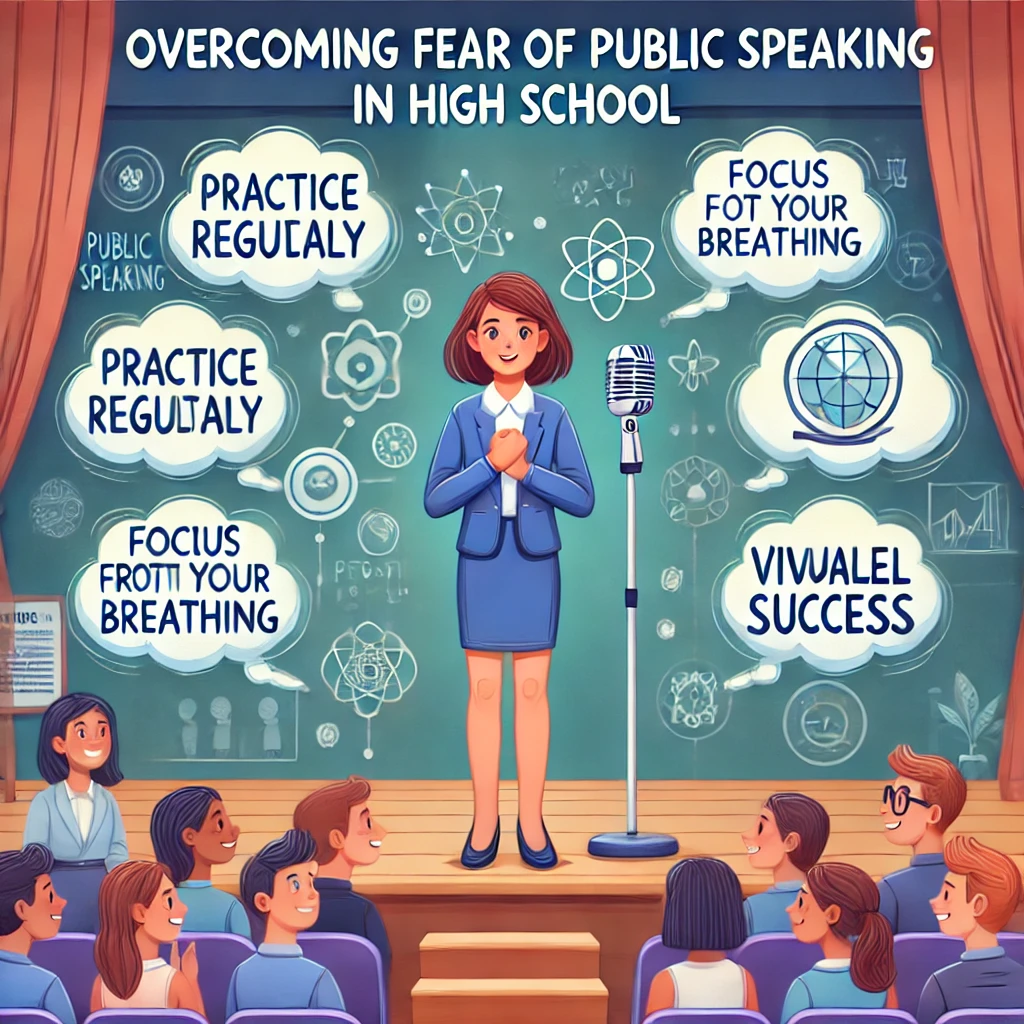
Overcoming Fear of Public Speaking in High School
Fear of public speaking is a common challenge for high school students, but with the right strategies, it’s a skill that can be mastered. Whether it’s for a class presentation, a debate, or a school assembly, overcoming this fear can boost confidence and improve communication skills. Here’s how to face and conquer your fear of public speaking.
1. Understand the Source of Your Fear
Why It Helps:
Recognizing why you’re afraid is the first step to overcoming it.
How to Do It:
- Reflect on what makes you nervous—fear of judgment, forgetting lines, or making mistakes.
- Realize that most people feel nervous before speaking, even experienced speakers.
- Remind yourself that it’s okay to feel fear—it’s part of the process.
Tip: Write down your fears to understand and address them one by one.
2. Prepare Thoroughly
Why It Helps:
Knowing your material well reduces anxiety and boosts confidence.
How to Do It:
- Practice your speech or presentation multiple times until you’re comfortable.
- Break your content into sections with key points to make it easier to remember.
- Use visual aids like slides or cue cards for support.
Tip: Practice in front of a mirror or record yourself to review your delivery.
3. Start Small
Why It Helps:
Gradual exposure helps you build confidence over time.
How to Do It:
- Begin by speaking in front of a small group of friends or family.
- Volunteer for short speaking opportunities, like answering questions in class.
- Work your way up to larger audiences as you gain confidence.
Tip: Celebrate small successes to keep yourself motivated.
4. Practice Deep Breathing
Why It Helps:
Deep breathing calms your nerves and improves focus.
How to Do It:
- Take slow, deep breaths before and during your speech.
- Inhale for four seconds, hold for four seconds, and exhale for four seconds.
- Repeat this exercise until you feel more relaxed.
Tip: Combine deep breathing with positive affirmations, like “I can do this.”
5. Focus on Your Message, Not Yourself
Why It Helps:
Shifting focus from yourself to your message reduces self-consciousness.
How to Do It:
- Remind yourself that the audience is there to learn or enjoy, not to judge.
- Think about the value your message brings to others.
- Focus on connecting with the audience rather than worrying about their reactions.
Tip: Imagine speaking to a friend to make the experience feel more natural.
6. Use Visualization Techniques
Why It Helps:
Visualizing success helps you build confidence and reduce fear.
How to Do It:
- Close your eyes and imagine yourself delivering a confident, well-received speech.
- Picture the audience smiling and applauding.
- Repeat this exercise daily to build positive associations with public speaking.
Tip: Combine visualization with practice for maximum impact.
7. Accept and Embrace Nervousness
Why It Helps:
Acknowledging your nerves allows you to control them better.
How to Do It:
- Remind yourself that nervousness is a natural response to speaking in public.
- Use the adrenaline rush to energize your performance.
- Accept that small mistakes are normal and won’t ruin your presentation.
Tip: Even professional speakers feel nervous—it’s a sign you care about doing well.
8. Engage with Your Audience
Why It Helps:
Interaction helps you feel more connected and reduces anxiety.
How to Do It:
- Make eye contact with different people in the audience to create a sense of connection.
- Start with a question, joke, or anecdote to grab attention and ease tension.
- Encourage audience participation, like asking for a show of hands or feedback.
Tip: Treat the presentation as a conversation rather than a performance.
9. Learn from Feedback
Why It Helps:
Constructive feedback helps you improve and grow more confident over time.
How to Do It:
- Ask teachers, peers, or mentors for feedback on your speech.
- Focus on areas for improvement without being overly critical of yourself.
- Use each speaking opportunity as a learning experience.
Tip: Keep track of your progress to remind yourself how far you’ve come.
10. Join Speaking or Debate Clubs
Why It Helps:
Practice in a supportive environment builds skills and confidence.
How to Do It:
- Join your school’s debate team, drama club, or Toastmasters group.
- Participate in speech contests or school events to gain experience.
- Surround yourself with peers who encourage and inspire you.
Tip: Regular practice in these settings makes public speaking feel less intimidating.
11. Focus on Progress, Not Perfection
Why It Helps:
Letting go of perfectionism allows you to enjoy the process and learn from mistakes.
How to Do It:
- Set realistic goals, like speaking clearly or making eye contact.
- Celebrate small improvements, even if the speech wasn’t flawless.
- Remember that every speaker makes mistakes—it’s part of the journey.
Tip: Each speech is an opportunity to grow, not a test of your worth.
Final Thoughts
Overcoming the fear of public speaking takes time, patience, and practice. By preparing thoroughly, embracing small steps, and focusing on progress rather than perfection, you can turn your fear into confidence. Remember, the more you practice, the easier it becomes.
For more tips and tools to build confidence and communication skills, explore helpful resources and take the first step toward mastering public speaking!
Добавить комментарий