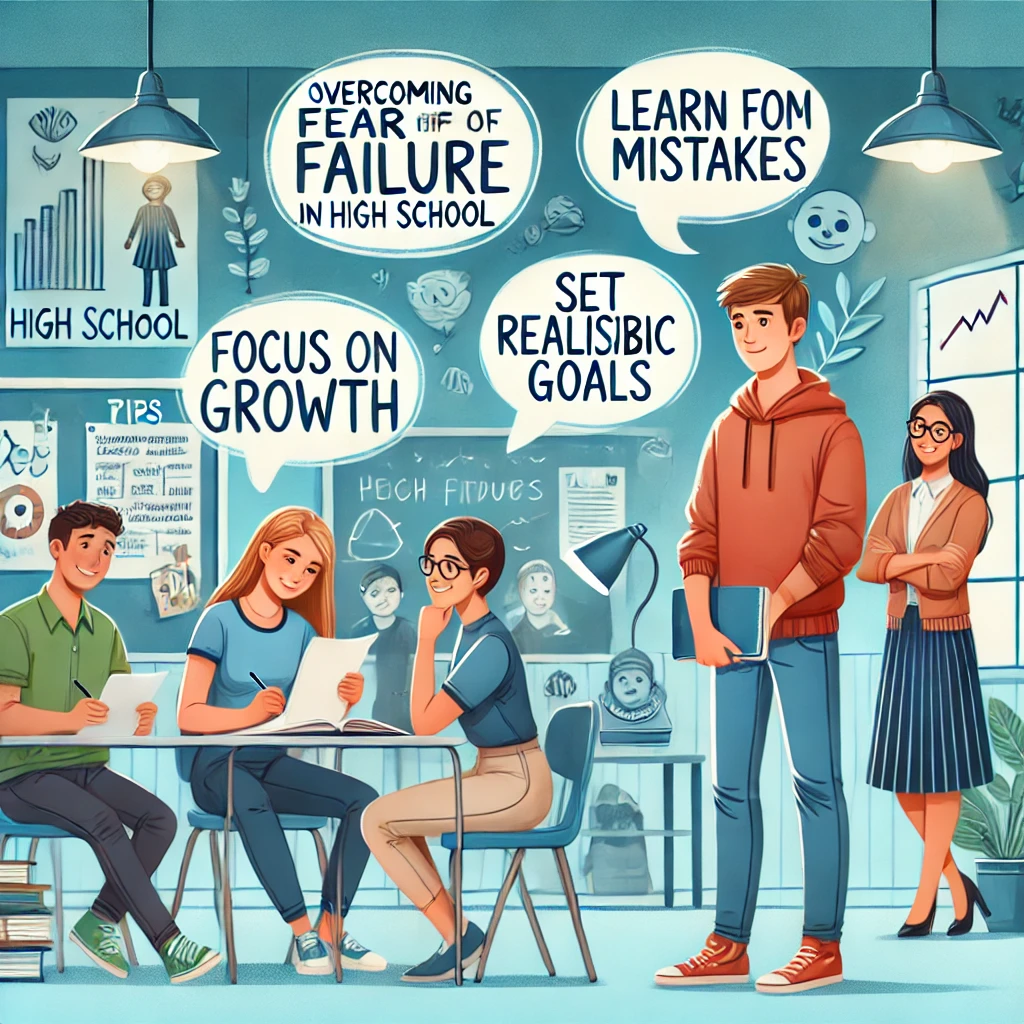
Fear of Failure
Fear of failure is common among high school students who face academic pressure, extracurricular challenges, and social expectations. While the fear is natural, it can hold you back from reaching your full potential if not addressed. Here are practical strategies to help you overcome the fear of failure and turn setbacks into opportunities for growth.
1. Understand the Root of Your Fear
Why It Helps:
Identifying the cause of your fear allows you to tackle it more effectively.
How to Do It:
- Reflect on what failure means to you—are you worried about disappointing others, looking bad, or losing opportunities?
- Acknowledge that failure is a natural part of learning and growing.
- Challenge the negative beliefs that feed your fear, such as “I’ll never succeed” or “People will judge me.”
Tip: Write down your fears and analyze whether they’re based on facts or assumptions.
2. Set Realistic Expectations
Why It Helps:
Unrealistic goals can increase pressure and make failure feel inevitable.
How to Do It:
- Break large goals into smaller, achievable steps.
- Focus on progress rather than perfection—celebrate small wins along the way.
- Be kind to yourself if things don’t go as planned and adjust your expectations accordingly.
Tip: Remember, no one succeeds all the time, and that’s okay.
3. Reframe Failure as a Learning Opportunity
Why It Helps:
Seeing failure as a chance to grow reduces its power to intimidate you.
How to Do It:
- After a setback, ask yourself what you learned and how you can improve next time.
- Replace “I failed” with “I tried, and now I know what to do differently.”
- View each challenge as a stepping stone toward your goals.
Tip: Keep a journal to track lessons learned from difficult experiences.
4. Focus on What You Can Control
Why It Helps:
Worrying about things outside your control increases anxiety and hinders performance.
How to Do It:
- Concentrate on the effort you put in rather than the outcome.
- Prepare thoroughly for tasks like tests, projects, or performances to boost confidence.
- Let go of external factors, like other people’s opinions or unpredictable circumstances.
Tip: Practice mindfulness to stay grounded in the present moment.
5. Develop a Positive Mindset
Why It Helps:
Optimism reduces fear and builds resilience in the face of setbacks.
How to Do It:
- Use affirmations like, “I am capable of handling challenges” or “Every mistake brings me closer to success.”
- Surround yourself with supportive people who encourage and uplift you.
- Replace self-criticism with self-compassion by treating yourself as you would a friend.
Tip: Start each day by listing three things you’re grateful for to shift your focus to the positive.
6. Practice Self-Care
Why It Helps:
A healthy body and mind improve your ability to cope with stress and fear.
How to Do It:
- Get enough sleep, eat nutritious meals, and stay hydrated to keep your energy levels up.
- Exercise regularly to release tension and boost mood.
- Take breaks to relax, recharge, and do activities you enjoy.
Tip: Schedule downtime into your routine to maintain balance.
7. Take Small Risks to Build Confidence
Why It Helps:
Facing your fears in manageable steps helps you become more comfortable with challenges.
How to Do It:
- Start with low-stakes situations, like answering a question in class or trying a new hobby.
- Gradually work up to bigger risks, such as taking on a leadership role or entering a competition.
- Reflect on each success, no matter how small, to reinforce your confidence.
Tip: Keep a list of your accomplishments to remind yourself of your growth.
8. Seek Feedback and Support
Why It Helps:
Constructive feedback helps you improve, while support boosts your morale.
How to Do It:
- Ask teachers, mentors, or friends for advice on how to do better.
- Share your fears with someone you trust to gain perspective and reassurance.
- Join study groups or extracurricular teams where you can learn from others.
Tip: Feedback is a tool for growth, not a judgment of your worth.
9. Accept That Failure Is Part of Success
Why It Helps:
Even the most successful people have failed on their journey—failure is a stepping stone, not a roadblock.
How to Do It:
- Research stories of famous figures who overcame failures, like Michael Jordan or J.K. Rowling.
- Remind yourself that setbacks are temporary and don’t define you.
- Celebrate your efforts, even if the outcome isn’t perfect.
Tip: Embrace the idea that failure is a natural and valuable part of life.
10. Plan for the Worst and Focus on the Best
Why It Helps:
Having a plan for potential setbacks reduces their emotional impact.
How to Do It:
- Identify possible challenges and think of solutions in advance.
- Focus on your strengths and the resources you have to overcome obstacles.
- Visualize success to build confidence and motivation.
Tip: Prepare thoroughly but stay flexible if things don’t go as planned.
Final Thoughts
Fear of failure is a normal part of growth, especially in high school when you’re navigating new challenges and expectations. By setting realistic goals, reframing setbacks as learning experiences, and building a supportive environment, you can turn fear into a powerful motivator for success.
For more tips and strategies on overcoming fear and building resilience, explore helpful resources to support your journey!
Добавить комментарий