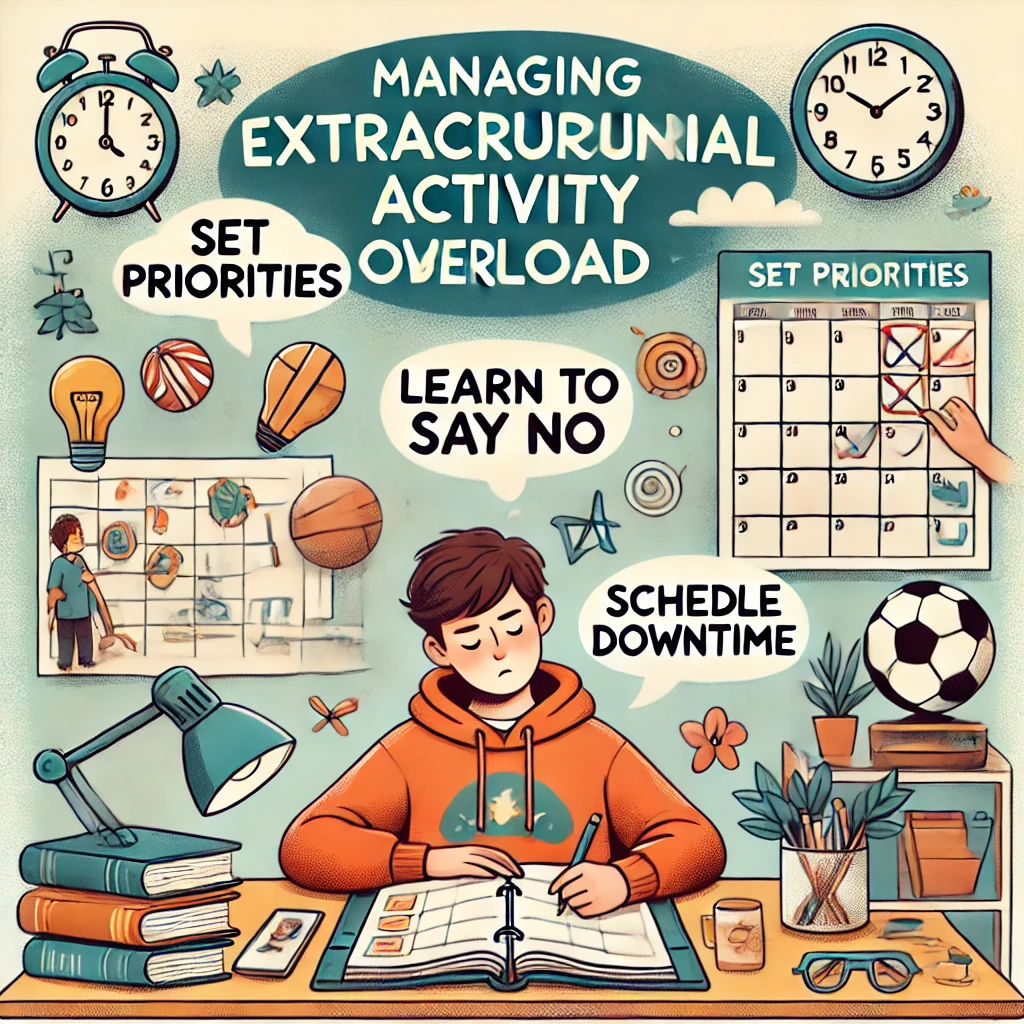
Extracurricular Activity
Extracurricular activities are an important part of personal growth, but taking on too many can lead to stress, burnout, and a lack of balance. If you’re feeling overwhelmed by your commitments, here are practical tips to manage your time and reduce overload without missing out on what matters most.
1. Recognize the Signs of Overload
Why It’s Important:
Acknowledging that you’re overcommitted is the first step to finding balance.
Common Signs:
- Constantly feeling stressed or anxious.
- Difficulty keeping up with schoolwork or personal responsibilities.
- Lack of free time for relaxation or hobbies.
- Feeling exhausted or burned out.
Tip: Reflect on your current schedule and how it’s impacting your mental and physical well-being.
2. Prioritize Your Activities
Why It’s Important:
Focusing on what matters most helps you allocate your time and energy effectively.
How to Do It:
- List all your activities and rank them based on importance and enjoyment.
- Identify which activities align with your long-term goals or passions.
- Let go of commitments that don’t bring value or cause unnecessary stress.
Tip: Ask yourself, “Does this activity make me happy or help me grow?”
3. Learn to Say No
Why It’s Important:
Setting boundaries prevents you from taking on more than you can handle.
How to Do It:
- Politely decline new opportunities that don’t fit into your current schedule.
- Use phrases like, “I appreciate the offer, but I’m focusing on other commitments right now.”
- Practice saying no to smaller tasks to build confidence in setting limits.
Tip: Remember, saying no to one thing allows you to say yes to something more meaningful.
4. Create a Weekly Schedule
Why It’s Important:
A clear schedule helps you stay organized and ensures you don’t overbook yourself.
How to Do It:
- Use a planner or digital calendar to map out your commitments.
- Allocate specific blocks of time for schoolwork, activities, and relaxation.
- Review your schedule weekly and adjust as needed.
Tip: Color-code your activities to visualize how your time is divided.
5. Set Realistic Goals
Why It’s Important:
Clear goals keep you focused on what’s achievable and meaningful.
How to Do It:
- Break larger goals into smaller, actionable steps.
- Set priorities for each day or week to avoid feeling overwhelmed.
- Celebrate small accomplishments to stay motivated.
Tip: Focus on progress rather than perfection.
6. Take Advantage of Downtime
Why It’s Important:
Short breaks throughout the day can help you recharge and stay productive.
How to Do It:
- Use free periods or travel time to review notes, plan tasks, or relax.
- Incorporate quick stress-relief activities, like deep breathing or stretching.
- Avoid filling every spare moment with additional responsibilities.
Tip: Protect your downtime as non-negotiable self-care time.
7. Communicate with Parents and Mentors
Why It’s Important:
Seeking support can provide perspective and practical advice.
How to Do It:
- Share your feelings of overwhelm with parents, teachers, or coaches.
- Ask for guidance on how to prioritize or manage your commitments.
- Let them know if you need to adjust your responsibilities temporarily.
Tip: Open communication builds trust and helps others understand your situation.
8. Focus on Quality Over Quantity
Why It’s Important:
Excelling in a few activities is more impactful than spreading yourself thin across many.
How to Do It:
- Dedicate your energy to activities where you can make a meaningful contribution.
- Drop commitments that don’t align with your goals or interests.
- Reflect on your achievements and what you’ve learned from focusing deeply.
Tip: Colleges and employers value depth and dedication over sheer quantity.
9. Practice Self-Care
Why It’s Important:
Taking care of your mental and physical health helps you perform better in all areas.
How to Do It:
- Get at least 7–9 hours of sleep per night to stay energized.
- Eat balanced meals and stay hydrated throughout the day.
- Incorporate relaxation techniques, like meditation or journaling, into your routine.
Tip: Exercise regularly to boost your mood and reduce stress.
10. Evaluate Your Commitments Regularly
Why It’s Important:
Regular check-ins ensure your schedule stays manageable and aligned with your goals.
How to Do It:
- Review your activities at the end of each term or season.
- Assess which commitments are worth continuing and which can be scaled back.
- Make adjustments to balance your workload and personal needs.
Tip: Use reflection questions like, “What did I enjoy most this month?”
Final Thoughts
Managing extracurricular activity overload requires careful planning, self-awareness, and the willingness to set boundaries. By focusing on what matters most and making time for self-care, you can enjoy your commitments without feeling overwhelmed.
Remember, it’s okay to step back and recalibrate your priorities—your well-being comes first. For more tips and strategies to stay balanced, explore helpful guides to support your journey!
Добавить комментарий