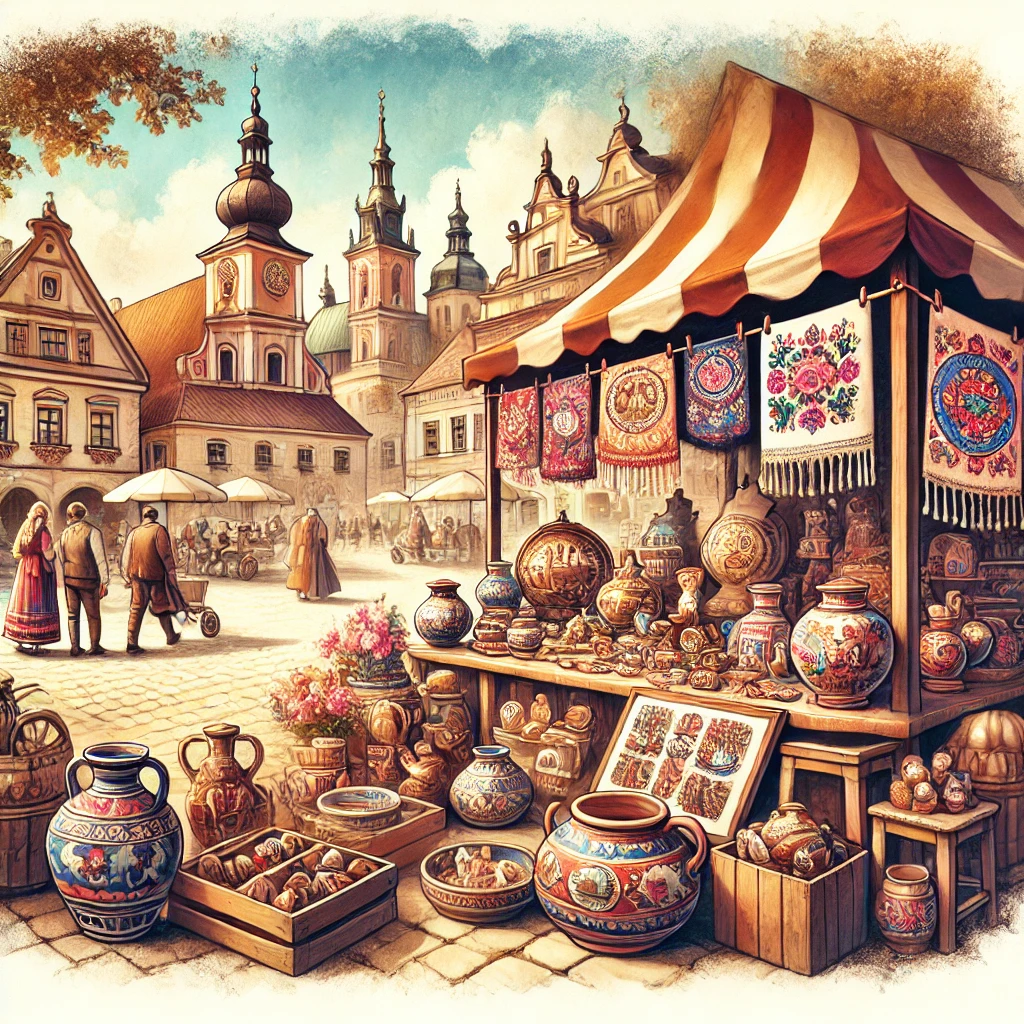
Local Crafts in Poland
Poland has a rich tradition of handmade crafts that reflect its history, culture, and regional diversity. From intricate embroidery to fine pottery, Polish artisans have mastered techniques passed down through generations. Here’s a guide to some of Poland’s most iconic local crafts and where you can find them.
1. Polish Pottery (Bolesławiec Ceramics)
- What It Is: Famous for its hand-painted designs, Bolesławiec pottery features intricate patterns of dots, flowers, and geometric shapes, usually in shades of blue, green, and red.
- Where to Find:
- Bolesławiec, Lower Silesia: Visit workshops and stores in the town known as the heart of Polish ceramics.
- Craft Shops Across Poland: Many souvenir stores stock Bolesławiec pottery.
- Why It’s Special: Durable, functional, and beautiful, Bolesławiec pottery is perfect for both everyday use and as a collectible.
2. Traditional Embroidery
- What It Is: Each region in Poland has its unique embroidery style. The most famous include:
- Kashubian Embroidery (Pomerania): Features floral patterns in shades of blue, green, and red.
- Łowicz Embroidery (Łowicz Region): Known for its vibrant, multicolored floral motifs.
- Where to Find:
- Folk art shops and markets in regional areas.
- Ethnographic museums showcasing embroidery as part of traditional costumes.
- Why It’s Special: The colorful patterns often tell stories or symbolize aspects of local folklore.
3. Wooden Carvings
- What It Is: Hand-carved wooden items, such as figurines, religious icons, and household goods, are a hallmark of Polish craftsmanship.
- Podhale Region: Specializes in Zakopane-style carvings inspired by Highlander culture.
- Where to Find:
- Zakopane’s markets, especially Krupówki Street.
- Folk fairs like the Cepelia Fair in Kraków.
- Why It’s Special: The carvings are not only decorative but also functional, ranging from furniture to ornaments.
4. Amber Jewelry
- What It Is: Often called «Baltic gold,» amber from the Baltic Sea is crafted into stunning necklaces, bracelets, and earrings.
- Where to Find:
- Gdańsk: Known as the amber capital of the world, with numerous boutiques and the Amber Museum.
- Amber fairs and workshops across Poland.
- Why It’s Special: Polish amber is highly prized for its clarity and variety of colors, ranging from pale yellow to deep red.
5. Papercutting (Wycinanki)
- What It Is: A traditional Polish folk art involving intricate patterns cut from paper, often used to decorate walls or windows.
- Łowicz Wycinanki: Features symmetrical, multicolored floral and animal motifs.
- Kurkowe Wycinanki: Known for monochromatic designs.
- Where to Find:
- Folk art shops in Warsaw and Kraków.
- Cultural festivals and regional fairs.
- Why It’s Special: The vibrant designs are entirely handmade and symbolize Polish folk traditions.
6. Glass Art (Krosno Glass)
- What It Is: Poland is renowned for its glassmaking, with Krosno being the center of this craft. Artisans create crystal glassware, vases, and decorative pieces.
- Where to Find:
- Krosno, Subcarpathia: Visit the Glass Heritage Center for workshops and exhibits.
- Gift shops throughout Poland.
- Why It’s Special: The combination of traditional techniques and modern designs makes these glass pieces highly sought after.
7. Sheepskin Products
- What It Is: The Podhale region specializes in handmade sheepskin rugs, coats, and slippers, crafted by Highlanders using traditional methods.
- Where to Find:
- Zakopane markets and nearby villages.
- Specialty shops across the Tatra Mountains.
- Why It’s Special: These items are warm, durable, and reflect the region’s pastoral heritage.
8. Painted Wooden Boxes
- What It Is: Small wooden boxes adorned with hand-painted floral or geometric patterns, often used for storing jewelry or keepsakes.
- Where to Find:
- Folk art shops in Kraków, Warsaw, and other major cities.
- Why It’s Special: These charming items are a great example of functional art, combining utility with traditional aesthetics.
9. Ceremonial Easter Crafts
- What It Is: Polish Easter traditions include crafting:
- Pisanki: Hand-painted or dyed Easter eggs, often featuring intricate patterns.
- Palm Weaving: Decorated palms for Palm Sunday celebrations.
- Where to Find:
- Markets and fairs during Easter, such as Kraków’s Main Market Square.
- Folk museums showcasing seasonal crafts.
- Why It’s Special: These items are steeped in cultural and religious significance.
10. Lacework
- What It Is: Delicate, handwoven lace is a traditional craft from areas like Koniaków in southern Poland. Often used for tablecloths, curtains, or decorative pieces.
- Where to Find:
- Koniaków village workshops and craft stores.
- Gift shops in major cities like Kraków and Zakopane.
- Why It’s Special: Koniaków lace is known for its intricate patterns and is often regarded as an heirloom.
Tips for Shopping Local Crafts in Poland
- Visit Folk Markets: Seasonal fairs like Kraków’s Christmas or Easter markets are excellent places to find authentic crafts.
- Support Local Artisans: Purchase directly from workshops or artisan-run shops to ensure authenticity.
- Look for Labels: Many high-quality items bear the «Cepelia» label, which certifies them as authentic Polish folk art.
Conclusion
Poland’s local crafts offer a window into its rich cultural heritage. From colorful embroidery and ceramics to delicate lace and striking amber jewelry, these handmade treasures make for unique souvenirs and meaningful gifts.
For more tips on improving your photography and editing skills, check out helpful guides to take your selfies to the next level.
Добавить комментарий