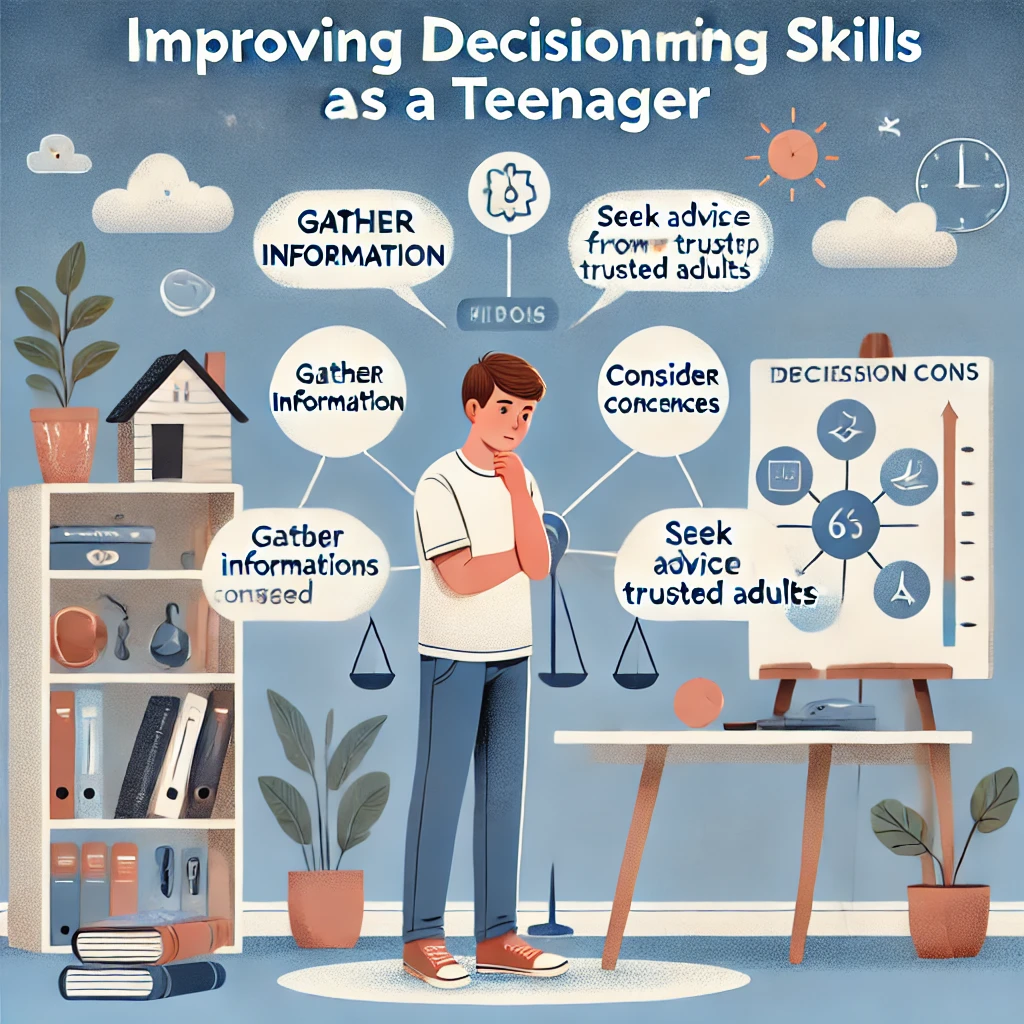
Decision-Making Skills
Decision-making is a crucial skill that helps teenagers navigate school, relationships, and future planning. Learning to make thoughtful, informed decisions builds confidence, reduces stress, and prepares you for adulthood. Here are effective strategies to improve your decision-making skills as a teenager.
1. Understand the Importance of Decisions
Why It Helps:
Recognizing the impact of your choices encourages you to approach them thoughtfully.
How to Do It:
- Reflect on past decisions and how they shaped your experiences.
- Consider the short-term and long-term effects of your choices.
- Realize that even small decisions, like managing your time, contribute to larger outcomes.
Tip: Treat each decision as a chance to learn and grow, even if the results aren’t perfect.
2. Define Your Goals and Values
Why It Helps:
Knowing what matters to you provides a solid foundation for making aligned decisions.
How to Do It:
- Identify your priorities, such as education, friendships, or personal growth.
- Think about how each option aligns with your values and goals.
- Write down your goals to keep them clear and front of mind.
Tip: Use your goals as a “compass” when faced with tough choices.
3. Gather Information
Why It Helps:
Informed decisions are more likely to lead to positive outcomes.
How to Do It:
- Research your options thoroughly, whether it’s choosing a class, joining a club, or applying for a job.
- Seek advice from trusted sources, like parents, teachers, or friends.
- Consider both the pros and cons of each option.
Tip: Avoid making impulsive decisions by taking time to gather all relevant information.
4. Weigh the Pros and Cons
Why It Helps:
Listing the advantages and disadvantages of each option helps you evaluate your choices logically.
How to Do It:
- Write a list of pros and cons for each decision.
- Rank the importance of each factor to determine which option aligns best with your goals.
- Reflect on which option has the most significant long-term benefits.
Tip: Use a simple table or app to visualize your pros and cons for clarity.
5. Consider the Consequences
Why It Helps:
Thinking ahead helps you prepare for the outcomes of your decisions.
How to Do It:
- Ask yourself, “What will happen if I choose this option?”
- Think about how your decision will affect others, like friends, family, or teammates.
- Plan for possible challenges or obstacles that may arise.
Tip: Use the “What if?” method to explore different scenarios and their potential results.
6. Trust Your Instincts
Why It Helps:
Sometimes, your gut feeling can guide you when logic doesn’t provide a clear answer.
How to Do It:
- Pay attention to how each option makes you feel—are you excited, nervous, or indifferent?
- Combine your instincts with the facts you’ve gathered to make a balanced decision.
- Avoid second-guessing yourself excessively once you’ve made a choice.
Tip: Use intuition as a supplement to critical thinking, not a replacement.
7. Seek Feedback and Advice
Why It Helps:
Other perspectives can offer insights you might not have considered.
How to Do It:
- Talk to someone who has experience in the area you’re deciding about, like a teacher for academic choices or a coach for sports decisions.
- Ask open-ended questions like, “What do you think about this option?”
- Use feedback to refine your decision without letting others dictate your choice.
Tip: Choose advisors who have your best interests at heart and understand your goals.
8. Start Small and Build Confidence
Why It Helps:
Practicing decision-making with smaller choices prepares you for more significant ones.
How to Do It:
- Decide what to wear, what to eat, or how to organize your time each day.
- Reflect on these small decisions to learn what works best for you.
- Gradually take on more complex decisions, like choosing extracurricular activities or summer internships.
Tip: Celebrate the success of your small decisions to build confidence in your abilities.
9. Learn from Mistakes
Why It Helps:
Mistakes are valuable opportunities to grow and improve your decision-making process.
How to Do It:
- Reflect on what went wrong and what you could do differently next time.
- Avoid dwelling on past mistakes—focus on the lessons they provide.
- Remember that no one makes perfect decisions all the time.
Tip: Keep a journal of lessons learned from past decisions to guide future ones.
10. Practice Mindfulness and Patience
Why It Helps:
Staying calm and patient prevents impulsive decisions driven by stress or emotions.
How to Do It:
- Take a few deep breaths or step away from the situation if you feel overwhelmed.
- Avoid rushing into decisions without taking time to think them through.
- Use mindfulness techniques, like meditation or journaling, to clear your mind.
Tip: Give yourself a deadline for making a decision to balance patience with action.
Example of a Decision-Making Process
| Step | Example |
|---|---|
| Identify the decision | Choosing between joining the debate club or the art club. |
| Gather information | Research both clubs and talk to current members. |
| Weigh pros and cons | Debate club improves public speaking; art club nurtures creativity. |
| Consider consequences | Debate club may require more time; art club fits better with schedule. |
| Make the decision | Join the art club based on interest and availability. |
Final Thoughts
Improving decision-making skills as a teenager is a process that takes time and practice. By setting clear goals, gathering information, and learning from your experiences, you’ll build the confidence and skills needed to make thoughtful, effective choices.
For more tips and resources on personal growth, check out helpful guides and take charge of your decision-making journey today!
Добавить комментарий