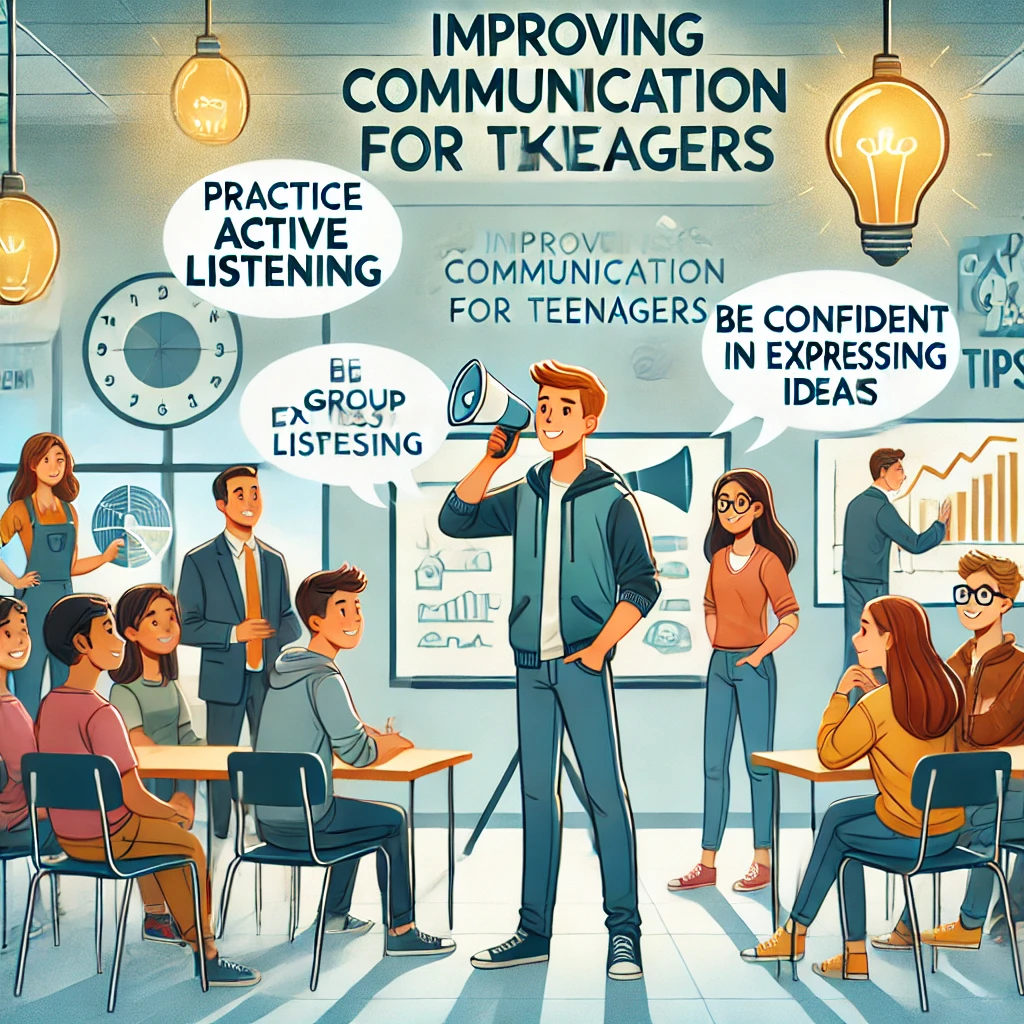
Communication Skills
Strong communication skills are essential for building relationships, succeeding in school, and preparing for the future. For teenagers, improving these skills can boost confidence, reduce misunderstandings, and help navigate social and academic challenges. Here are practical tips for enhancing communication skills as a teenager.
1. Practice Active Listening
Why It Helps:
Good communication starts with being a great listener. Understanding others shows respect and fosters meaningful conversations.
How to Do It:
- Maintain eye contact when someone is speaking.
- Nod or respond with short phrases like “I see” or “That makes sense” to show engagement.
- Avoid interrupting and wait for the speaker to finish before sharing your thoughts.
Tip: Summarize what the other person said to confirm you understand their point.
2. Expand Your Vocabulary
Why It Helps:
A broader vocabulary allows you to express yourself more clearly and effectively.
How to Do It:
- Read books, articles, and blogs on topics that interest you.
- Learn one new word each day and use it in a conversation.
- Watch movies or shows with subtitles to pick up new phrases.
Tip: Keep a journal of words and phrases you find interesting to refer back to later.
3. Improve Nonverbal Communication
Why It Helps:
Body language, facial expressions, and tone of voice all contribute to how your message is received.
How to Do It:
- Stand up straight and use open body language to appear approachable.
- Smile when appropriate and match your tone to the situation.
- Avoid fidgeting or crossing your arms, as these can signal discomfort or defensiveness.
Tip: Practice in front of a mirror to observe and refine your nonverbal cues.
4. Join Group Activities
Why It Helps:
Group settings encourage collaboration and provide opportunities to practice speaking and listening.
How to Do It:
- Join a debate club, theater group, or sports team to work on teamwork and verbal skills.
- Participate in study groups or extracurricular clubs that require discussions.
- Volunteer for leadership roles where you can speak to a group or coordinate activities.
Tip: Focus on sharing your ideas and listening to others in these settings.
5. Practice Public Speaking
Why It Helps:
Public speaking boosts confidence and helps you organize your thoughts effectively.
How to Do It:
- Start small by speaking up in class or giving presentations.
- Join organizations like Toastmasters or take part in school speech competitions.
- Practice delivering short speeches at home to friends or family.
Tip: Use notes to guide you but try not to read directly from them to build confidence.
6. Ask Questions
Why It Helps:
Asking questions shows curiosity and encourages deeper conversations.
How to Do It:
- Use open-ended questions like “What do you think about this?” or “Can you tell me more about that?”
- Show genuine interest in the answers by listening attentively.
- Follow up with related questions to keep the conversation flowing.
Tip: Avoid yes/no questions to encourage more detailed responses.
7. Use Technology Wisely
Why It Helps:
In the digital age, effective written communication is just as important as verbal communication.
How to Do It:
- Practice writing clear and concise emails, texts, or social media posts.
- Avoid overusing emojis or slang that might confuse your message.
- Proofread your messages to ensure they convey the right tone and meaning.
Tip: Treat online communication with the same care as face-to-face conversations.
8. Build Empathy
Why It Helps:
Understanding and relating to others’ feelings strengthens your connections and improves your responses.
How to Do It:
- Put yourself in the other person’s shoes before reacting.
- Acknowledge their emotions by saying things like, “I understand how you feel.”
- Practice patience, especially when someone is upset or needs time to express themselves.
Tip: Focus on listening more than offering solutions unless asked.
9. Handle Conflicts Calmly
Why It Helps:
Resolving disagreements effectively demonstrates maturity and strengthens relationships.
How to Do It:
- Stay calm and avoid raising your voice during arguments.
- Focus on the issue rather than blaming or attacking the other person.
- Use “I” statements like “I feel upset because…” instead of “You always…”
Tip: Take a break if emotions are running high and revisit the conversation later.
10. Seek Feedback
Why It Helps:
Constructive criticism helps you identify areas for improvement.
How to Do It:
- Ask teachers, friends, or family members for feedback on how you communicate.
- Be open to their suggestions and avoid taking them personally.
- Practice the tips they offer and check in to see if they notice improvement.
Tip: Focus on specific areas, such as tone, clarity, or listening skills, for targeted growth.
Final Thoughts
Improving communication skills as a teenager is a gradual process that requires practice, patience, and an open mind. By actively listening, practicing empathy, and seeking opportunities to speak and connect, you’ll become a more confident and effective communicator.
For more resources and tips to enhance your personal growth, explore helpful guides and start building stronger connections today!
Добавить комментарий