How to Use the Environment in Warfare in Civilization VI
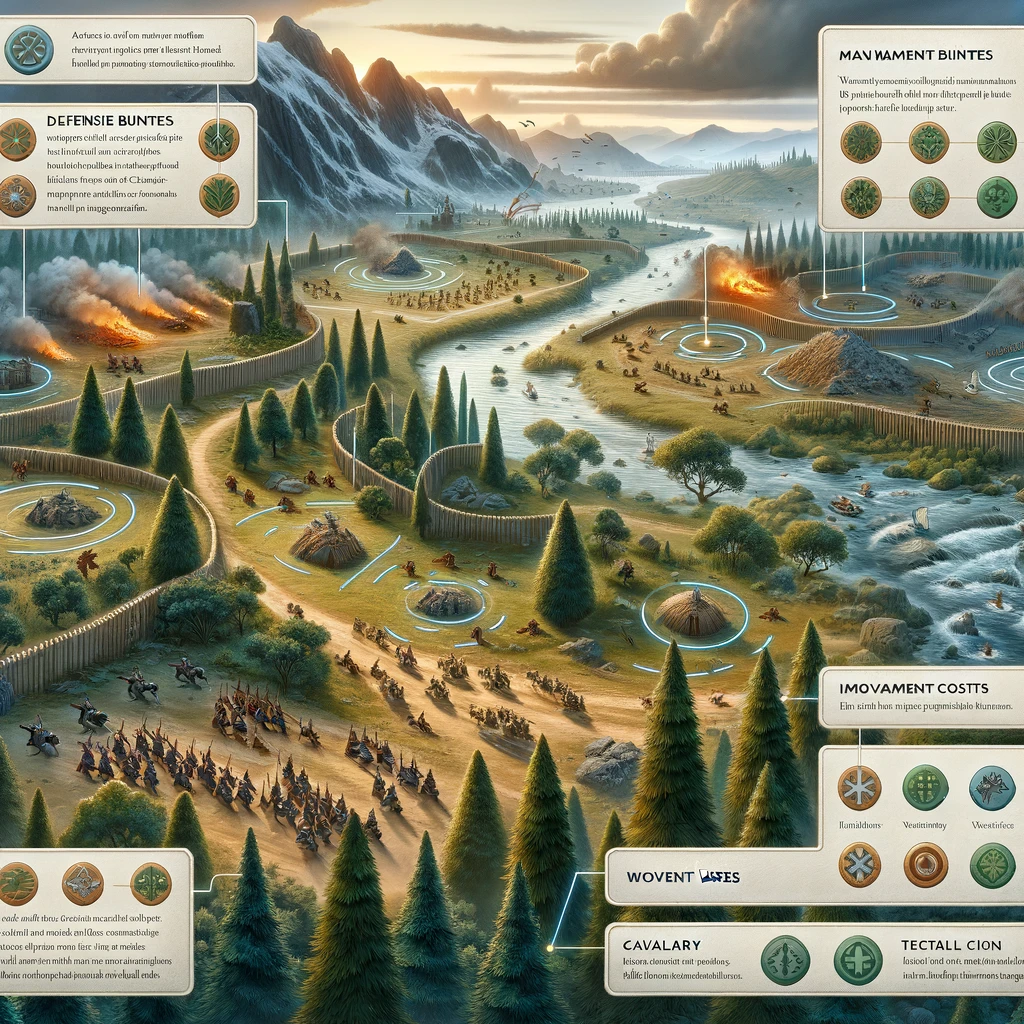
In Civilization VI, mastering the environment is as crucial as commanding armies. The terrain, weather, and natural features can play pivotal roles in your military strategy, affecting the outcomes of battles and campaigns. From using mountains as natural fortresses to exploiting rivers for defensive bonuses, the environment is not just a backdrop but a powerful ally or adversary in warfare. Here’s how to tactically use the environment to your advantage in Civ VI’s complex battlefield.
Understanding Terrain Types and Their Tactical Advantages
Each terrain type in Civilization VI offers specific advantages and disadvantages that can significantly impact military operations:
- Hills: Provide a defensive bonus to units and increase attack range for ranged units. Positioning archers or artillery on hills can give you a considerable advantage in battles.
- Forests and Jungles: Offer defense bonuses and can slow down enemy movement. Use these terrains to ambush advancing forces or to retreat when outnumbered.
- Rivers: Attacking over a river incurs significant penalties to the attacker. Defend rivers vigorously and use them as natural barriers against enemy advances.
- Mountains: Completely impassable by most units, mountains can serve as excellent natural barriers for defense and funnel enemies into chokepoints.
Leveraging Weather and Environmental Effects
Civilization VI’s Gathering Storm expansion introduced more dynamic weather patterns and environmental effects, which can be utilized strategically:
- Storms (Hurricanes, Blizzards, Sandstorms, Tornadoes): These can damage or destroy enemy units and infrastructure but are unpredictable. Monitor weather patterns and move your units accordingly to avoid losses while possibly using them to hinder enemy movements.
- Volcanoes: Settling near a volcano can be risky due to potential eruptions, which damage nearby units and cities. However, the fertilized tiles post-eruption offer increased yields. Military wise, use these areas to bait enemies into vulnerable positions.
- Floodplains: Though risky for settlement due to flooding, floodplains can be used in warfare to trap enemy units. Be mindful of dam constructions which can mitigate flooding risks.
Strategic Resource Management
Natural resources play a critical role in developing and maintaining your military forces:
- Strategic Resources (Iron, Niter, Oil, Uranium): Control of these resources can directly influence the types and strengths of the military units you can produce. Secure these resources early to ensure a technological edge over your adversaries.
- Geothermal Fissures and Oil Seeps: Visible signs of valuable resources that can be crucial for late-game units and technologies. Securing these locations can provide tactical advantages in terms of resource access and environmental benefits.
Utilizing Geography for Strategic Operations
The layout of the land itself can dictate military strategies:
- Chokepoints: Narrow passages between mountains or through forests can serve as strategic chokepoints. Fortify these areas to control movement and force enemies into disadvantageous battles.
- Islands and Peninsulas: Use naval superiority to control islands and peninsulas, which can be easily defended and serve as bases for projecting power across the seas.
Adapting to Global Warming and Sea Level Rise
In games with the Gathering Storm expansion, environmental changes become significant in the late game:
- Sea Level Rise: Coastal tiles may become submerged, affecting naval operations and coastal cities. Adapt your strategy by fortifying or evacuating vulnerable areas and exploiting new naval routes that may open up.
- Carbon Emissions: High emissions can lead to severe global warming effects. Manage your emissions to avoid catastrophic environmental damages that could affect your and your enemies’ strategies.
Table: Environment Features and Their Strategic Impacts in Warfare
| Environmental Feature | Strategic Impact | Tips for Use |
|---|---|---|
| Mountains | Natural barrier and defense boost | Use as natural fortresses; avoid encirclement |
| Rivers | Defense bonus for defenders; penalty for attackers | Defend aggressively; force enemies to attack across rivers |
| Volcanic Tiles | High risk but high reward for fertility post-eruption | Use as bait in wartime; economic boost in peacetime |
| Forests/Jungles | Increased defense; movement penalty for units | Ambush tactics; slow enemy advances |
Conclusion
Using the environment in Civilization VI requires a keen understanding of the terrain, weather, and strategic resources. By leveraging these elements, you can enhance your military tactics, create impenetrable defenses, and outmaneuver your opponents. Remember, in Civ VI, the wise commander uses the landscape not just as a map to traverse, but as a tool to dominate.
Добавить комментарий