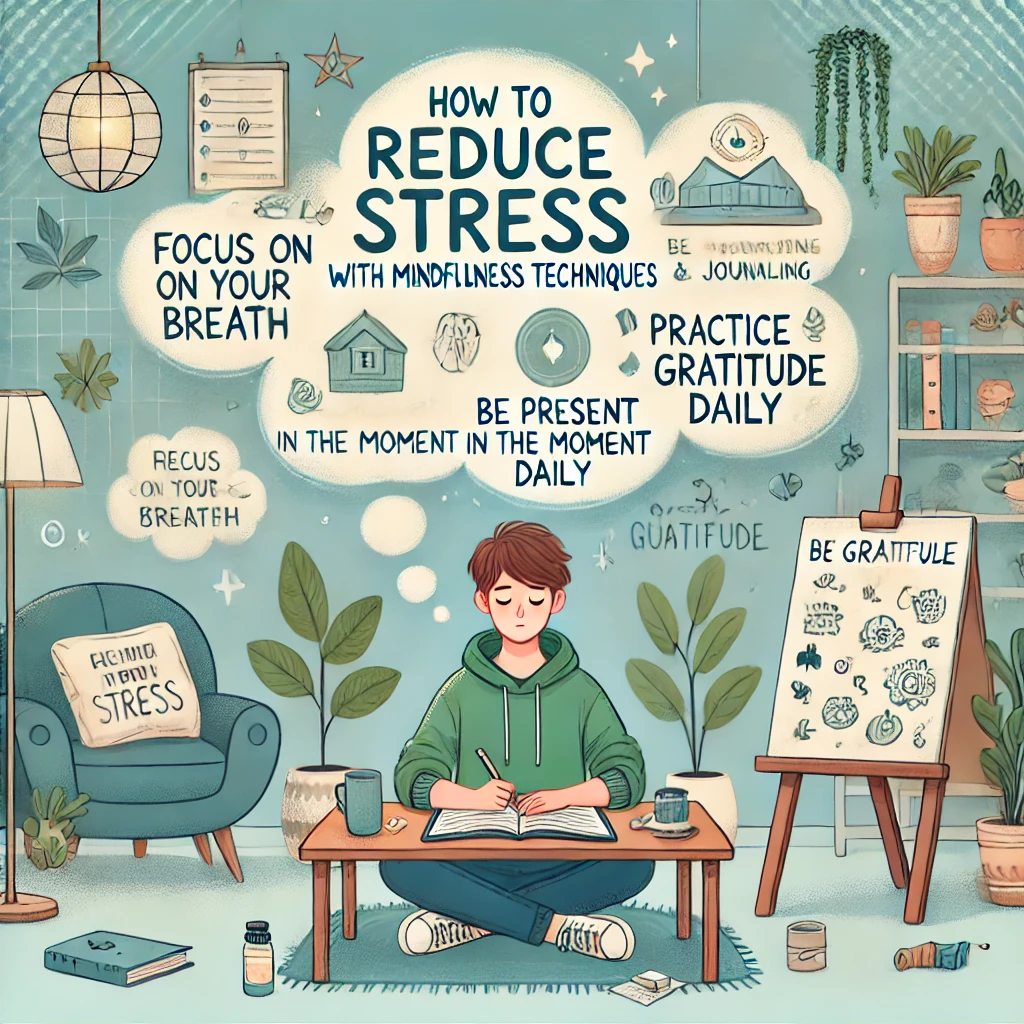
Mindfulness Techniques
Stress is a common part of life, but practicing mindfulness can help you stay calm, focused, and in control. Mindfulness techniques encourage you to live in the present moment, reducing anxiety and promoting relaxation. Here are practical ways to incorporate mindfulness into your daily routine to combat stress effectively.
1. Practice Deep Breathing
Why It Helps:
Deep breathing calms your nervous system, lowers heart rate, and reduces physical tension.
How to Do It:
- Sit in a quiet place and close your eyes.
- Inhale deeply through your nose for 4 seconds, hold for 4 seconds, and exhale through your mouth for 6 seconds.
- Repeat this cycle for 5–10 minutes.
Tip: Use apps like Calm or Headspace for guided breathing exercises.
2. Try a Body Scan Meditation
Why It Helps:
Body scans help you release tension by bringing awareness to different parts of your body.
How to Do It:
- Lie down or sit comfortably in a quiet space.
- Starting at your toes, focus on each part of your body, moving upwards to your head.
- Notice areas of tension and consciously relax them.
Tip: Combine body scans with soothing music or guided audio for a deeper effect.
3. Engage in Mindful Observation
Why It Helps:
Focusing on your surroundings distracts your mind from stress and cultivates a sense of calm.
How to Do It:
- Choose an object in your environment, like a plant or a piece of artwork.
- Observe its color, texture, and shape without judgment.
- Spend 2–3 minutes fully immersing yourself in the experience.
Tip: Try this technique outdoors with nature, such as observing a tree or listening to birds.
4. Practice Gratitude Journaling
Why It Helps:
Shifting your focus to positive aspects of your life can improve your mood and reduce stress.
How to Do It:
- Write down 3 things you’re grateful for each day.
- Reflect on why these things are meaningful to you.
- Include small joys, like a kind gesture or a delicious meal.
Tip: Keep your journal by your bedside and make it a nightly habit.
5. Use the “5-4-3-2-1” Grounding Technique
Why It Helps:
This method anchors you in the present moment and reduces feelings of overwhelm.
How to Do It:
- Identify 5 things you can see.
- Touch 4 things around you.
- Listen for 3 sounds.
- Notice 2 smells.
- Focus on 1 taste in your mouth.
Tip: This technique is particularly effective during moments of acute anxiety.
6. Incorporate Mindful Walking
Why It Helps:
Walking mindfully combines physical movement with mental relaxation.
How to Do It:
- Walk slowly and focus on the sensation of your feet touching the ground.
- Notice the rhythm of your breathing and the movement of your body.
- Pay attention to your surroundings, such as the sounds and sights around you.
Tip: Practice mindful walking in a quiet park or along a nature trail for added relaxation.
7. Practice Mindful Eating
Why It Helps:
Focusing on your meal can turn eating into a calming and enjoyable experience.
How to Do It:
- Eliminate distractions like TV or phones during meals.
- Take small bites and chew slowly, noticing the flavors and textures.
- Reflect on the source of your food and the effort it took to prepare it.
Tip: Try this with a favorite snack to make the experience more engaging.
8. Use Visualization Techniques
Why It Helps:
Imagining calming scenes can reduce stress and help you relax.
How to Do It:
- Close your eyes and picture a peaceful place, such as a beach or forest.
- Imagine the sounds, smells, and sensations of being there.
- Spend 5–10 minutes fully immersed in this mental getaway.
Tip: Use guided visualization recordings if you struggle to create mental images.
9. Meditate Daily
Why It Helps:
Meditation clears your mind, improves focus, and helps you manage stress over time.
How to Do It:
- Set aside 5–10 minutes in a quiet space each day.
- Sit comfortably and focus on your breath or a specific mantra.
- Gently bring your mind back to the present if it starts to wander.
Tip: Start with short sessions and gradually increase the duration as you become more comfortable.
10. Focus on One Task at a Time
Why It Helps:
Mindful multitasking reduces stress and helps you complete tasks more efficiently.
How to Do It:
- Prioritize tasks and focus on completing one before moving to the next.
- Eliminate distractions like notifications or background noise.
- Stay present and fully engaged in the task at hand.
Tip: Use to-do lists to organize tasks and reduce mental clutter.
Final Thoughts
Mindfulness is a powerful way to reduce stress and improve your overall well-being. By incorporating these techniques into your daily routine, you’ll feel calmer, more focused, and better equipped to handle life’s challenges.
For more tips and guided mindfulness exercises, explore helpful resources and start your journey to a stress-free lifestyle today!
Добавить комментарий