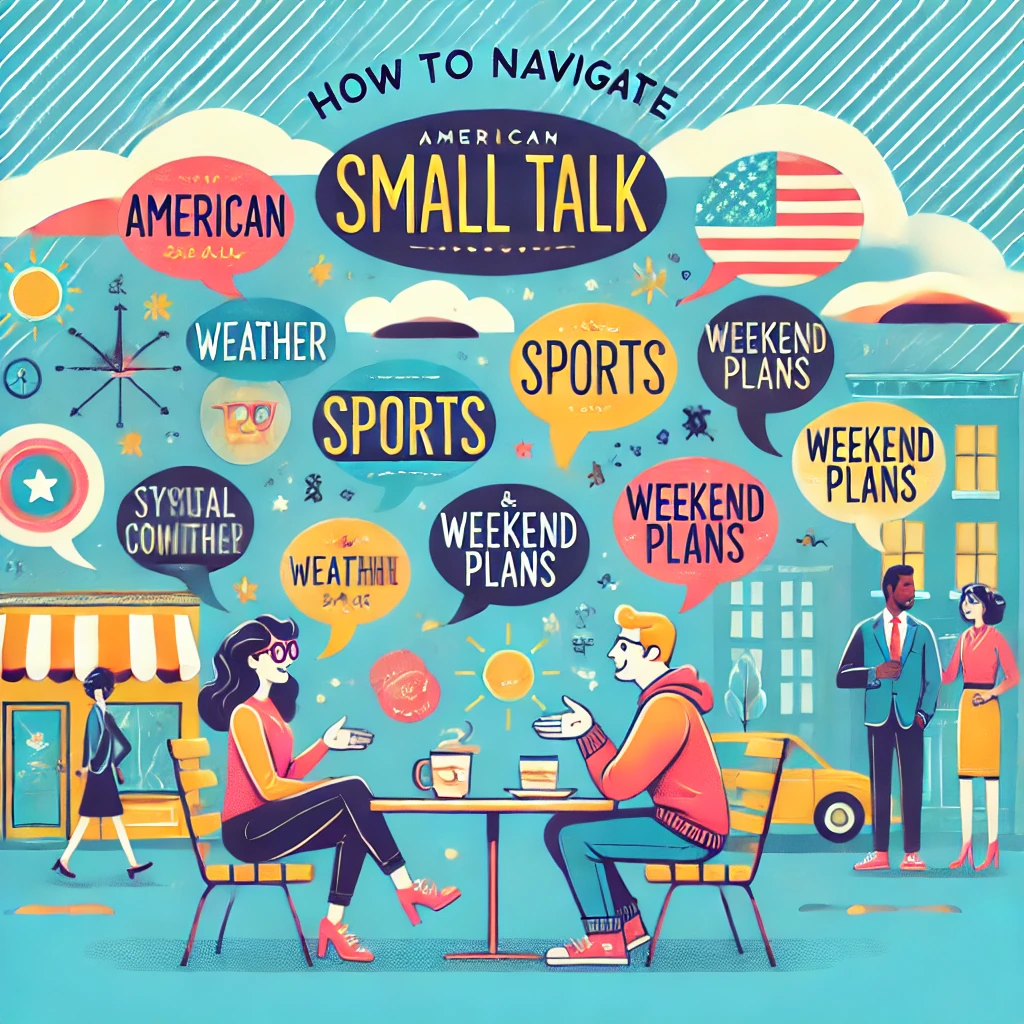
How to Navigate American Small Talk
Small talk is a key part of American culture and serves as a way to build rapport, show friendliness, and establish connections, even with strangers. While it may seem superficial or challenging to outsiders, small talk is often the starting point for deeper conversations and relationships in the US. If you’re unfamiliar with this cultural practice, here’s a guide on how to navigate American small talk confidently and naturally.
1. Understand the Purpose of Small Talk
Small talk in America isn’t necessarily about exchanging deep ideas but about creating a sense of comfort and connection.
a. Why It’s Important
- Builds Relationships: Small talk acts as a social “icebreaker” to ease into more meaningful conversations.
- Shows Friendliness: Americans tend to value politeness and approachability, and small talk helps demonstrate those qualities.
- Fills Silence: In many situations, silence can feel awkward, so small talk is used to keep the interaction pleasant.
b. Common Contexts
- In elevators, waiting rooms, or checkout lines.
- At work, especially with colleagues or clients.
- Social events, such as parties, networking events, or casual gatherings.
2. Start with a Friendly Greeting
The first step in small talk is a warm greeting, which sets a positive tone for the conversation.
a. Standard Openings
- “Hi, how are you?”: This is a standard American greeting and not necessarily meant to prompt a detailed response. A simple “I’m good, how about you?” is sufficient.
- “Nice weather we’re having!”: Americans often comment on the weather as a neutral and easy conversation starter.
b. Be Polite and Casual
- Smile and maintain eye contact to show you’re approachable.
- Use a friendly tone, even if the topic is mundane.
3. Master Common Small Talk Topics
Certain topics are considered safe and appropriate for small talk in the US. These subjects are generally light and non-controversial.
a. Weather
- A classic topic that works almost anywhere.
- Example: “It’s so sunny today! Makes me want to spend time outside.”
b. Hobbies or Interests
- Asking about someone’s favorite activities can spark a pleasant exchange.
- Example: “Have you been up to anything fun lately?”
c. Current Events (Non-Political)
- Mention widely shared, neutral events like sports, pop culture, or local festivals.
- Example: “Did you see the Super Bowl last weekend? What a game!”
d. Food and Dining
- Americans love to talk about food, so asking about restaurants or favorite dishes is a great choice.
- Example: “I’m looking for a good pizza place around here—any recommendations?”
e. Compliments
- Compliments are a simple way to start small talk.
- Example: “I love your jacket—it’s such a great color!”
f. Travel
- Ask about vacations or local recommendations.
- Example: “Have you been to any interesting places recently?”
4. Topics to Avoid
While small talk is meant to be light and easy, certain topics can be uncomfortable or inappropriate.
a. Politics or Religion
- These are deeply personal and often polarizing subjects, so they’re best avoided unless you know the person well.
b. Money
- Avoid discussing salaries, finances, or asking how much someone paid for something.
c. Personal or Sensitive Topics
- Stay away from overly personal questions about relationships, health, or private matters.
5. Use Open-Ended Questions
To keep the conversation flowing, ask open-ended questions that invite more than a simple yes or no response.
a. Examples of Open-Ended Questions
- “What do you usually like to do on weekends?”
- “How did you find out about this event?”
- “What’s the best restaurant you’ve tried in this area?”
b. Follow-Up Questions
- Listen actively to their response and ask follow-up questions to show genuine interest.
- Example: “You mentioned you like hiking—what’s your favorite trail?”
6. Be a Good Listener
One of the key skills in small talk is active listening.
a. Show Interest
- Nod occasionally, make eye contact, and respond with short affirmations like “Oh, that’s interesting!” or “Really?”
b. Avoid Interrupting
- Let the other person finish their thought before responding.
c. Paraphrase or Reflect
- Summarize what they’ve said to show you’re engaged.
- Example: “So you’ve been learning guitar during your free time—that’s awesome!”
7. Use Humor to Break the Ice
Americans appreciate light humor and jokes during small talk, as long as it’s appropriate and inclusive.
a. Self-Deprecating Humor
- Poking fun at yourself in a lighthearted way can make you more relatable.
- Example: “I tried baking cookies yesterday, but I think I invented a new kind of rock instead!”
b. Situational Humor
- Comment on something funny happening in the moment.
- Example: “Looks like everyone had the same idea to get coffee this morning!” (if there’s a long line).
8. Read Social Cues
Pay attention to body language and tone to gauge how the other person is feeling about the conversation.
a. Positive Cues
- Smiling, nodding, and leaning slightly forward are signs they’re engaged and enjoying the conversation.
b. Negative Cues
- Crossed arms, lack of eye contact, or short, one-word answers may indicate they’re uninterested or distracted.
c. Know When to Wrap It Up
- If the conversation feels like it’s coming to a natural end, don’t force it. Politely conclude with:
- “It was great chatting with you—hope you have a good day!”
9. Practice Makes Perfect
Small talk may feel awkward at first, but the more you practice, the easier it gets.
a. Start Small
- Try striking up brief conversations with cashiers, coworkers, or neighbors.
b. Build Confidence
- Focus on being friendly and approachable rather than perfect. Most Americans will appreciate the effort, even if your small talk feels clumsy at first.
c. Watch and Learn
- Observe how Americans interact in social settings, such as at coffee shops or networking events, to pick up tips on tone and phrasing.
10. End on a Positive Note
When it’s time to wrap up the conversation, leave a good impression with a polite and friendly goodbye.
a. Examples
- “It was great meeting you—have a wonderful day!”
- “Thanks for chatting! Hope to see you around again.”
- “Good luck with your project—I’d love to hear how it goes next time.”
Final Thoughts
Mastering American small talk is all about understanding its purpose: to create a friendly and positive atmosphere. Focus on light, neutral topics, ask open-ended questions, and show genuine interest in what the other person has to say. With practice, you’ll become more comfortable navigating these brief but meaningful interactions—and you might even find yourself enjoying them!
For more insights into American culture and social skills, check out helpful guides to build confidence in any conversation.
Добавить комментарий