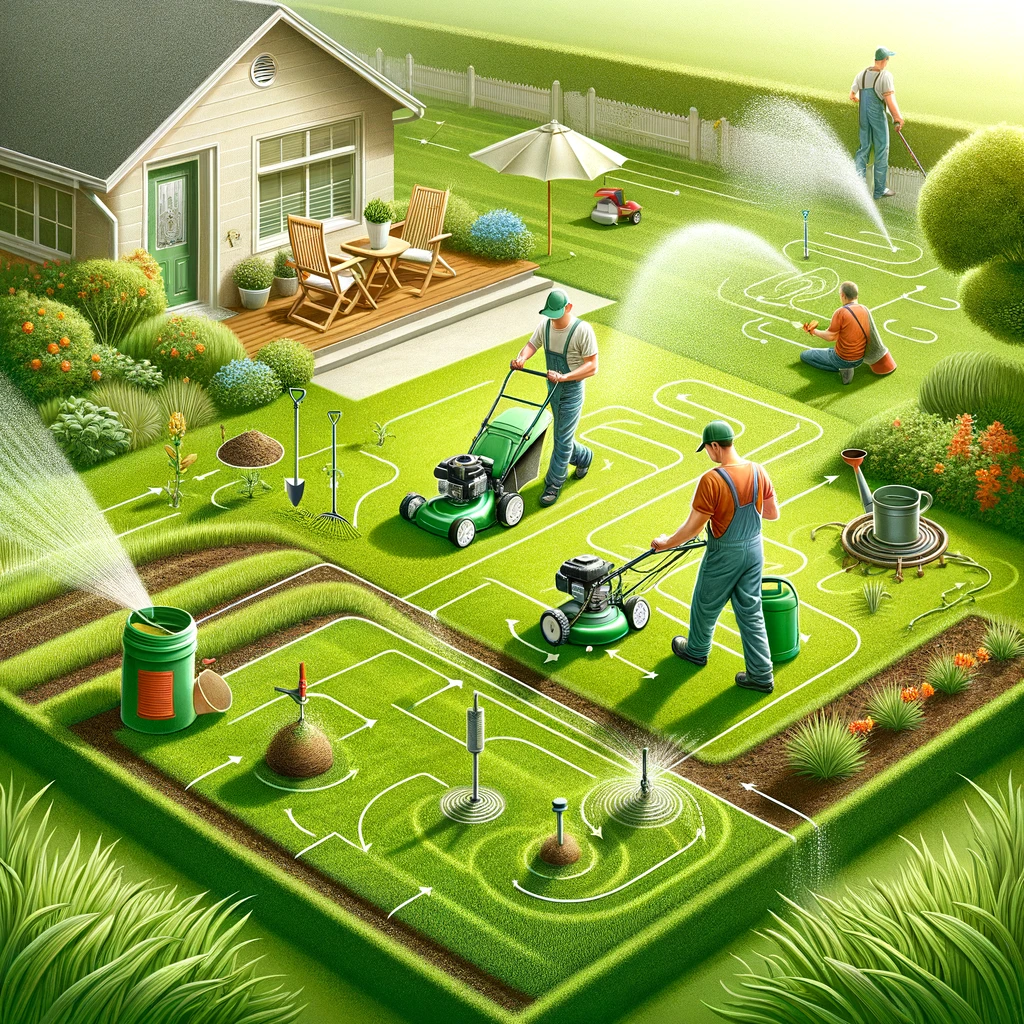
How to Maintain a Lawn: Keeping Your Grass Green and Healthy
Maintaining a lush, healthy lawn requires attention and regular care. Here’s how to ensure your lawn stays green and vibrant through the seasons:
Regular Mowing
How Often to Mow: Mow your lawn regularly to encourage healthy growth. The frequency depends on the growth rate, which varies with the season, but generally, it’s good to cut the grass once a week during the growing season.
How High to Cut: Avoid cutting the grass too short. Cutting more than one-third of the grass blade at a time can stress the grass, making it susceptible to diseases and weeds.
Watering Effectively
How Much to Water: Lawns typically need about 1 to 1.5 inches of water per week, either from rainfall or watering. How you water is crucial—deep, infrequent watering encourages deep root growth.
How to Water: Water early in the morning to reduce evaporation and ensure the water soaks deeply into the soil. Avoid evening watering to prevent lawn diseases caused by overnight moisture.
Fertilizing for Growth
How to Choose Fertilizer: Select a fertilizer that suits the type of grass you have and your soil’s nutrient needs. Slow-release or controlled-release fertilizers are ideal because they feed the grass slowly over time.
How Often to Fertilize: Generally, fertilizing in the spring and fall is sufficient. However, how often you should fertilize can vary depending on your specific lawn needs and the local climate.
Weed and Pest Control
How to Handle Weeds: Regularly inspect your lawn for weeds. Early detection and treatment are crucial. You can remove weeds manually or use herbicides. How you apply herbicide matters—follow label directions carefully to avoid damaging the grass.
How to Manage Pests: Keep an eye out for signs of pest infestations, such as brown patches or wilting grass. How to treat pests depends on the type of pest; sometimes, natural remedies are effective, while other times, you may need chemical treatments.
Aerating Your Lawn
How and When to Aerate: Aerate your lawn to alleviate soil compaction. This process involves removing small plugs of soil to improve air, water, and nutrient flow to the roots. How often you should aerate depends on your lawn’s soil type—clay soils often need more frequent aeration.
Overseeding
How and When to Overseed: Overseed thin or bare patches to keep your lawn thick and lush. The best time for overseeding depends on your climate—typically early fall is ideal, as the temperatures are cooler and there is plenty of moisture.
Seasonal Care
How to Prepare for Winter: In late fall, reduce the mowing height gradually so the grass is shorter over the winter months. How short to cut your lawn depends on the grass type but avoid cutting it too short as it can stress the grass.
How to Manage Spring Recovery: In spring, clean up any debris, dead leaves, and branches. How you handle spring lawn care sets the tone for the growing season. Start regular mowing as soon as the grass begins growing.
By understanding how to properly care for your lawn throughout the year, you can maintain a beautiful and healthy green space that enhances your home and offers a pleasant outdoor area for family activities. Remember, how well you maintain your lawn reflects on the overall appearance of your property, so take the time to care for it regularly.
Добавить комментарий