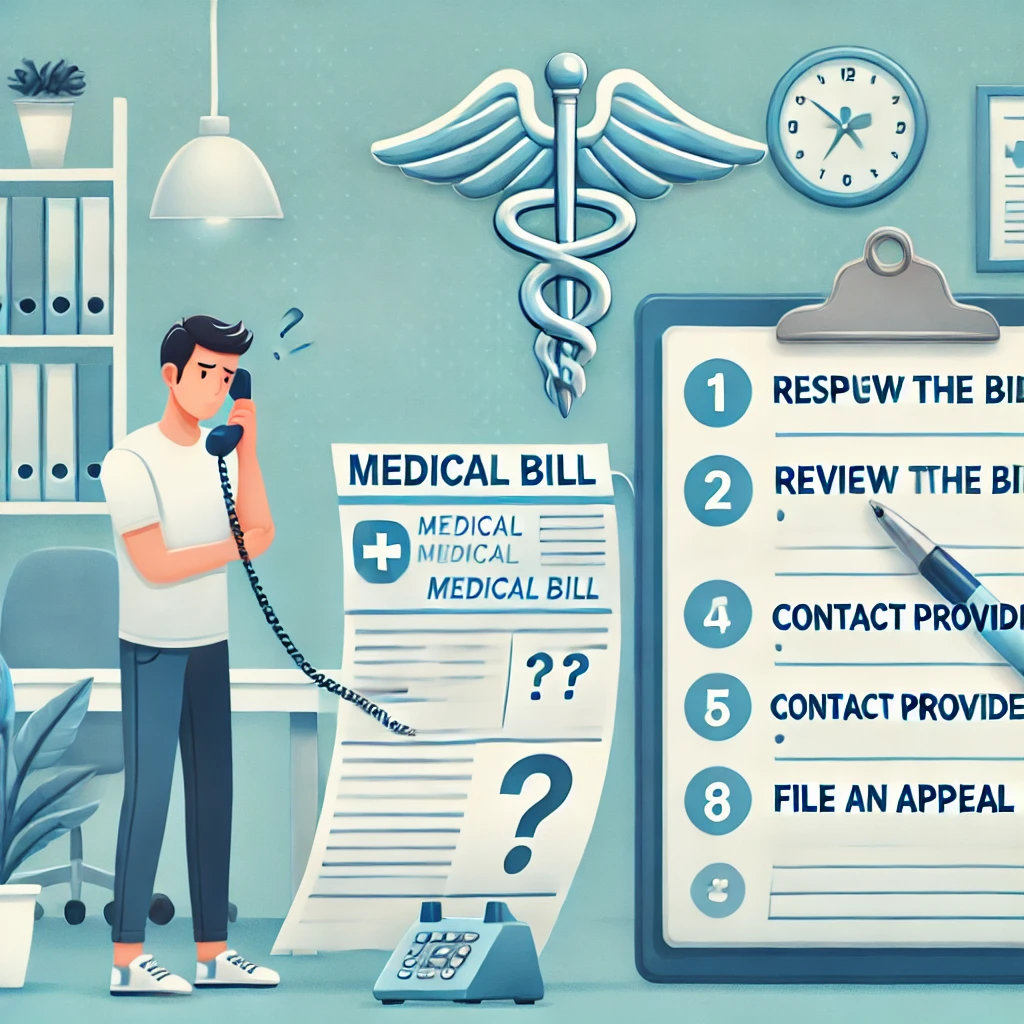
How to Dispute a Medical Bill in the US
Receiving an unexpectedly high medical bill can be overwhelming, especially if you believe there’s been a mistake. Fortunately, you can dispute a medical bill and potentially lower or eliminate charges you don’t owe. Below is a step-by-step guide on how to dispute a medical bill in the United States.
1. Review Your Bill Carefully
The first step is to carefully examine your medical bill. Errors are common and can include duplicate charges, incorrect coding, or charges for services you didn’t receive.
- Request an Itemized Bill: Ask for a detailed breakdown of all charges if your bill isn’t itemized.
- Check for Errors: Look for duplicate charges, incorrect procedure codes, or services that weren’t provided.
- Compare Against Your Insurance Explanation of Benefits (EOB): Cross-check your bill with the EOB from your insurer to ensure you’re being charged the correct amount.
2. Contact Your Healthcare Provider
If you identify discrepancies or need clarification, contact the billing department of the hospital, clinic, or provider.
- Ask for Clarification: Politely request an explanation for any charges you don’t understand.
- Point Out Errors: If you notice any billing mistakes, inform the billing department immediately.
- Request a Hold on Your Bill: While you’re disputing charges, ask them to put your account on hold to avoid collections.
3. Verify Insurance Coverage
Sometimes errors occur when your insurance company processes your claim.
- Confirm Coverage: Check if your insurance policy covers the procedures or treatments in question.
- Ensure Network Participation: Verify that all providers (e.g., specialists, anesthesiologists) were in-network. If not, ask for an explanation for any out-of-network charges.
- Contact Your Insurance Provider: If the insurance company denied coverage for a legitimate claim, ask them to review the claim. Provide supporting documentation, if necessary.
4. Dispute the Bill with Your Insurance Company
If you believe your insurance company should cover more of the charges, file a formal dispute.
- Call Customer Service: Start by contacting your insurer’s customer service to explain the issue.
- Submit an Appeal: If the issue isn’t resolved, submit a formal appeal. Include all relevant documents, such as your itemized bill, EOB, and any supporting medical records.
- Follow Deadlines: Insurers often have strict timelines for disputes, so submit your appeal promptly.
5. Negotiate with the Provider
If the dispute is not resolved, or if you’re responsible for part of the bill, consider negotiating with your provider.
- Request a Discount: Many providers offer discounts for upfront payments or financial hardship.
- Ask for Payment Plans: If you can’t pay the full amount, negotiate a payment plan with manageable monthly payments.
- Discuss Financial Assistance: Some hospitals and clinics have charity care or financial assistance programs for low-income patients.
6. File a Formal Complaint if Necessary
If your dispute isn’t resolved through direct communication with the provider or insurer, you can escalate the issue.
- Contact State Agencies: File a complaint with your state’s insurance commissioner if the issue involves your insurer.
- Reach Out to Medical Billing Advocates: Medical billing advocates can review your bill and negotiate on your behalf for a fee.
- Consult Consumer Protection Agencies: Organizations like the Consumer Financial Protection Bureau (CFPB) may be able to assist with your dispute.
7. Keep Records of All Communication
Throughout the dispute process, it’s essential to keep detailed records.
- Document Every Call: Record the date, time, and name of the person you spoke to, along with the details of your conversation.
- Save All Correspondence: Keep copies of emails, letters, and any other communication related to the dispute.
- Track Deadlines: Monitor any deadlines for appeals or payments to avoid additional charges.
8. Know Your Rights
It’s important to understand your legal rights when disputing a medical bill.
- No Surprises Act (2022): This law protects patients from unexpected out-of-network charges for emergency services and certain non-emergency situations.
- Medical Debt Reporting: Credit reporting agencies are now required to remove paid medical debts from your credit report and will no longer report unpaid bills under $500 starting in 2023.
- State Laws: Some states have additional protections for patients disputing medical bills.
Final Thoughts
Disputing a medical bill can take time and persistence, but it’s worth the effort to avoid overpaying for services or charges that are incorrect. By carefully reviewing your bill, contacting your provider and insurer, and knowing your rights, you can resolve disputes effectively and potentially reduce your financial burden.
For more tips on improving your photography and editing skills, check out helpful guides to take your selfies to the next level.
Добавить комментарий