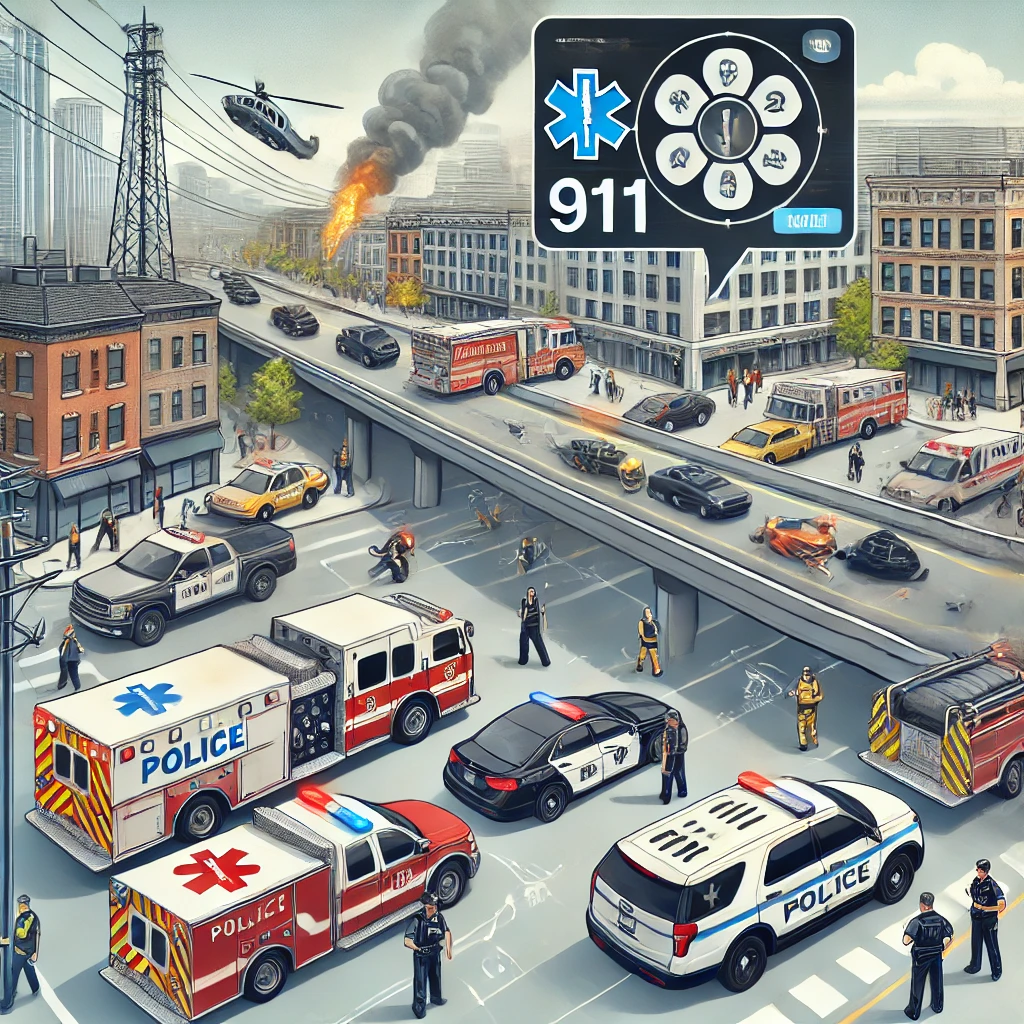
How Does Emergency Response Work in the US?
Emergency response in the United States is a well-coordinated system designed to handle a wide range of emergencies, including medical incidents, fires, crimes, natural disasters, and large-scale public health crises. The system involves multiple agencies, professionals, and resources working together to provide timely assistance and minimize harm. If you ever need help, understanding how emergency response works in the US can make a critical difference. Here’s an overview of how the system operates.
1. The 911 System: The Gateway to Emergency Services
The 911 emergency hotline is the primary way to access emergency services in the US. It’s a free service available nationwide.
a. How It Works
- Dial 911: When you dial 911, your call is routed to the nearest Public Safety Answering Point (PSAP) based on your location.
- Trained Operators: Dispatchers are trained to quickly assess your situation and direct your call to the appropriate emergency services, such as police, fire, or medical teams.
- Enhanced 911 (E911): In most areas, the system automatically detects your location and phone number, even for mobile phones, allowing responders to find you if you can’t communicate your address.
b. What You Should Do When Calling 911
- Stay Calm: Speak clearly and provide accurate information.
- Provide Details: Explain the nature of the emergency, your location, and any relevant information (e.g., injuries, suspects, or hazards).
- Follow Instructions: The dispatcher may provide instructions, such as performing CPR or evacuating a building, before responders arrive.
2. Key Emergency Response Services
Emergency response involves three primary services: law enforcement, fire departments, and emergency medical services (EMS). Each plays a vital role depending on the type of incident.
a. Law Enforcement
- Who Responds: Police officers, sheriff’s deputies, or federal agents, depending on jurisdiction.
- Responsibilities:
- Responding to crimes (e.g., theft, assault, domestic violence).
- Securing crime scenes.
- Managing public safety during events or disasters.
- Conducting search-and-rescue operations.
b. Fire Departments
- Who Responds: Firefighters and specialized teams such as hazardous materials (HazMat) units.
- Responsibilities:
- Extinguishing fires and preventing their spread.
- Rescuing individuals trapped in burning buildings, vehicles, or other dangerous situations.
- Responding to hazardous materials incidents, such as chemical spills.
- Assisting during natural disasters (e.g., floods, hurricanes).
c. Emergency Medical Services (EMS)
- Who Responds: Paramedics and emergency medical technicians (EMTs) provide medical care on-site and during transport to hospitals.
- Responsibilities:
- Treating injuries and illnesses.
- Performing life-saving interventions (e.g., CPR, defibrillation, administering medications).
- Transporting patients to the nearest or most appropriate hospital.
3. Coordination Between Agencies
During emergencies, multiple agencies often collaborate to ensure an effective response. Coordination depends on the severity and type of incident.
a. Incident Command System (ICS)
- ICS is a standardized framework used by agencies to manage emergencies.
- It defines roles, responsibilities, and communication channels for all responders, ensuring seamless collaboration.
b. Mutual Aid Agreements
- Neighboring jurisdictions often have agreements to share resources during large-scale emergencies. For example, firefighters from one city may assist in another city during a major wildfire.
c. Federal Assistance
- In large-scale disasters, federal agencies such as the Federal Emergency Management Agency (FEMA) may step in to provide additional resources and support.
4. Natural Disasters and FEMA’s Role
The US is prone to natural disasters such as hurricanes, wildfires, tornadoes, and earthquakes. The emergency response system adapts to these situations with federal support.
a. How FEMA Works
- Disaster Declarations: A state governor must request federal assistance for FEMA to get involved.
- Services Provided: FEMA coordinates disaster relief efforts, including search and rescue, sheltering, and financial assistance for recovery.
- Partnerships: FEMA works with local agencies, nonprofits (e.g., the Red Cross), and private companies to deliver aid.
b. State and Local Emergency Management
- Every state has an emergency management agency that coordinates disaster preparedness and response within its jurisdiction.
5. Public Health Emergencies
In public health crises like pandemics, bioterrorism, or chemical exposure, agencies such as the Centers for Disease Control and Prevention (CDC) take the lead.
a. CDC’s Role
- Monitoring and investigating public health threats.
- Deploying medical supplies and personnel.
- Educating the public on prevention and safety measures.
b. Coordination with Local Health Departments
- Local health departments manage vaccinations, testing, and health outreach programs during public health emergencies.
6. Community Involvement in Emergency Response
Communities play a crucial role in emergency response, especially in large-scale disasters.
a. CERT Programs (Community Emergency Response Teams)
- CERT programs train civilians to assist first responders by providing basic aid, organizing evacuations, and conducting search-and-rescue operations.
b. Neighborhood Watch Programs
- Neighborhood watch groups report suspicious activities and assist law enforcement in maintaining community safety.
c. Volunteering
- Organizations like the American Red Cross or local nonprofits often recruit volunteers to support disaster relief efforts.
7. Technology in Emergency Response
Technology has significantly improved the speed and efficiency of emergency response.
a. Emergency Alerts
- The Emergency Alert System (EAS) and Wireless Emergency Alerts (WEA) send warnings about severe weather, AMBER alerts, or other emergencies to your phone or TV.
b. Smartphone Apps
- Apps like FEMA’s app or PulsePoint can provide real-time updates on disasters and medical emergencies.
c. Drones and GIS
- Emergency responders use drones and Geographic Information Systems (GIS) for mapping disaster zones and locating victims.
8. After the Emergency: Recovery and Support
The recovery phase focuses on helping affected individuals and communities rebuild after the immediate emergency has passed.
a. Emergency Shelters
- Temporary shelters are often set up by local governments or nonprofits to house displaced individuals.
b. Financial Assistance
- FEMA and other agencies provide grants, loans, and other resources to help individuals recover from disasters.
c. Counseling Services
- Emotional and psychological support is offered to victims and first responders through organizations like the Red Cross or community health programs.
Final Thoughts
Emergency response in the US is a multi-layered system involving local, state, and federal agencies, as well as community members and technology. Whether it’s a medical crisis, a natural disaster, or a public safety threat, the system is designed to mobilize quickly and efficiently. Being informed about how the process works—and how you can contribute—can help you stay prepared and safe during emergencies.
For more insights on emergency preparedness and public safety, check out helpful guides to stay informed and ready for any situation.
Добавить комментарий