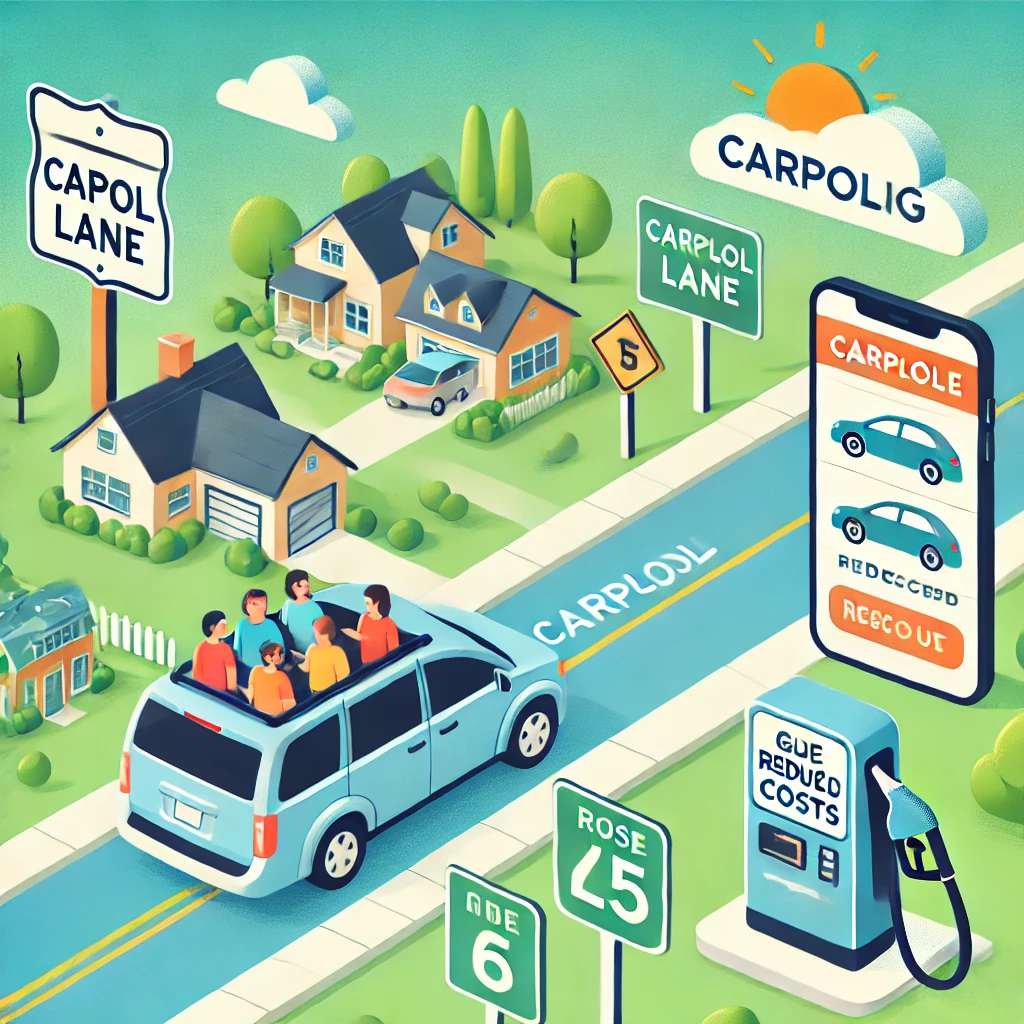
Carpooling
Carpooling is a popular and eco-friendly way to save money, reduce traffic congestion, and cut down on carbon emissions. In the US, carpooling involves sharing a ride with others who are traveling in the same direction, whether for daily commutes, errands, or long-distance trips. Here’s a breakdown of how carpooling works and how you can make the most of it.
1. What Is Carpooling?
Carpooling is the practice of sharing a car ride with one or more passengers. Instead of each person driving separately, one vehicle is used, and the passengers split the costs or take turns driving.
- Who It’s For: Carpooling is commonly used by commuters, students, coworkers, and anyone looking to save on travel costs.
- Key Benefits:
- Saves money on gas and parking.
- Reduces wear and tear on your vehicle.
- Helps the environment by reducing carbon emissions.
2. How to Arrange a Carpool
There are multiple ways to organize a carpool, from informal arrangements with friends or coworkers to using technology to connect with other commuters.
Option 1: Informal Carpooling
- With Friends or Coworkers: Coordinate schedules with people you already know who travel the same route.
- Rotating Drivers: Take turns driving, so everyone shares the responsibility.
- Cost Sharing: Passengers chip in for gas, tolls, or parking fees.
Option 2: Using Carpooling Apps and Websites
There are apps and online platforms designed to connect drivers and passengers for carpooling.
- Popular Apps:
- Waze Carpool: Matches drivers and riders traveling along similar routes.
- Scoop: Helps organize carpools for daily commutes.
- BlaBlaCar: Popular for long-distance carpooling.
- Zimride: Often used by colleges and workplaces to connect carpoolers.
- How It Works:
- Create a profile, input your route and schedule, and search for matches.
- Some apps handle cost-splitting automatically for convenience.
Option 3: Employer or Community Programs
- Many companies and communities promote carpooling through rideshare programs.
- Employer Incentives: Some workplaces offer carpool parking spots, gas subsidies, or access to commuter benefits for carpoolers.
- Community Boards: Local bulletin boards, Facebook groups, or Craigslist often have carpool listings.
3. How Do Costs Work in Carpooling?
Costs are typically shared among the passengers, making it cheaper than driving solo.
- Splitting Gas Costs: Divide the fuel expense based on the number of passengers.
- Tolls and Parking: If tolls or parking fees are involved, these can also be split among riders.
- Apps and Payments: Some carpooling apps calculate the cost per passenger and handle payments directly through the platform.
4. Carpool Lanes (HOV Lanes)
One major perk of carpooling in the US is access to High-Occupancy Vehicle (HOV) lanes.
- What Are HOV Lanes? Special lanes on highways designated for vehicles with 2 or more occupants.
- Benefits:
- Faster travel times by avoiding congested regular lanes.
- Reduced stress during commutes.
- Rules: Each state has its own rules regarding the minimum number of passengers required and the times when HOV lanes are active.
5. Tips for a Successful Carpool
For Drivers:
- Be Punctual: Arrive on time to avoid delays.
- Set Clear Rules: Discuss expectations for music, food, or smoking in the car.
- Safety First: Ensure your car is well-maintained and passengers wear seat belts.
For Passengers:
- Respect the Schedule: Be on time to avoid inconveniencing others.
- Contribute Fairly: Pay your share of gas, tolls, or other costs.
- Be Considerate: Avoid distracting the driver and respect the car’s cleanliness.
For Everyone:
- Plan Ahead: Set pickup and drop-off points, and agree on routes in advance.
- Communicate: Keep everyone informed about schedule changes or delays.
6. Environmental and Financial Benefits of Carpooling
Environmental Benefits:
- Reduces greenhouse gas emissions by cutting the number of vehicles on the road.
- Decreases fuel consumption and air pollution.
Financial Benefits:
- Lowers individual fuel and maintenance costs.
- Reduces the need for paid parking spaces.
7. Common Challenges and How to Overcome Them
While carpooling has many advantages, it can also come with a few challenges.
- Scheduling Conflicts: Agree on a flexible schedule and communicate any changes early.
- Personality Clashes: Choose compatible carpool companions or use apps to find like-minded individuals.
- Last-Minute Changes: Have a backup plan, such as public transit or another driver.
Final Thoughts
Carpooling is an excellent way to save money, reduce your carbon footprint, and make commuting more enjoyable. Whether you arrange a carpool with friends or use apps to find new carpool buddies, there are plenty of options to get started. With the added benefit of access to HOV lanes, carpooling can make your daily commute faster, cheaper, and more eco-friendly.
For more tips on improving your photography and editing skills, check out helpful guides to take your selfies to the next level.
Добавить комментарий