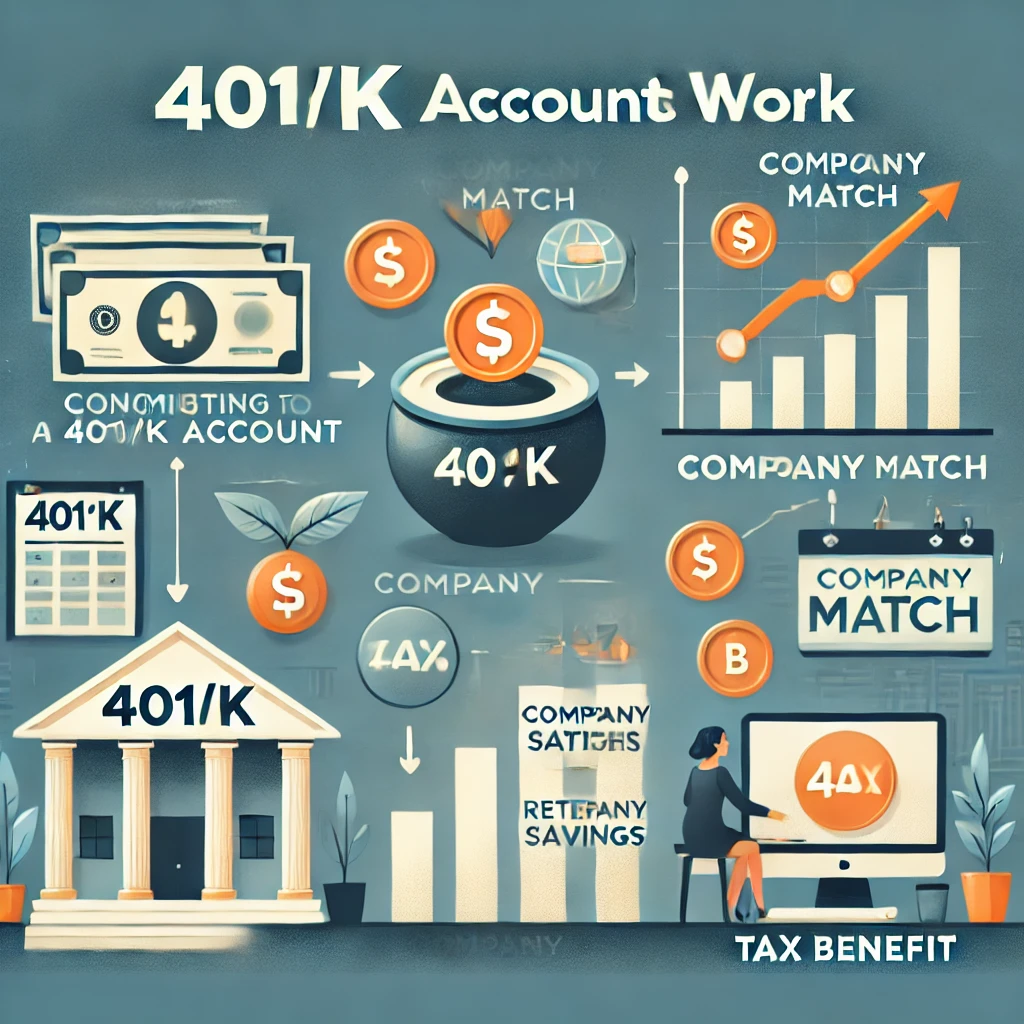
How Do 401(k) Accounts Work?
A 401(k) is a popular retirement savings plan in the United States, offering employees a tax-advantaged way to save for retirement. Named after a section of the Internal Revenue Code, 401(k) plans are widely offered by employers and provide an opportunity to grow your retirement savings over time. Here’s how they work.
1. Contributions
Employees contribute to their 401(k) accounts directly from their paycheck. Contributions are deducted before taxes (in traditional 401(k) plans), reducing your taxable income for the year. Alternatively, with a Roth 401(k), contributions are made with after-tax dollars, allowing for tax-free withdrawals in retirement.
Key Features:
- Contribution Limits: For 2023, the annual contribution limit is $22,500 (or $30,000 if you’re age 50 or older, due to catch-up contributions).
- Employer Matching: Many employers match a percentage of your contributions, essentially giving you free money for your retirement.
2. Tax Advantages
One of the primary benefits of a 401(k) is its tax advantages:
- Traditional 401(k): Contributions are tax-deferred, meaning you don’t pay taxes on them until you withdraw money in retirement.
- Roth 401(k): Contributions are made after taxes, but withdrawals (including earnings) are tax-free if certain conditions are met.
These tax benefits allow your savings to grow faster over time compared to a taxable investment account.
3. Investment Options
401(k) plans offer a variety of investment options, including:
- Mutual funds
- Index funds
- Target-date funds
- Company stock (in some cases)
You can choose how to allocate your contributions among these options based on your risk tolerance, investment goals, and timeline.
4. Growth Through Compounding
The money in your 401(k) account grows over time through compounding. This means you earn returns not only on your original contributions but also on the earnings those contributions generate. Over the years, this compounding effect can lead to substantial growth in your retirement savings.
5. Withdrawals
You can start taking withdrawals from your 401(k) without penalty once you reach age 59½. Withdrawals are subject to the following rules:
- Traditional 401(k): Withdrawals are taxed as ordinary income.
- Roth 401(k): Withdrawals are tax-free if the account has been open for at least five years and you are 59½ or older.
Early Withdrawal Penalties: If you withdraw funds before age 59½, you may face a 10% penalty in addition to taxes, unless you qualify for certain exceptions (e.g., hardship withdrawals).
6. Required Minimum Distributions (RMDs)
For traditional 401(k) accounts, you must start taking required minimum distributions (RMDs) at age 73 (or 72 for those born before 1951). Roth 401(k) accounts are not subject to RMDs, provided they are rolled into a Roth IRA.
7. Portability
If you change jobs, you can roll over your 401(k) funds into:
- A new employer’s 401(k) plan.
- An individual retirement account (IRA).
- Leave the funds in your previous employer’s plan (if allowed).
This ensures you retain control of your retirement savings even if you switch employers.
8. Contribution Limits and Catch-Up Contributions
The IRS sets annual limits on how much you can contribute to a 401(k). If you’re over age 50, you can make catch-up contributions to boost your savings. This is particularly useful for those nearing retirement who want to maximize their tax-advantaged savings.
9. Fees
401(k) plans often come with fees for account maintenance, fund management, and other administrative costs. It’s important to review your plan’s fee structure, as high fees can eat into your returns over time.
Conclusion
A 401(k) is a powerful tool for retirement planning, offering tax advantages, employer matching, and potential for long-term growth. By contributing regularly, choosing investments wisely, and taking advantage of employer matches, you can build a substantial nest egg to support your retirement.
For more tips on improving your photography and editing skills, check out helpful guides to take your selfies to the next level.
Добавить комментарий