Procrastination
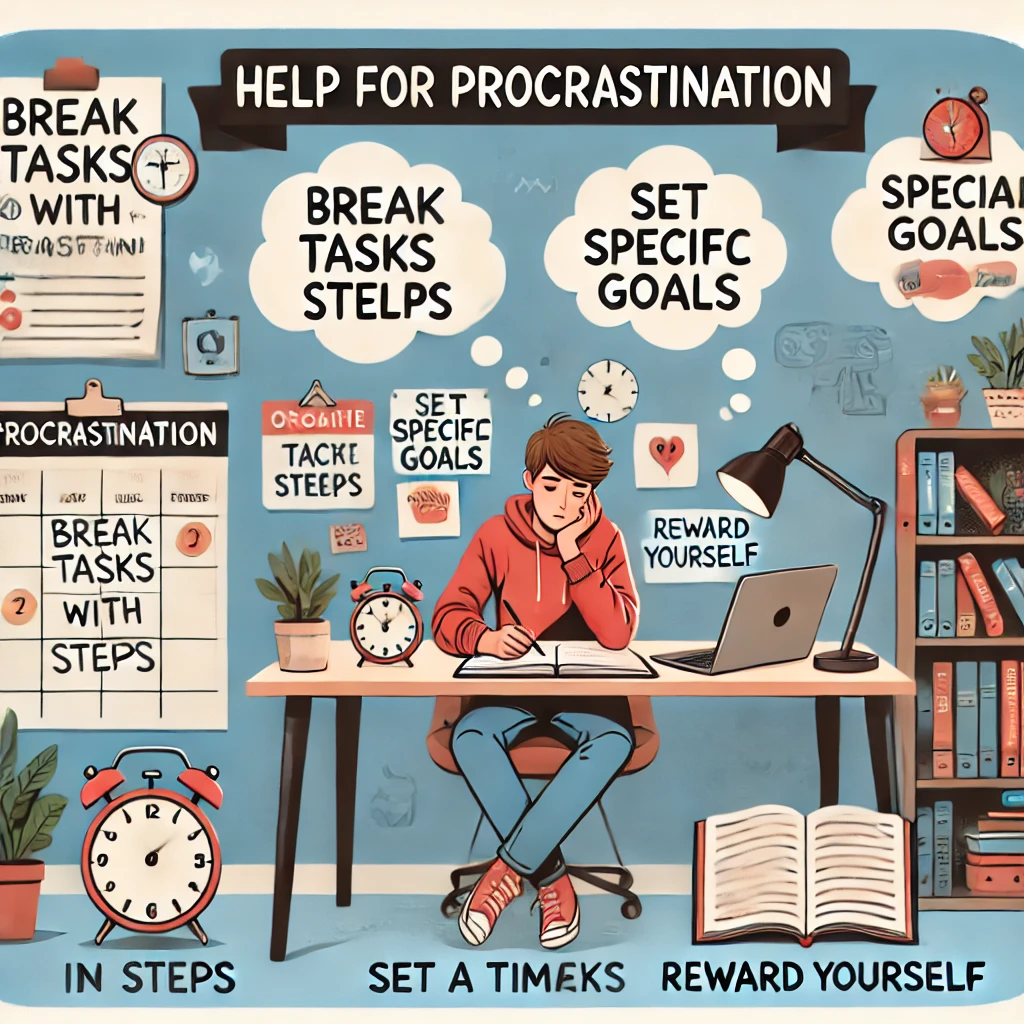
Procrastination can be a common struggle for teens, especially when juggling school, extracurricular activities, and social life. While it might seem like an impossible habit to break, there are practical steps you can take to overcome procrastination and become more productive. Here’s how to tackle it effectively.
1. Understand Why You’re Procrastinating
Why It’s Important:
Identifying the root cause helps you address the problem directly.
Common Reasons for Procrastination:
- Fear of failure or perfectionism.
- Feeling overwhelmed by large tasks.
- Distractions from phones, games, or social media.
- Lack of interest or motivation.
Tip: Keep a journal to note when and why you procrastinate, then look for patterns.
2. Break Tasks into Smaller Steps
Why It Helps:
Big tasks can feel overwhelming, but smaller steps are more manageable.
How to Do It:
- Write down the task and divide it into smaller, actionable parts.
- Focus on completing one step at a time.
- Celebrate small wins to stay motivated.
Tip: Use checklists or apps like Todoist to track your progress.
3. Set Clear Goals and Deadlines
Why It Helps:
Having specific goals gives you direction and purpose.
How to Do It:
- Define what you want to achieve and set a realistic timeline.
- Use the SMART method (Specific, Measurable, Achievable, Relevant, Time-bound) for goal setting.
- Break long-term goals into short-term objectives.
Tip: Use a planner or calendar to visualize your deadlines and plan ahead.
4. Eliminate Distractions
Why It Helps:
A focused environment makes it easier to get started and stay on track.
How to Do It:
- Turn off notifications on your phone or put it in another room.
- Use productivity apps like Forest or StayFocusd to block distracting websites.
- Choose a quiet workspace and let others know not to disturb you.
Tip: Create a designated study area free from unnecessary clutter.
5. Use the “Two-Minute Rule”
Why It Helps:
Starting small builds momentum and reduces resistance.
How to Do It:
- Commit to working on a task for just two minutes.
- Once you start, you’ll often feel motivated to continue.
- Apply this to tasks like reading, writing, or organizing your workspace.
Tip: Starting is often the hardest part—this trick helps overcome that hurdle.
6. Reward Yourself for Progress
Why It Helps:
Rewards create positive reinforcement and make work more enjoyable.
How to Do It:
- Set small rewards for completing tasks, like a snack, break, or favorite activity.
- Use bigger rewards for major accomplishments, like finishing a big project.
- Tie rewards to goals to keep yourself motivated.
Tip: Avoid over-rewarding or using distractions (like phone games) as rewards too early.
7. Create a Daily Routine
Why It Helps:
A structured routine builds consistency and reduces procrastination triggers.
How to Do It:
- Plan your day the night before, including specific times for homework and breaks.
- Prioritize important or difficult tasks earlier in the day when your energy is highest.
- Include time for relaxation and hobbies to maintain balance.
Tip: Use a time-blocking method to allocate time slots for specific tasks.
8. Get Accountability from Others
Why It Helps:
Sharing your goals or tasks with someone keeps you responsible and motivated.
How to Do It:
- Work with a study buddy to keep each other on track.
- Share your deadlines with a trusted friend or family member who can check in on your progress.
- Join a group or club that aligns with your goals for added support.
Tip: Friendly competition can also motivate you to stay productive.
9. Practice Self-Compassion
Why It Helps:
Being too hard on yourself can create anxiety and further procrastination.
How to Do It:
- Remind yourself that it’s okay to make mistakes or fall behind occasionally.
- Focus on progress rather than perfection.
- Use positive affirmations to build confidence, like, “I can handle this task.”
Tip: Treat yourself with the kindness and understanding you’d offer a friend.
10. Reflect and Adjust
Why It Helps:
Evaluating what works helps you improve your strategies over time.
How to Do It:
- At the end of each week, reflect on what tasks you completed and where you struggled.
- Adjust your approach based on what worked well.
- Set new goals for the next week to keep moving forward.
Tip: Journaling about your progress can help you identify patterns and successes.
Final Thoughts
Procrastination is a habit, but it’s one you can overcome with patience and the right strategies. By breaking tasks into smaller steps, setting clear goals, and eliminating distractions, you’ll be able to tackle your work with confidence and ease.
Start small, stay consistent, and celebrate your progress. For more helpful tips and tools to beat procrastination, explore resources to take control of your time!
Добавить комментарий