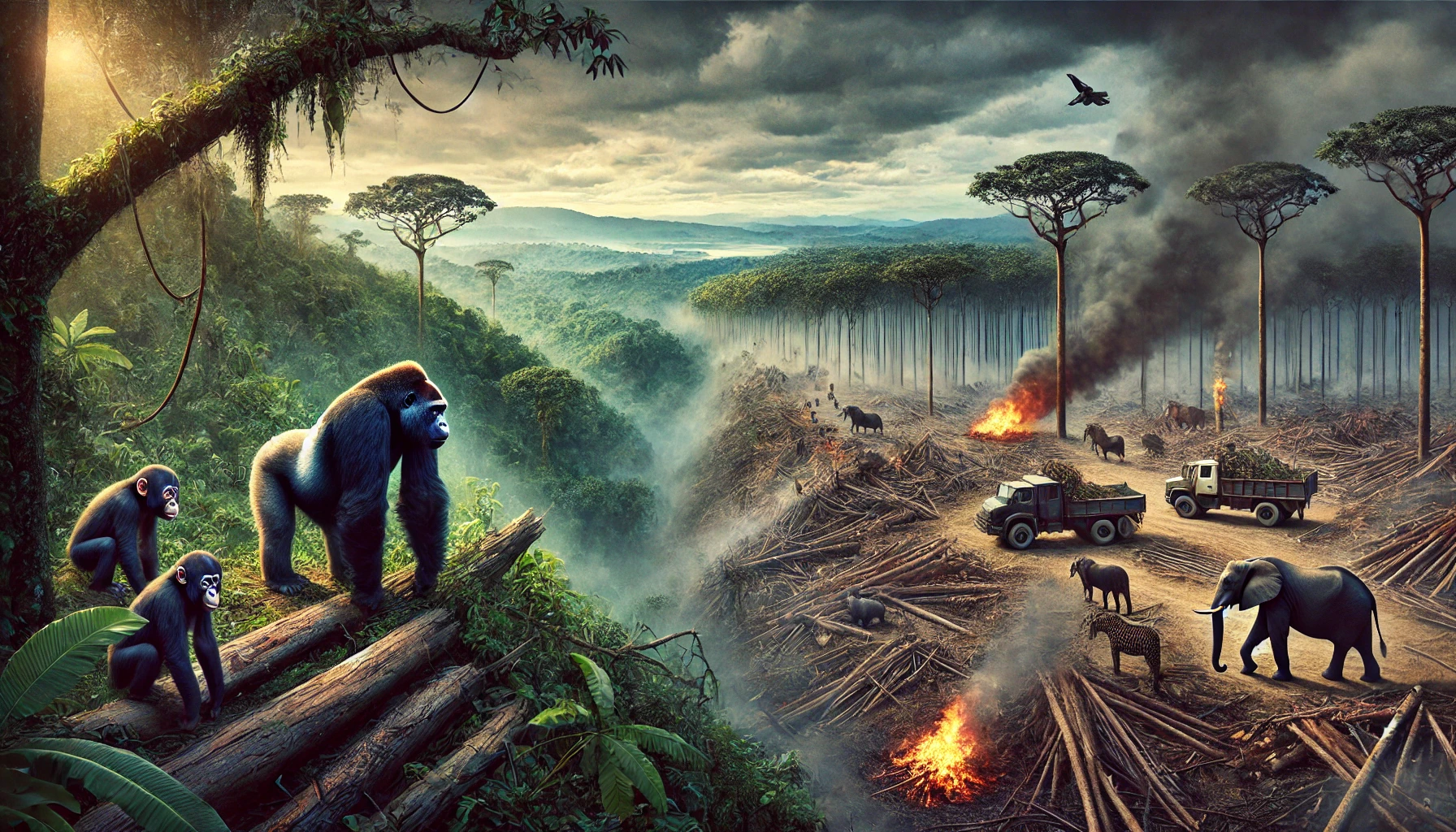
Habitat Loss in the Congo Basin
The Congo Basin is home to the world’s second-largest tropical rainforest, spanning across six Central African countries. It serves as a vital ecosystem for millions of people, endangered wildlife, and global climate stability. However, habitat loss in the region is escalating due to deforestation, industrial activities, and human expansion, threatening biodiversity and accelerating climate change.
Causes of Habitat Loss
Deforestation for Agriculture and Logging
One of the biggest threats to the Congo Basin is large-scale deforestation. Farmers clear vast areas for subsistence agriculture and commercial plantations, while illegal and unsustainable logging further depletes the forest. The demand for tropical hardwood, such as mahogany, continues to drive deforestation at alarming rates.
Mining and Infrastructure Development
The region is rich in minerals like gold, diamonds, and coltan, essential for electronics production. Mining operations, both legal and illegal, destroy vast areas of forest and pollute rivers with toxic chemicals. Additionally, infrastructure projects, such as roads and dams, fragment habitats and make untouched forest areas more accessible for further exploitation.
Urban Expansion and Population Growth
As populations grow, cities expand into previously untouched forest areas. Increased demand for land, timber, and fuelwood leads to uncontrolled deforestation. Many local communities rely on slash-and-burn agriculture, which further accelerates forest loss.
Impact on Wildlife and Indigenous Communities
Threats to Endangered Species
The Congo Basin is home to iconic and endangered species such as forest elephants, gorillas, bonobos, and okapis. Habitat destruction pushes these species closer to extinction by reducing their living space and increasing human-wildlife conflicts. Poaching also intensifies as access to remote areas becomes easier.
Displacement of Indigenous Peoples
Many indigenous communities in the Congo Basin depend on the forest for their livelihoods, practicing sustainable hunting, fishing, and gathering. Habitat loss forces them to relocate, threatening their traditional ways of life and cultural heritage.
Conservation Efforts and Solutions
Protected Areas and Ecotourism
Several national parks and reserves, such as Salonga and Virunga National Parks, are designated to protect critical habitats. Ecotourism initiatives also help generate income for local communities while promoting conservation.
Sustainable Forestry and Agriculture
Encouraging sustainable land-use practices, such as agroforestry and responsible logging, can help balance economic development with environmental conservation. International partnerships and certification programs, like the Forest Stewardship Council (FSC), aim to reduce deforestation.
Stronger Environmental Policies
Governments and conservation organizations are working to implement stricter regulations to combat illegal logging and mining. Increased funding for conservation programs and community-led initiatives is essential for long-term habitat protection.
The Road Ahead
Protecting the Congo Basin is not just a regional issue—it’s a global priority. As one of the Earth’s most important carbon sinks, its destruction contributes significantly to climate change. Strengthening conservation efforts, supporting local communities, and promoting sustainable practices are crucial steps in preserving this irreplaceable ecosystem for future generations.
For more tips on improving your photography and editing skills, check out helpful guides to take your selfies to the next level.
Добавить комментарий