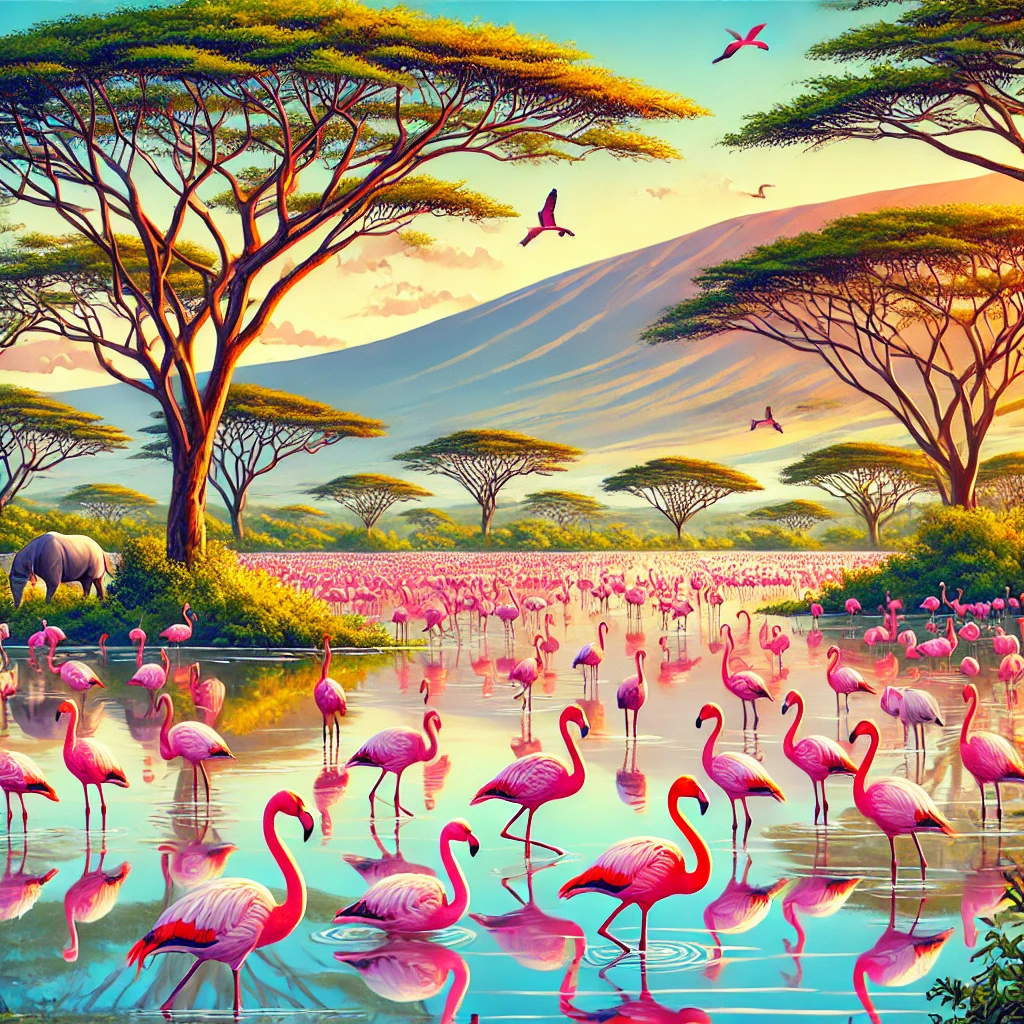
Flamingos in Lake Nakuru, Kenya
Lake Nakuru, located in the heart of Kenya’s Great Rift Valley, is one of the most famous destinations in the world to witness the breathtaking sight of thousands—sometimes millions—of flamingos. This shallow, alkaline lake within Lake Nakuru National Park is a haven for birdlife, making it a paradise for wildlife enthusiasts and photographers.
1. Why Flamingos Gather at Lake Nakuru
The large populations of flamingos at Lake Nakuru are primarily attracted by the abundance of cyanobacteria (blue-green algae), which thrive in the lake’s alkaline waters. These algae serve as the main food source for the lesser flamingo (Phoeniconaias minor), the species most commonly found at the lake.
2. Types of Flamingos Found in Lake Nakuru
Two species of flamingos can be spotted at the lake:
- Lesser Flamingos (Phoeniconaias minor) – Smaller in size, with a deep pink hue and a black-tipped beak, these birds make up the majority of the flamingo population in Nakuru.
- Greater Flamingos (Phoenicopterus roseus) – Larger, paler in color, with a distinctive curved beak, these flamingos are less common but still a striking sight.
3. Seasonal Movements and Population Changes
The number of flamingos at Lake Nakuru fluctuates depending on environmental factors such as water levels and food availability. In years when the lake’s water becomes too diluted due to heavy rains, algae levels drop, prompting the flamingos to migrate to other Rift Valley lakes, such as Lake Bogoria and Lake Elementeita.
4. Other Wildlife in Lake Nakuru National Park
While flamingos are the star attraction, Lake Nakuru National Park is home to an array of other wildlife:
- Rothschild’s Giraffes – One of the rarest giraffe species, reintroduced to the park for conservation.
- Rhinos – The park serves as a sanctuary for both black and white rhinos.
- Lions, Leopards, and Hyenas – Predators roam the acacia woodlands, adding to the park’s diverse ecosystem.
- Over 450 Bird Species – Pelicans, African fish eagles, and herons are among the many species found here.
5. Best Time to Visit
- Dry Season (June to February): Ideal for flamingo viewing and general wildlife spotting.
- Wet Season (March to May): While the park remains beautiful, heavy rains may lead to rising water levels, reducing flamingo numbers.
6. Conservation Challenges
Lake Nakuru’s ecosystem faces several threats, including:
- Rising Water Levels: Climate change and increased rainfall have led to flooding, affecting the lake’s alkalinity and flamingo populations.
- Pollution and Urban Expansion: The nearby town of Nakuru and agricultural activities pose risks to the lake’s water quality.
- Habitat Loss: Encroachment on the surrounding wetlands affects the delicate balance of the ecosystem.
7. A Spectacle Like No Other
Despite these challenges, Lake Nakuru remains one of the most remarkable places to witness the mesmerizing pink flocks of flamingos. The sight of thousands of birds creating a shimmering pink carpet on the lake’s surface is a wildlife experience unlike any other.
For more tips on improving your photography and editing skills, check out helpful guides to take your selfies to the next level.
Добавить комментарий