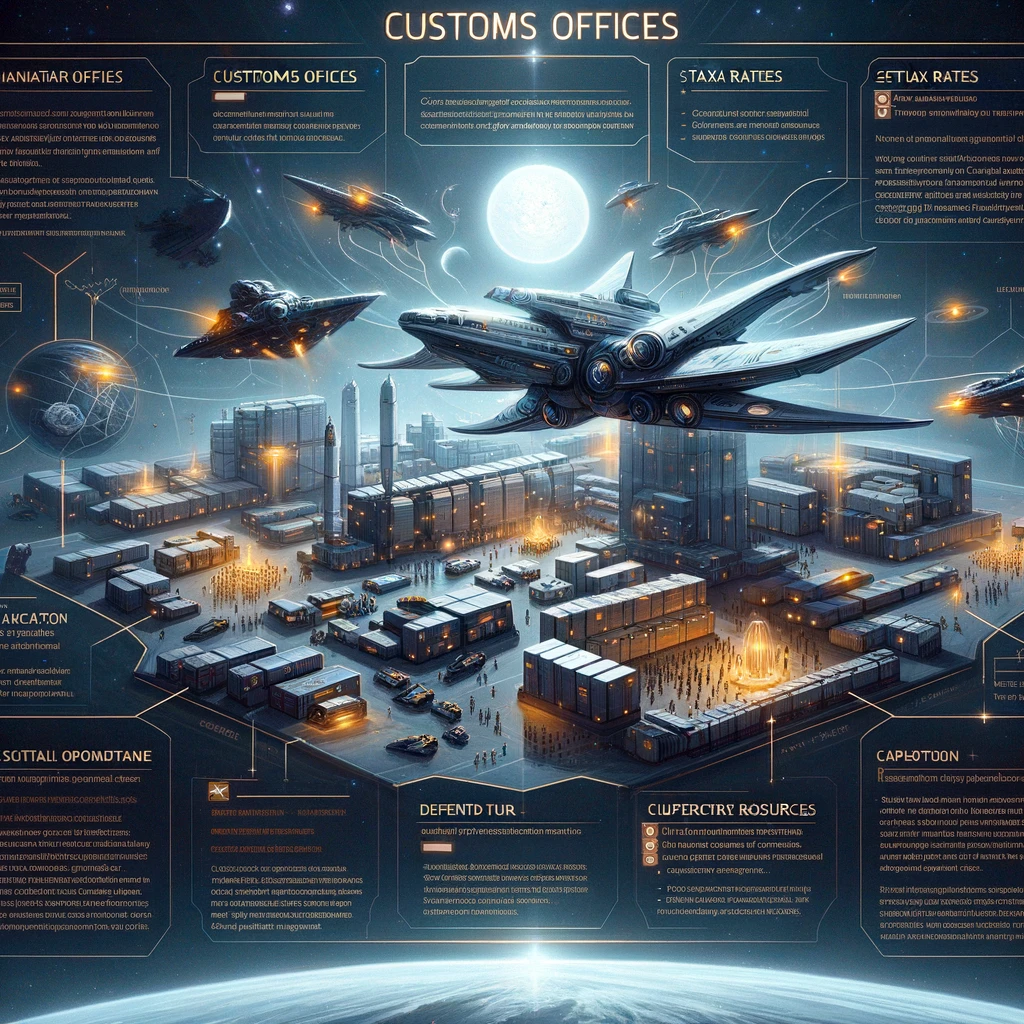
Managing Custom Offices in EVE Online is an essential part of planetary interaction (PI), a lucrative activity where players extract resources from planets and process them into valuable commodities. Custom Offices are the link between the surface of a planet and the wider universe, serving as the point where goods are transferred from your planetary colonies to your cargo hold, ready for sale or further processing. Here’s a guide on how to effectively manage Custom Offices for maximum efficiency and profit:
Understanding Planetary Customs Offices (PCOs)
- Function: PCOs are space structures orbiting planets. They hold goods produced from planetary colonies until they are transported to a station or elsewhere. Tax rates for importing materials to the planet or exporting goods to space are set by the entity controlling the PCO.
- Types:
- Interbus Custom Offices: Initially, most planets are equipped with these NPC-run offices, which have a fixed tax rate that cannot be adjusted.
- Player-Owned Customs Offices (POCOs): Players or corporations can take control of customs offices by destroying the existing NPC-owned office and deploying their own. Ownership allows for tax rate adjustments.
Taking Control of a Custom Office
- Locate a Target: Find an Interbus Custom Office you wish to control. Evaluate the planet for its resource potential to ensure it’s worth the investment.
- Attack the Office: Engage the office with a combat ship until its health is depleted. Note that attacking a customs office will flag you for PvP, and you might incur a standings loss with the NPC faction.
- Deploy Your POCO: Once the Interbus office is destroyed, deploy a Customs Office Gantry from your cargo hold, then use resources to upgrade it to a fully functional POCO.
Managing Your POCO
- Set Tax Rates: As the owner, you can set tax rates for both importing and exporting goods. Consider setting competitive rates to encourage other players to use your POCO, generating passive income.
- Defense: Be prepared to defend your customs office from other players who may attempt to take control. This can involve setting up defense fleets or diplomatic negotiations with potential aggressors.
- Permissions: You can set different tax rates for various levels of access, from public users to specific corporations or alliance members, optimizing your revenue based on your relationships and agreements.
Maximizing Profits
- Location Selection: Prioritize planets with high-demand resources or those in strategic locations, such as near trade hubs or within active manufacturing regions.
- Tax Strategy: Find the right balance between high enough taxes to profit and low enough to discourage smuggling or encourage use by others. Monitor activity and adjust rates as necessary.
- Collaboration: Work with local corporations or alliances to secure your POCOs. In return for protection, you might offer reduced tax rates or access to your facilities.
- Market Integration: Align your planetary production with market needs. Owning POCOs on planets rich in resources needed for popular blueprints or consumables can be particularly profitable.
Considerations for Custom Office Management
- Legal and PvP Implications: Owning POCOs can make you a target for war declarations and attacks. Ensure you’re prepared for potential conflicts.
- Maintenance: While POCOs don’t require active maintenance, keeping an eye on them for damage or attacks is prudent.
- Diplomacy: Engaging in discussions and agreements with neighboring system owners and local powers can ensure the longevity and profitability of your custom offices.
Effectively managing Custom Offices in EVE Online is a complex but potentially rewarding endeavor that integrates well with planetary interaction, market trading, and the broader socio-political dynamics of New Eden. With the right strategy and management, POCOs can become a significant source of passive income and a strategic asset for individuals, corporations, and alliances alike.
Добавить комментарий